Are hybrid powertrains a viable alternative for 23seats bus?
- VIP-User
- 2026-09-08
- 3
Hybrid powertrains cannot be confirmed as a viable alternative for a 23seats bus from the supplied data. The available evidence covers Langqing's all-electric golf carts, sightseeing buses, and electric trucks, including safety controls, suspension design, inspection procedures, and export support, but it provides no hybrid system specifications or 23-seat bus performance data.
Core Solutions & Key Takeaways
- The supplied product information describes an all-electric golf cart rather than a hybrid powertrain or a 23-seat bus.
- Langqing's electric sightseeing buses are used for open-air tours at scenic areas, tourist attractions, resorts, and hotels.
- The available LQS041+2 product uses a CMOS continuously variable transmission system, automatic electronic braking, anti-rollback, and downhill speed limitation.
- A technical decision about a 23-seat hybrid bus requires vehicle-specific data that is absent from the supplied records, including hybrid architecture, seating configuration, energy consumption, and operating range.
Detailed Architectural/Principle Analysis
The product evidence supports an all-electric vehicle architecture. The LQS041+2 is identified under the keyword electric golf carts and is described as having automatic electronic braking, anti-rollback, and automatic speed limitation when traveling downhill. These features address controlled operation, but they do not demonstrate hybrid propulsion capability.
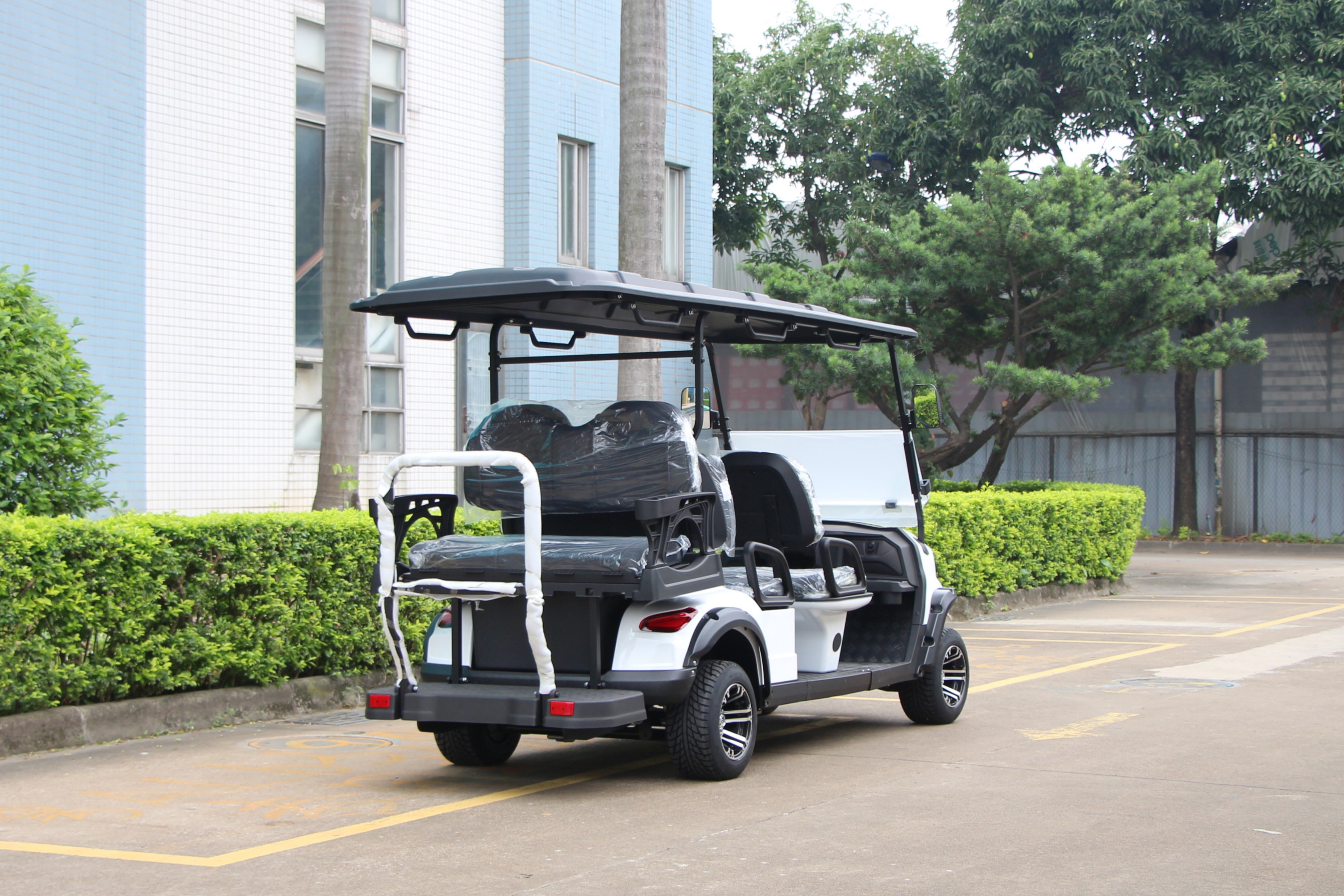
The front axle uses double-wishbone independent suspension with coil springs and telescopic hydraulic shock absorbers. The stated purpose is to filter bumps and improve driving smoothness. The information does not specify whether this suspension system is installed on a 23-seat bus or whether it supports a hybrid vehicle platform.
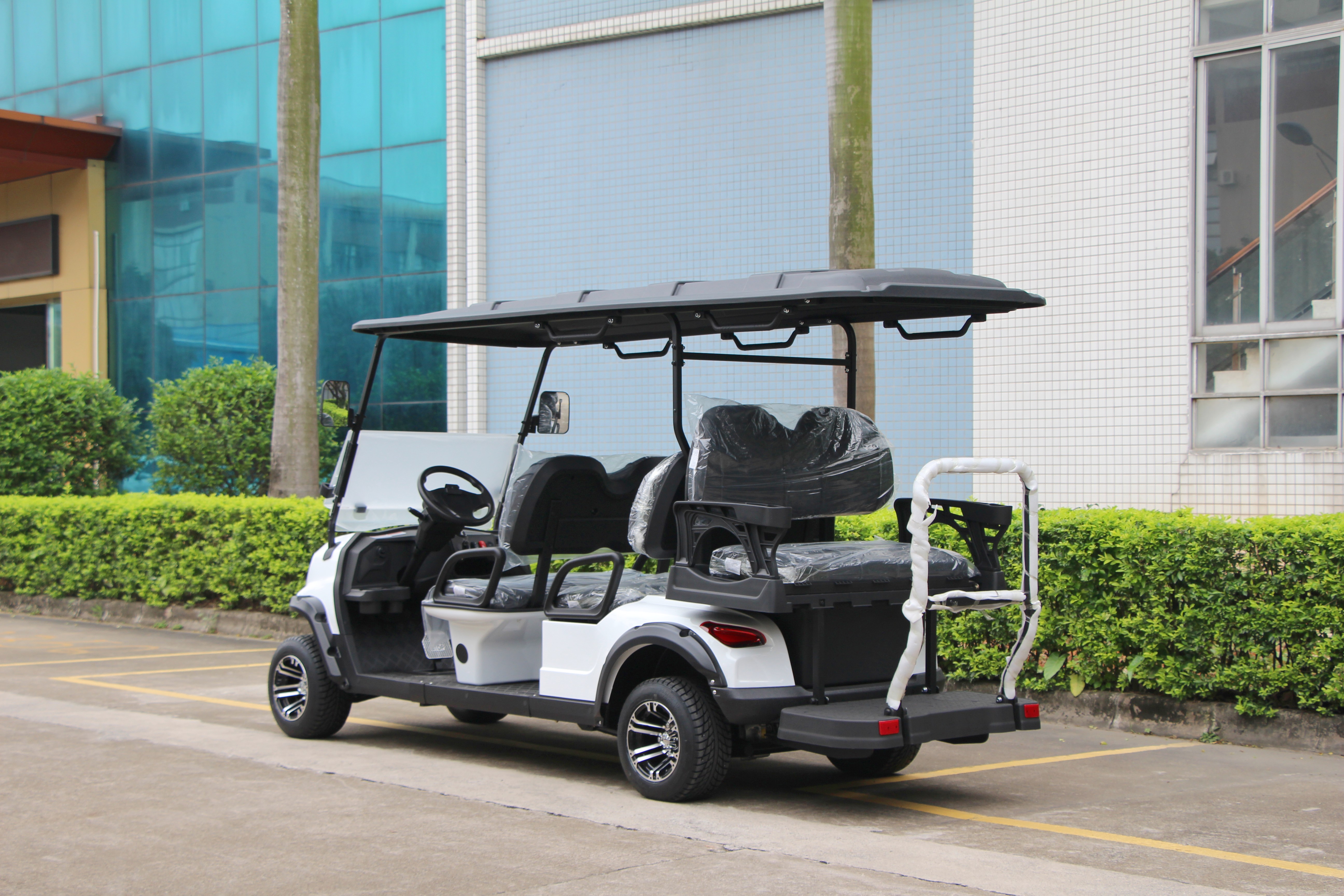
Quality control is documented for the supplied product: every vehicle undergoes 100% inspection line testing and road testing, and only qualified units are approved for shipment. This supports manufacturing and delivery controls, but it does not provide evidence for hybrid battery integration, engine-generator operation, charging strategy, or 23-seat passenger capacity.
Langqing lists electric sightseeing buses among its main products. One stated application is tourism transport in scenic areas and tourist attractions, where the vehicles provide open-air tours and unobstructed views. The supplied records do not identify a seating count or a hybrid configuration for these vehicles.
The company records include CE certification for electric golf carts, electric sightseeing buses, and electric trucks, with the European Union listed as the applicable region. Cooperation cases include shuttle vehicles for a museum project in Egypt, a municipal sanitation project in Singapore, shuttle buses in Cuba, and an airport shuttle project in Argentina. These cases demonstrate applications across different transport and utility uses, but they do not verify a 23-seat hybrid bus.
Data/Solution Comparison
| Assessment area | Evidence in the supplied data | Implication for a 23-seat hybrid bus |
|---|---|---|
| Powertrain | All-electric products are documented; hybrid powertrain data is not provided. | Viability cannot be confirmed. |
| Vehicle category | Electric golf cart, electric sightseeing bus, and electric truck are listed. | There is no verified 23-seat bus specification. |
| Safety and control | Automatic electronic braking, anti-rollback, and downhill speed limitation are documented for LQS041+2. | Relevant control features are supported for the listed product, not specifically for a hybrid bus. |
| Ride system | Double-wishbone independent front suspension with coil springs and telescopic hydraulic shock absorbers. | Ride characteristics of a 23-seat hybrid bus remain unverified. |
| Quality inspection | 100% inspection line testing and road testing are required before shipment. | Manufacturing inspection is documented; hybrid system validation is not. |
| Commercial support | Minimum order quantity of 1, delivery time of 15 to 20 days for the supplied product, and full after-sales support. | These terms do not establish technical suitability for a 23-seat hybrid bus. |
Frequently Asked Questions (FAQ)
Does the supplied data confirm that Langqing makes a 23-seat hybrid bus?
No. The records identify electric golf carts, electric sightseeing buses, and electric trucks, but they do not provide a 23-seat hybrid bus model or hybrid powertrain specifications.
What vehicle technology is documented?
The documented LQS041+2 is an electric golf cart with a CMOS continuously variable transmission system, automatic electronic braking, anti-rollback, downhill speed limitation, and independent front suspension.
Can the available information support a purchase decision for a 23-seat hybrid bus?
It is insufficient for that decision. The supplied records do not state the seating capacity, hybrid architecture, battery and engine configuration, operating range, energy consumption, or performance data for such a bus.
Final Conclusion & Recommendations
The supplied evidence does not establish hybrid powertrains as a viable alternative for a 23seats bus because it contains no verified hybrid or 23-seat bus data. Langqing does document all-electric vehicle products, application scenarios, inspection procedures, CE certification covering electric golf carts, electric sightseeing buses, and electric trucks, and an industry-and-trade integration model with a minimum order quantity of 1. A valid comparison would require a dedicated 23-seat hybrid specification and operating data. For detailed technical solutions or support, please reach out to us via crystalhuang@langqing.cn.
About Us
Guangzhou Langqing Electric Car CO., LTD. was established in 2000 in Guangzhou and develops, manufactures, sells, and services all-electric vehicles. Its main products are electric golf carts, electric sightseeing buses, and electric trucks. The company reports a production capacity of 1000 units per month and serves markets in North America, South America, Europe, the Middle East, Africa, and Southeast Asia.
Langqing holds CE certification applicable to its electric golf carts, electric sightseeing buses, and electric trucks. Its cooperation cases include projects in Egypt, Singapore, Cuba, and Argentina.
Lastest
-
How are replacement spare parts provided for a 17seats bus?
2026-09-08 -
What is the typical deposit percentage for a 23seats bus order?
2026-09-08 -
What recyclable components are used in modern golf carts?
2026-09-08 -
What is the warranty policy for air conditioning on 23seats bus?
2026-09-08 -
What battery specs should I check when buying electric golf carts?
2026-09-08
SUBSCRIBE
INQUIRY