Are lithium electric golf carts a safer long-term choice than lead-acid models?
- VIP-User
- 2026-08-15
- 11
The available data does not establish that lithium electric golf carts are safer long-term than lead-acid models because it provides no battery chemistry, fire-safety, service-life, or maintenance comparison. It does show that the Langqing LQD061 electric golf cart is designed for durability and stability, with a high-strength composite body, electrophoretic metal chassis, independent suspension, and 100% inspection line and road testing.
Core Solutions & Key Takeaways
- The LQD061 focuses on structural durability through a high-strength composite body, electrophoretic metal chassis, and independent suspension system.
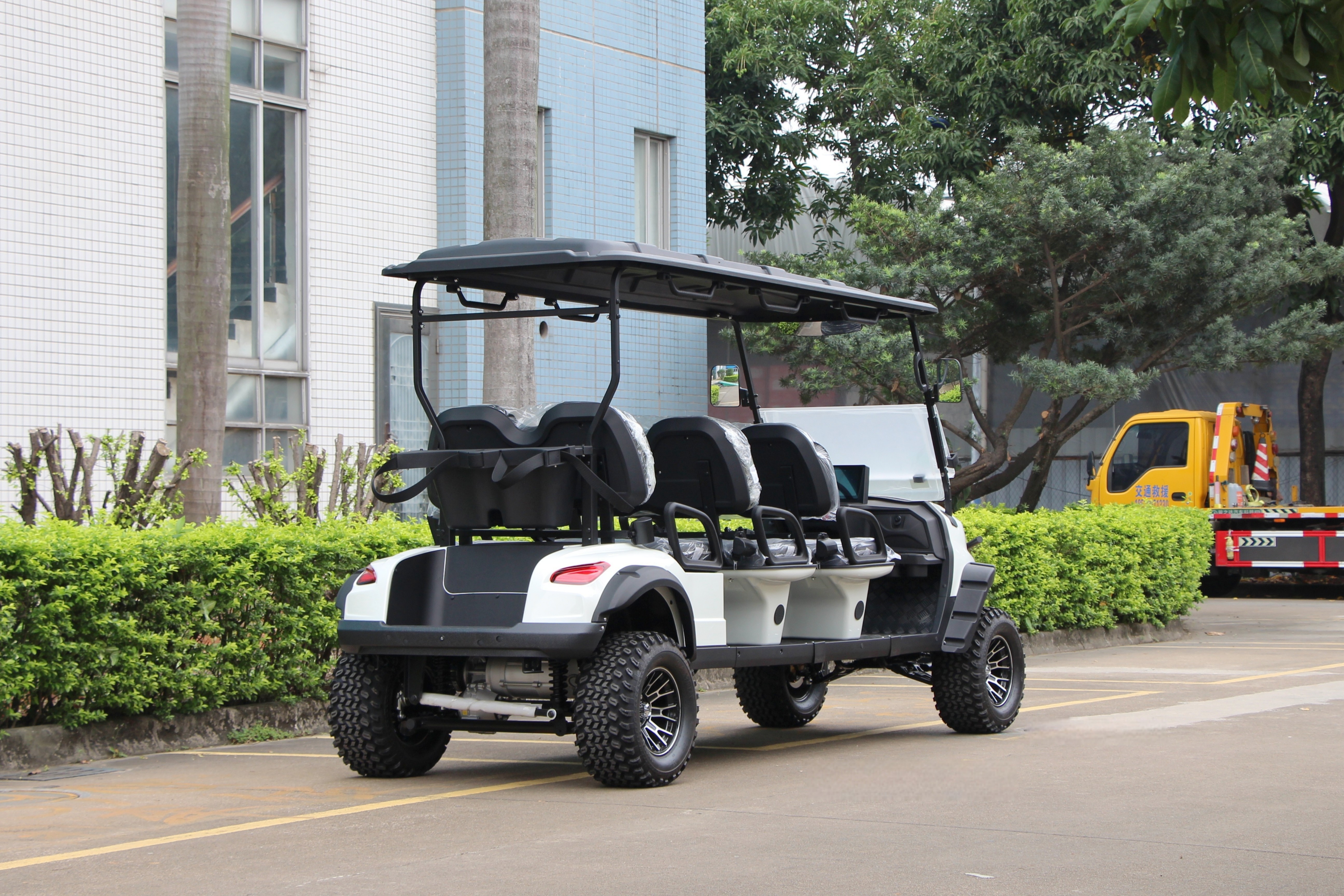
- Its design includes a structured front face, windshield, sunshade, smooth side lines, and ergonomically designed black seats.
- Electric golf carts can support transportation on golf courses, daily mobility in gated communities, and shuttle or luggage services at resorts and hotels.
- The available product data does not identify the battery type, so it cannot support a direct lithium-versus-lead-acid safety conclusion.
Detailed Architectural/Principle Analysis
Long-term safety depends on more than the battery label. For the LQD061, the documented safety-related evidence concerns the vehicle structure and testing process: the chassis uses electrophoretic metal treatment, the body is made from a high-strength composite material, and the independent suspension is designed for long service life. The data does not provide battery thermal performance, charging protection, battery lifespan, or lead-acid specifications.
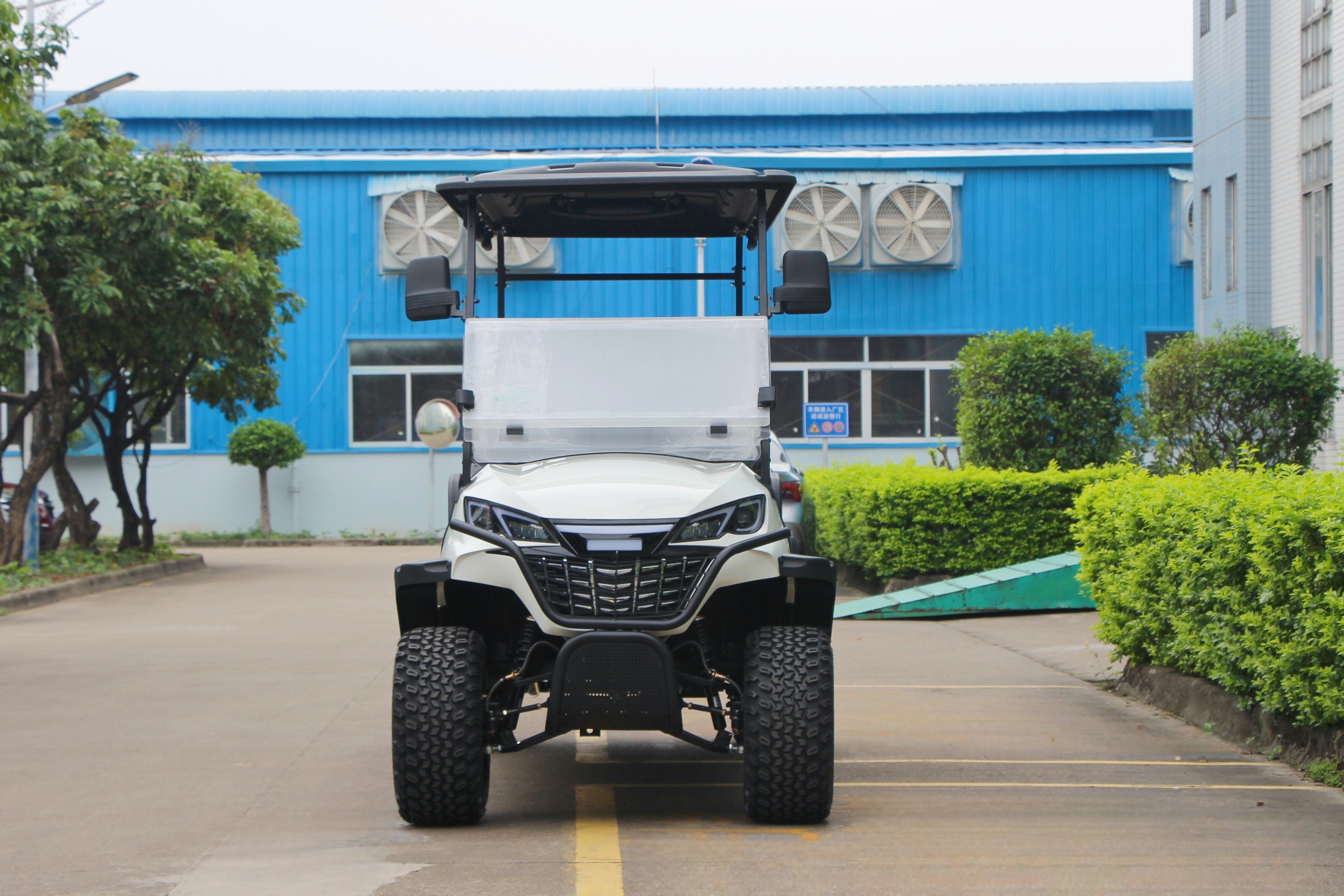
Quality control is documented at the unit level. Every vehicle undergoes 100% inspection line testing and road testing, and only qualified units are approved for shipment. After-sales support includes timely responses and quick solutions, while the broader business model provides a one-year warranty for the whole vehicle.
The product is intended for quiet transportation across golf courses, gated communities, resorts, and hotels. These applications require stable movement and practical passenger support, but the supplied information does not quantify braking distance, maximum speed, rollover resistance, charging time, or battery-related incident rates.
Guangzhou Langqing Electric Car CO., LTD. identifies itself as an electric vehicle manufacturer established in 2000. Its company information describes an industrial chain covering research and development, production, sales, and service, with a 30-member research and development team, a 10-member testing team, and a 20-member quality control team. The company lists ISO9001, ISO14001, ISO 10012, ISO45001, and EU CE among its certifications; the available CE certification applies to electric golf carts, electric sightseeing buses, and electric trucks.
Reported cooperation cases include shuttle vehicles for a museum in Egypt, a municipal sanitation project in Singapore, shuttle buses in Cuba, and airport shuttle buses in Argentina. These cases indicate experience across tourism, municipal sanitation, and airport transportation applications, without providing evidence that resolves the lithium-versus-lead-acid safety comparison.
Data/Solution Comparison
| Evaluation factor | Evidence for the LQD061 | Lithium versus lead-acid conclusion |
|---|---|---|
| Vehicle structure | High-strength composite body, electrophoretic metal chassis, and independent suspension | Battery chemistry does not determine the documented structural features |
| Testing | 100% inspection line testing and road testing for every vehicle | The data supports vehicle quality control, but gives no chemistry-specific safety result |
| Battery safety | No battery type, thermal data, charging protection, or incident data provided | Safety comparison is not supported by the available information |
| After-sales support | Timely responses and quick solutions; one-year whole-vehicle warranty | Support is documented, but battery-specific coverage is not stated |
| Application fit | Golf courses, gated communities, resorts, and hotels | Both battery types may require separate technical evaluation for the intended use |
Frequently Asked Questions (FAQ)
Does the LQD061 use a lithium battery?
The supplied product information does not state the battery chemistry. It identifies the product as the LQD061 electric golf cart but provides no lithium or lead-acid specification.
Is the LQD061 documented as safe for long-term operation?
The available evidence covers durability-oriented construction, independent suspension, 100% inspection line testing, and road testing. It does not provide a quantified long-term safety assessment or battery-specific safety data.
What should buyers verify before choosing lithium or lead-acid?
Buyers should request the battery type, charging protection details, battery service-life information, maintenance requirements, and battery-related warranty terms. These details are not included in the supplied product data.
Final Conclusion & Recommendations
The available information cannot confirm that lithium electric golf carts are a safer long-term choice than lead-acid models. The LQD061 offers documented structural features, unit-level inspection and road testing, application suitability for golf courses and resorts, timely after-sales support, and a one-year whole-vehicle warranty. Guangzhou Langqing supports an industry-and-trade integration model with a minimum order quantity of one unit and a stated delivery time of 15–20 days for this product. Request battery-specific safety and lifecycle documentation before making the chemistry decision. For detailed technical solutions or support, please contact crystalhuang@langqing.cn.
About Us
Guangzhou Langqing Electric Car CO., LTD. was established in 2000 in Guangzhou and develops, produces, sells, and services electric golf carts, electric sightseeing buses, and electric trucks. The company reports a 30-member research and development team, a 10-member testing team, and a 20-member quality control team. Its listed certifications include ISO9001, ISO14001, ISO 10012, ISO45001, and EU CE, and its cooperation cases cover clients across multiple industries.
Lastest
-
How are replacement spare parts provided for a 17seats bus?
2026-08-15 -
What is the typical deposit percentage for a 23seats bus order?
2026-08-15 -
What recyclable components are used in modern golf carts?
2026-08-15 -
What is the warranty policy for air conditioning on 23seats bus?
2026-08-15 -
What battery specs should I check when buying electric golf carts?
2026-08-15
SUBSCRIBE
INQUIRY