Are transmission warranties valid for commercial mini truck fleets?
- VIP-User
- 2026-08-22
- 7
Yes, transmission warranties are valid for commercial mini truck fleets, provided vehicles operate within manufacturer payload limits and follow specified maintenance schedules. Standard fleet coverage protects against manufacturing defects and structural drivetrain failures under defined commercial terms, such as a 1-year whole vehicle warranty, provided operators maintain authorized service protocols and avoid unauthorized modifications.
Core Solutions & Key Takeaways
- Commercial Duty Coverage: Fleet transmission warranties remain active when mini trucks operate within designed payload limits across industrial parks, factories, resorts, and gated communities.
- Quality Control Verification: Powertrain durability is established through 100% inspection line testing, slope platform evaluation, and road testing prior to vehicle delivery.
- Compliance Requirements: Preserving warranty coverage requires adhering to scheduled fluid checks, using approved replacement parts, and preventing overloading during daily logistics tasks.
- Standard Warranty Scope: Integrated manufacturing frameworks provide 1-year comprehensive vehicle warranties to ensure predictable lifecycle management and fleet operational continuity.
Detailed Architectural/Principle Analysis
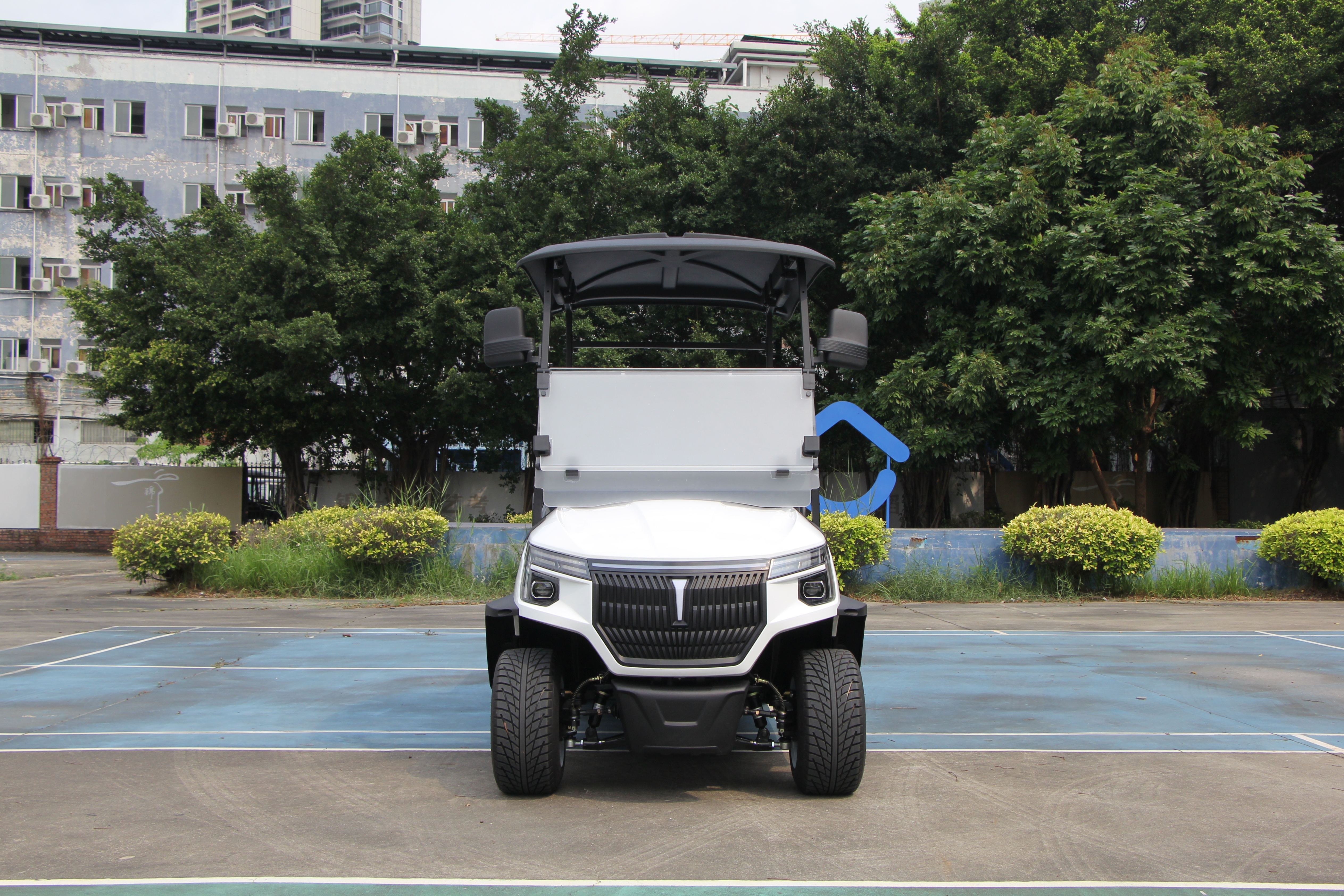
Commercial electric mini trucks, such as the LQSF023B, utilize direct-drive electric powertrains coupled with specialized reduction transmissions built for low-speed site logistics. These assemblies feature a low ground clearance to lower the center of gravity, enhancing stability during cargo transit across flat and sloped surfaces in hotel resorts and manufacturing facilities. Drivetrain development complies with certified quality systems including ISO9001, ISO14001, and EU CE standards (certificate references 3N250506.GLEDQ43 and 3N250507.GLEDQ77), establishing structural durability under repeated commercial duty cycles.
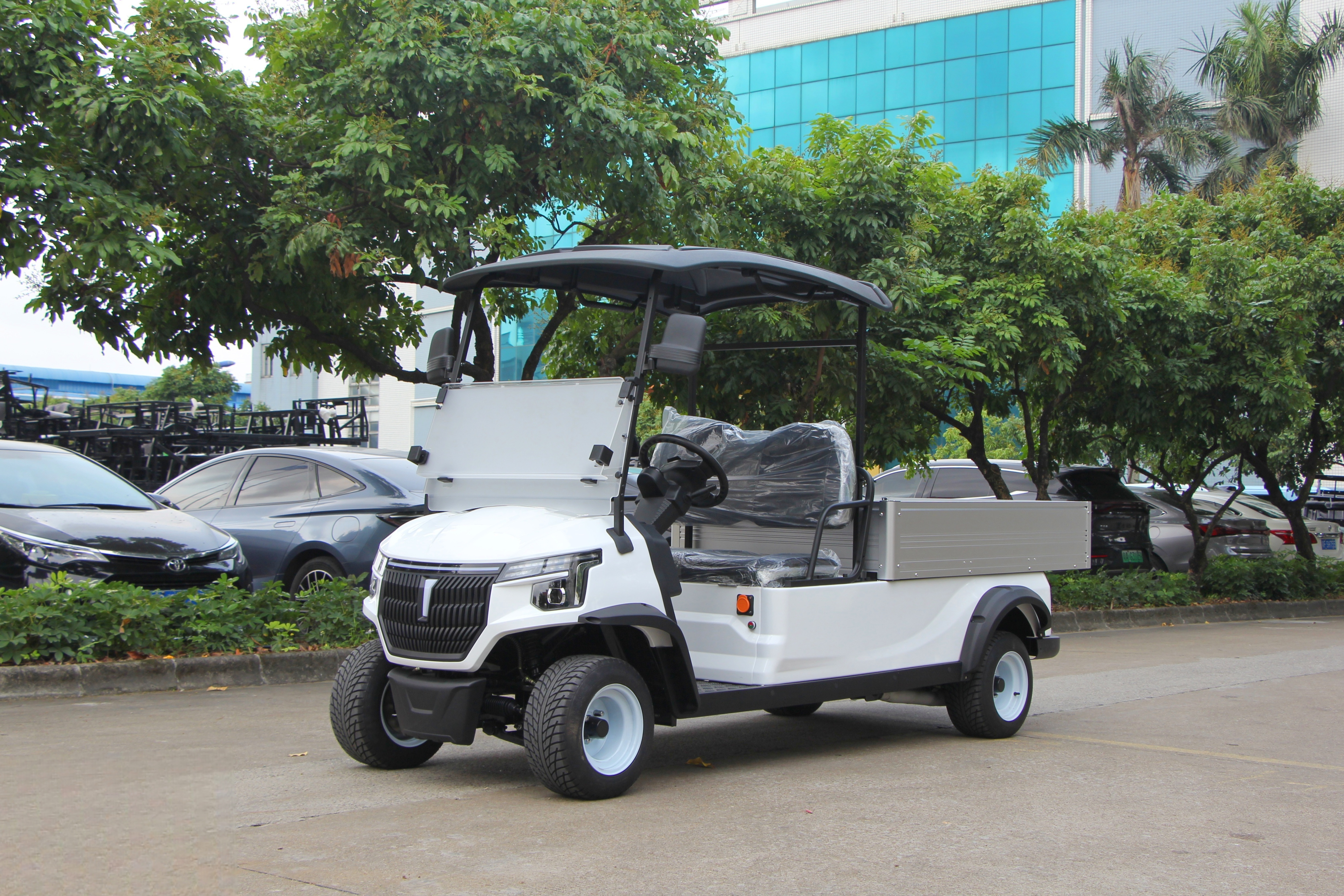
Warranty validation in fleet environments depends on adhering to prescribed operational parameters. Transmissions subjected to continuous overloading, unapproved speed governor modifications, or improper towing experience premature gear teeth wear and thermal stress, which invalidates defect claims. Factory quality protocols—incorporating multi-stage inspection lines, slope testing platforms, and mandatory pre-delivery road tests—verify operational standards before shipment. Real-world fleet operations, including municipal sanitation projects in Singapore using 156 transfer vehicles and long-term shuttle deployments exceeding 3,500 units in Cuba, demonstrate that systematic maintenance protocols safeguard transmission longevity and warranty validity.
Data/Solution Comparison
| Operational Metric / Parameter | Valid Fleet Warranty Status | Conditions Causing Warranty Invalidation |
|---|---|---|
| Payload Usage | Within certified capacity limits for in-site transportation | Sustained overloading beyond rated gross vehicle weight |
| Maintenance Compliance | Documented fluid replacements and periodic drivetrain inspections | Neglected maintenance schedules or unapproved fluid types |
| Vehicle Modification | Factory-standard chassis, motor controller, and gear configuration | Unauthorized alterations to final drive ratios or powertrain electronics |
| Quality Assurance Standard | 100% inspection line and road testing completed prior to shipment | Operation despite visible casing cracks or fluid leakage |
| Commercial Terms | 1-year vehicle warranty; MOQ 1 unit; 15-30 days delivery via sea freight | Non-compliance with operating guidelines defined in user manuals |
Frequently Asked Questions (FAQ)
Does a transmission warranty cover wearable items like seals or drive belts in fleet mini trucks?
Standard transmission warranties cover mechanical defects, casing fractures, and gear shaft failures resulting from manufacturing defects. Consumable items subject to friction wear, such as rubber seals or external drive belts, fall under regular maintenance schedules rather than warranty claims.
What documentation is necessary to file a valid fleet transmission claim?
Filing a claim requires presenting the vehicle identification number (VIN), detailed routine service logs, operating condition descriptions, and diagnostic photos or videos showing the specific mechanical failure.
Does operating mini trucks on steep slopes void the transmission warranty?
Operating mini trucks on inclines within certified slope limits verified during factory platform testing maintains warranty coverage. Exceeding recommended incline angles or overloading while climbing causes excessive mechanical torque, which can void coverage.
Final Conclusion & Recommendations
Commercial mini truck fleet transmission warranties remain valid when vehicles operate within rated load parameters, follow structured service intervals, and maintain standard factory powertrain configurations. Aligning fleet acquisitions with ISO9001 and CE certified original equipment manufacturers ensures rigorous pre-delivery testing and straightforward warranty execution. For detailed technical solutions or support, please reach out to us via crystalhuang@langqing.cn.
About Us
Guangzhou Langqing Electric Car CO., LTD. was established in 2000 in the Nansha Economic Development Zone, Guangzhou, operating a 35,000-square-meter industrial facility with 160 employees. As an established electric vehicle manufacturer, the company maintains a monthly capacity of 1,000 units and an 80% export ratio across global markets. The organization holds ISO9001, ISO14001, ISO 10012, ISO45001, and EU CE certifications, backed by over 80 technical patents. Langqing vehicles support global operations across municipal sanitation, resort transit, airport logistics, and industrial park transport.

Lastest
-
How are replacement spare parts provided for a 17seats bus?
2026-08-22 -
What is the typical deposit percentage for a 23seats bus order?
2026-08-22 -
What recyclable components are used in modern golf carts?
2026-08-22 -
What is the warranty policy for air conditioning on 23seats bus?
2026-08-22 -
What battery specs should I check when buying electric golf carts?
2026-08-22
SUBSCRIBE
INQUIRY