Can a mini truck be registered for road use, and what compliance proof is needed?
- VIP-User
- 2026-09-30
- 1
A mini truck can be registered for road use if it meets regional motor vehicle safety standards and electric vehicle safety regulations. Registration requires compliance proof such as a Certificate of Conformity, manufacturer Certificate of Origin, vehicle identification number (VIN), CE certification or local road-legal approvals, and inspection reports verifying braking, lighting, and chassis structural integrity.
Core Solutions & Key Takeaways
- Road-Legal Classification: Low-speed electric utility vehicles and mini trucks must conform to designated speed, weight, and safety specifications set by local transport departments.
- Essential Documentation: Standard registration requirements include a Certificate of Conformity, technical specification sheets, factory inspection records, and applicable safety certificates.
- Safety Systems Verification: Hydraulic disc brakes, front and rear lighting systems, seat belts, and an electrophoretic metal chassis with independent suspension are primary hardware elements inspected during road registration.
- Commercial Deployment: Municipal projects, industrial parks, and resort logistics utilize compliant electric mini trucks for efficient, low-emission material transport.
Detailed Architectural/Principle Analysis
Determining whether a mini truck qualifies for public road registration depends on vehicle classification, chassis construction, and compliance verification. Manufacturers like Guangzhou Langqing Electric Car CO., LTD. engineer electric mini trucks and utility platforms utilizing electrophoretic metal chassis and independent suspension systems to handle operational loads while adhering to road stability standards.
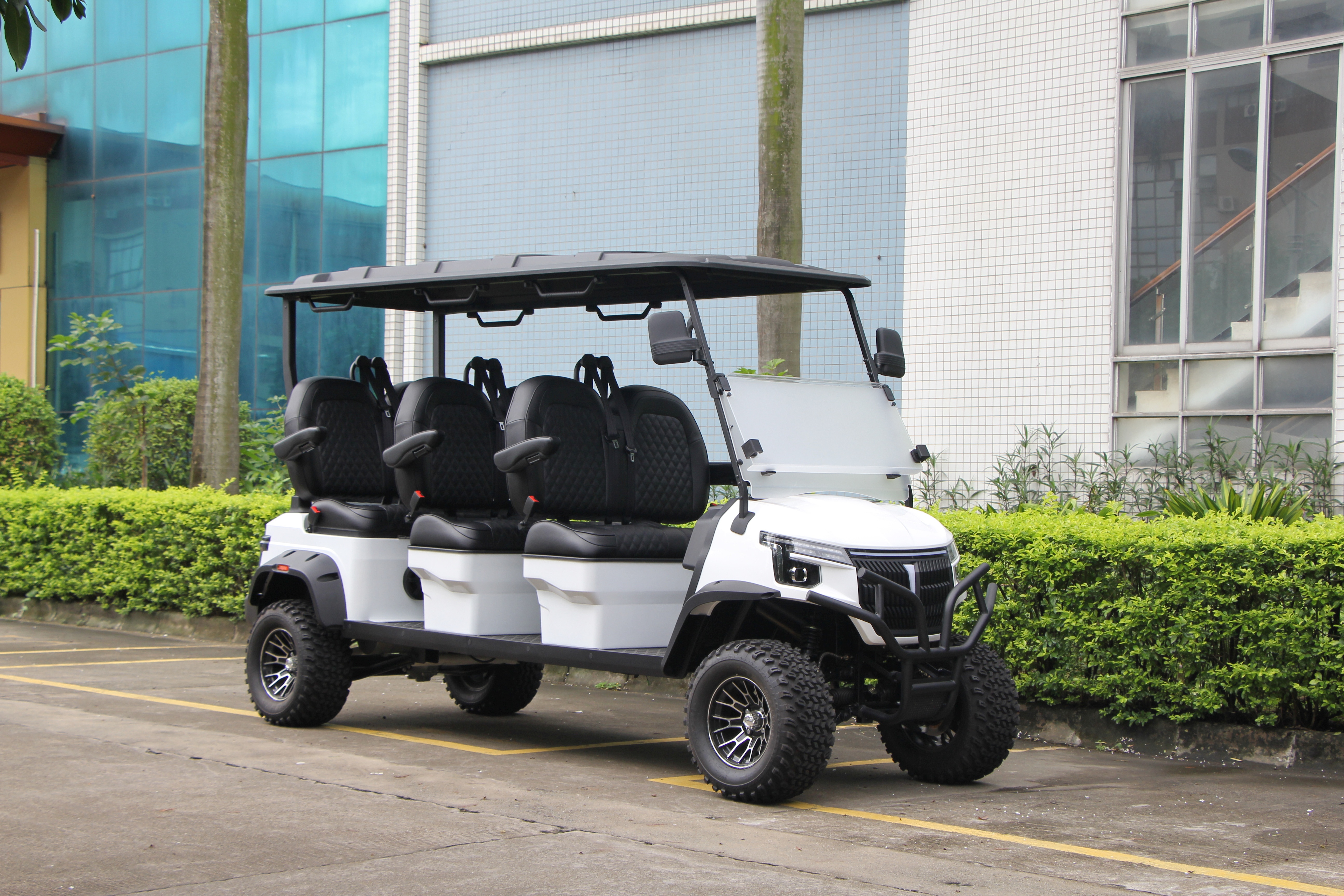
Compliance documentation verifies that mechanical and electrical sub-systems function within safe parameters. Key vehicle components evaluated during inspection include high-density diamond-pattern rubber flooring for non-slip operation, full lighting coverage, and hydraulic disc braking performance. International deployments, such as 156 units supplied for a municipal sanitation garbage transfer project in Singapore and over 3,500 shuttle units delivered to Cuba, demonstrate how structured compliance profiles enable large-scale public and commercial operation.
For electric utility vehicles and golf cart chassis models like the LQD065, compliance proof is backed by factory testing regimens. Every vehicle undergoes a 100% inspection line test and physical road test prior to delivery to ensure physical compliance with safety criteria.
Data/Solution Comparison
| Vehicle Parameters & Compliance Factors | Public Road-Legal Mini Truck | Off-Road / Closed-Campus Utility Vehicle |
|---|---|---|
| Certification Required | CE Certification, Certificate of Origin, VIN Code | Standard Factory Inspection Report |
| Brake & Safety Systems | Hydraulic Disc Brakes, Full Headlights/Turn Signals | Basic Mechanical or Hydraulic Brakes |
| Speed & Power Parameters | Regulated Low-Speed Vehicle (LSV) Thresholds | Unregulated / Internal Site Limits |
| Inspection Standard | 100% Line Testing + Road Compliance Verification | Pre-Delivery Quality Inspection |
| Primary Application Scenarios | Municipal Sanitation, City Logistics, Public Roads | Industrial Parks, Golf Courses, Private Resorts |
Frequently Asked Questions (FAQ)
What specific paperwork is required to register an electric mini truck?
Registration authorities generally require the original Manufacturer Certificate of Origin (MCO), a Certificate of Conformity (COC), official technical specification sheets, purchase invoices, and proof of passing local safety and emissions/electric vehicle inspections.
Are all electric mini trucks automatically allowed on public roads?
No. Standard off-road utility vehicles lack required highway safety components. Only units constructed to meet Low-Speed Vehicle (LSV) standards, equipped with compliant braking, seat belts, mirrors, and lighting, can be registered for public road use based on regional legislation.
How do international safety certifications like CE impact registration?
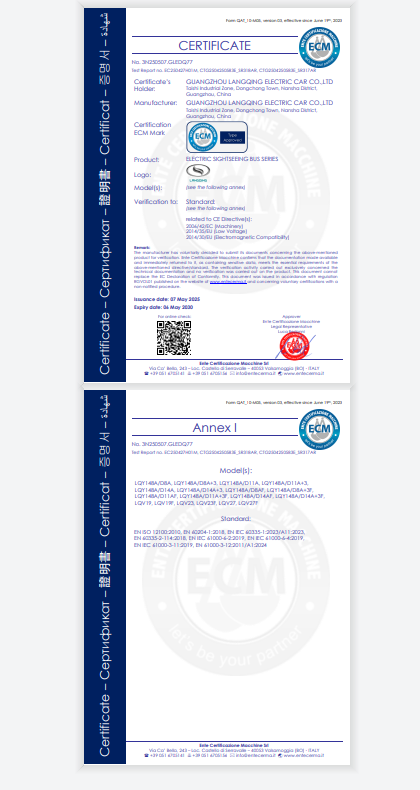
CE certification (such as numbers 3N250506.GLEDQ43, 3N250507.GLEDQ77, and 3N250507.GLEDQ78) verifies that the vehicle conforms to European Union health, safety, and environmental protection standards, serving as foundational compliance proof during registration in adopting markets.
Final Conclusion & Recommendations
Registering a mini truck for road use requires aligning vehicle specifications with regional transportation mandates and supplying certified compliance documentation. Evaluating chassis strength, braking configurations, and verified inspection records ensures smooth registration. Procurement programs benefit from selecting integrated industry manufacturers that provide standard warranties and documented quality testing. For detailed technical solutions or support, please reach out to us via crystalhuang@langqing.cn.
About Us
Guangzhou Langqing Electric Car CO., LTD. was established in 2000 in the Nansha Economic Development Zone, Guangzhou. Operating from a 35,000-square-meter facility with an employee base of 160 personnel and a monthly production capacity of 1,000 units, the company maintains a complete industrial chain across R&D, manufacturing, sales, and service. Holding ISO9001, ISO14001, ISO45001, and EU CE certifications, the enterprise exports 80% of its electric golf carts, sightseeing buses, and mini trucks across North America, South America, Europe, the Middle East, Africa, and Southeast Asia, serving municipal, commercial, and tourism clients worldwide.

Lastest
-
How are replacement spare parts provided for a 17seats bus?
2026-09-30 -
What is the typical deposit percentage for a 23seats bus order?
2026-09-30 -
What recyclable components are used in modern golf carts?
2026-09-30 -
What is the warranty policy for air conditioning on 23seats bus?
2026-09-30 -
What battery specs should I check when buying electric golf carts?
2026-09-30
SUBSCRIBE
INQUIRY