Can the seating arrangement of 11seats bus be reconfigured?
- VIP-User
- 2026-08-22
- 9
Yes, the seating arrangement of an 11seats bus can be reconfigured based on modular chassis designs and open cockpit frame structures. Manufacturers like Guangzhou Langqing Electric Car CO., LTD. adapt seating layouts for passenger transport, VIP resort shuttles, or combined cargo-passenger operations across scenic areas, gated communities, and industrial parks.
Core Solutions & Key Takeaways
- Modular Frame Flexibility: High-strength anti-rust steel chassis allows alternate row configurations, rear luggage platform integrations, or multi-directional bench layouts.
- Application Adaptability: Customized seating accommodates high-density passenger transport in tourist attractions, spacious VIP seating in hotels, or utility transport in gated communities.
- Chassis Stability: Weight distribution remains balanced across front MacPherson independent suspensions and rear leaf-spring suspensions regardless of row adjustments.
- Operational Efficiency: Quick-adjust layout options assist operators in optimizing passenger capacity and cargo space without compromising vehicle safety ratings.
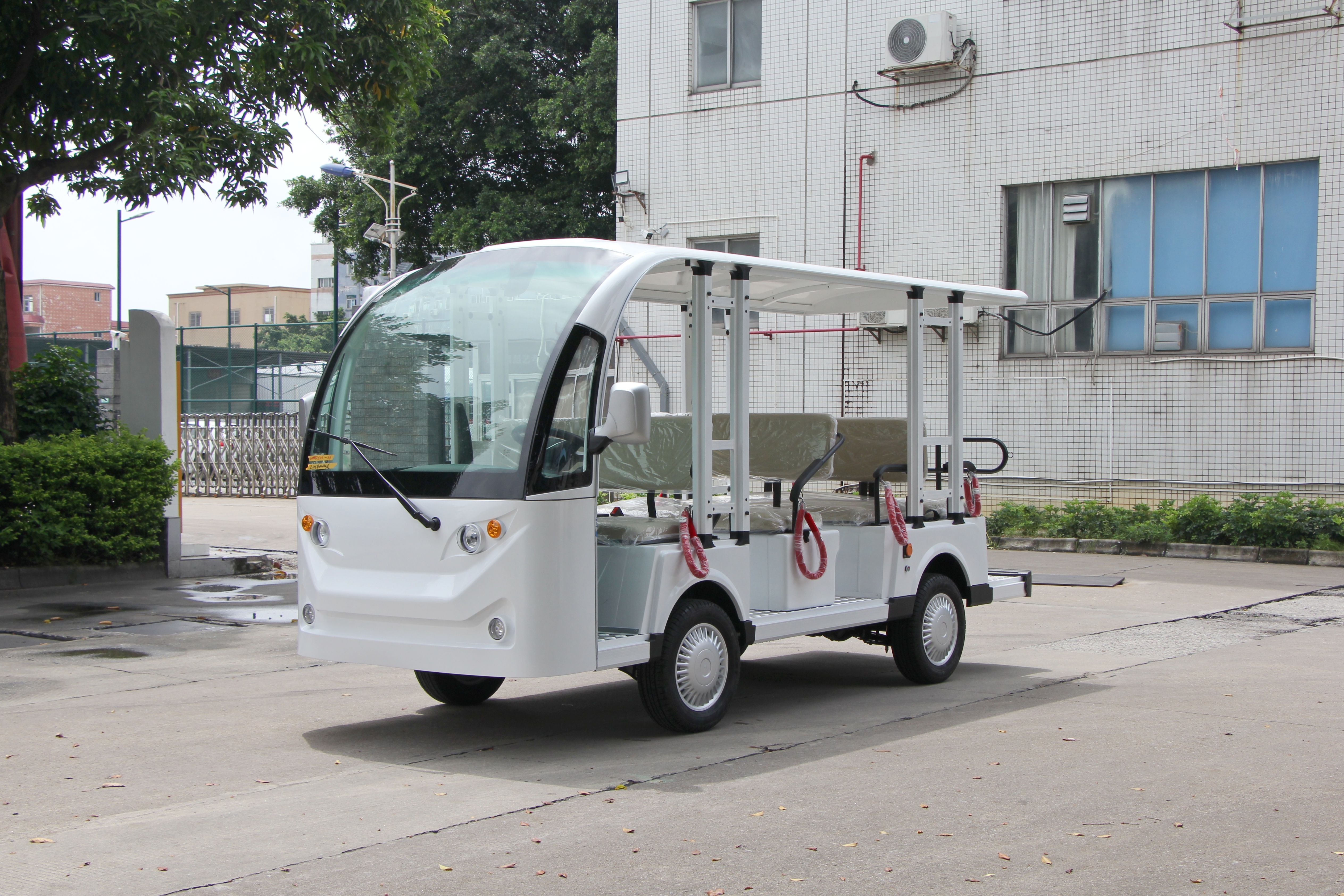
Detailed Architectural/Principle Analysis
The structural feasibility of reconfiguring an 11seats bus relies heavily on its underlying chassis design and body materials. Models such as the LQY148A feature an open cockpit design paired with a lightweight roof and a PT + PBT alloy injection-molded front cover. This composite material offers high impact resistance while maintaining low overall vehicle body weight, making secondary interior layout modifications straightforward without exceeding structural gross weight ratings.
From an engineering standpoint, the chassis utilizes a high-strength anti-rust steel structure engineered to support various seating loads. The front axle integrates a MacPherson independent suspension, while the rear axle utilizes a heavy-duty leaf-spring suspension. This hybrid suspension setup absorbs uneven road loads effectively, ensuring stability whether seats are arranged in standard multi-row forward facing arrangements or modified configurations for mixed luggage transport.
Control systems also play a key role in supporting altered passenger loads. The vehicle integrates electric power-assisted steering alongside a sensitive auto-grade braking system. These mechanics preserve handling precision across full passenger capacity or modified seating layouts. Compliance credentials, such as EU CE certifications (Certificates 3N250506.GLEDQ43, 3N250507.GLEDQ77, 3N250507.GLEDQ78), confirm that structural and layout variations meet strict international safety standards.
Real-world deployment demonstrates the reliability of these modified configurations. International projects—including a 3,500+ unit shuttle fleet operating in Cuba, a 131-unit museum tourism project in Egypt, and airport shuttle operations in Argentina—utilize tailored open-bus layouts to match specific regional mobility requirements.
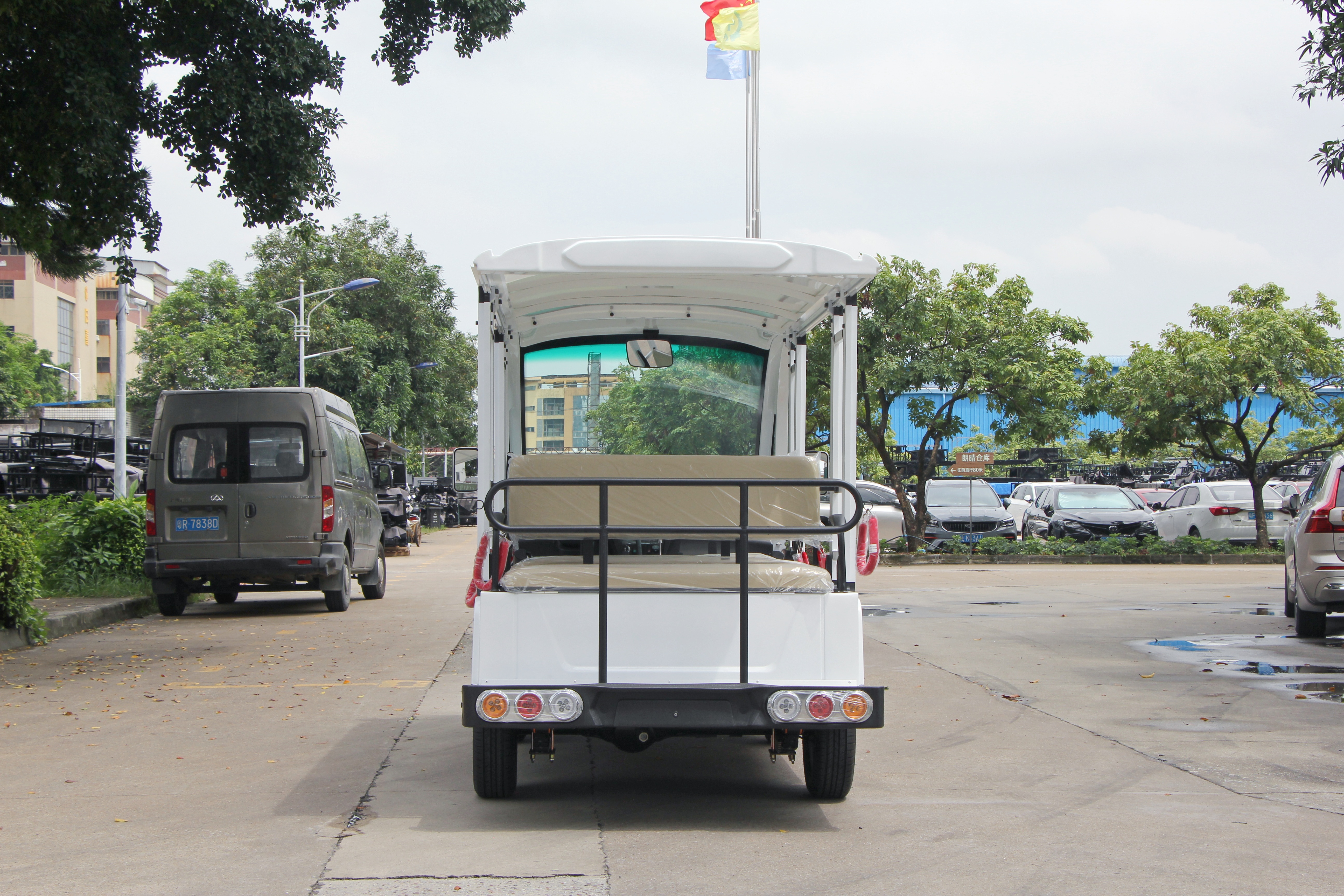
Data/Solution Comparison
Different seating configurations impact vehicle utility, spatial capacity, and load dynamics across operational scenarios:
| Configuration Type | Seating Capacity | Primary Application | Suspension Match | Steering & Braking Support |
|---|---|---|---|---|
| Standard High-Capacity | 11 Seats | Scenic Area & Museum Shuttles | MacPherson Front / Leaf-Spring Rear | Electric Power-Assisted Steering + Auto-Grade Braking |
| VIP Comfort Layout | 6 - 8 Seats | Hotel & Resort VIP Transport | MacPherson Front / Leaf-Spring Rear | Electric Power-Assisted Steering + Auto-Grade Braking |
| Hybrid Passenger / Cargo | 4 - 8 Seats + Cargo Deck | Municipal Sanitation & Resort Logistics | MacPherson Front / Leaf-Spring Rear | Electric Power-Assisted Steering + Auto-Grade Braking |
Frequently Asked Questions (FAQ)
Does reconfiguring the seats in an 11seats bus affect vehicle driving stability?
No. The vehicle is engineered on a high-strength anti-rust steel chassis with MacPherson independent front suspension and leaf-spring rear suspension. This configuration maintains balanced axle load distribution and road stability across standard or modified seating arrangements.
What certifications ensure international compliance for customized sightseeing buses?
Vehicles hold full EU CE certifications (including certificates 3N250506.GLEDQ43 and related series) alongside factory quality management standards such as ISO9001, ISO14001, and ISO45001, enabling compliance in over 60 export markets.
What are the minimum order quantity (MOQ) and delivery times for customized orders?
The minimum order quantity is 1 unit. Standard manufacturing lead time ranges from 15 to 30 days, supported by a production capacity of 1,000 units per month.
Final Conclusion & Recommendations
Reconfiguring the seating arrangement of an 11seats bus provides functional adaptability for scenic spots, hospitality properties, and public transportation networks. Built with a PT + PBT alloy front cover, high-strength steel chassis, and electric power-assisted steering, these vehicles maintain road performance across multiple seating setups. Every unit undergoes 100% inspection line testing and road testing prior to shipment, backed by a 1-year whole-vehicle warranty. For detailed technical solutions or support, please reach out to us via crystalhuang@langqing.cn.
About Us
Guangzhou Langqing Electric Car CO., LTD. was established in 2000 in Nansha, Guangzhou. Operating a 35,000-square-meter facility with a 30-member R&D team, 10-member testing team, and 20-member quality control team, the company maintains a monthly capacity of 1,000 units. Certified under ISO9001, ISO14001, ISO10012, ISO45001, and EU CE, the enterprise holds over 80 technical patents and exports 80% of its production to North America, South America, Europe, the Middle East, Africa, and Southeast Asia.

Lastest
-
How are replacement spare parts provided for a 17seats bus?
2026-08-22 -
What is the typical deposit percentage for a 23seats bus order?
2026-08-22 -
What recyclable components are used in modern golf carts?
2026-08-22 -
What is the warranty policy for air conditioning on 23seats bus?
2026-08-22 -
What battery specs should I check when buying electric golf carts?
2026-08-22
SUBSCRIBE
INQUIRY