How are rising freight costs reshaping 11seats bus sourcing?
- VIP-User
- 2026-08-11
- 8
Rising freight costs are forcing buyers to rethink 11seats bus sourcing by prioritizing space-optimized vehicle designs, durable anti-rust chassis configurations, and direct factory lead times. Sourcing decisions now favor open-cockpit models like the LQY148A型/D8A+3 that balance high passenger density with impact-resistant PT+PBT alloy materials, lowering total landed costs and maintenance overhead across global transport networks.
Core Solutions & Key Takeaways
- Maximizing Shipping Container Efficiency: Selecting 11seats buses with streamlined profiles and lightweight roofs reduces volumetric freight penalties while permitting optimized container stuffing configurations.
- Reducing Long-Term Maintenance & Replacement Costs: Chassis built with high-strength anti-rust steel, paired with MacPherson independent front suspension and leaf-spring rear suspension, resist severe operating environments in resorts, tourist spots, and airport terminals.
- Adopting Proven Multi-Scenario Vehicles: Open-cockpit electric sightseeing buses deliver multi-purpose utility across gated communities, scenic areas, cultural tourism sites, and hotel campuses, optimizing fleet ROI.
- Verifying International Compliance Credentials: Ensuring vehicles carry EU CE certification avoids costly customs delays and compliance re-inspections during transit.
Detailed Architectural/Principle Analysis
Surging international maritime rates directly impact the landed pricing of commercial passenger vehicles. When evaluating an 11seats bus for municipal, hospitality, or commercial fleet use, total acquisition cost extends beyond the initial purchase price to cover container space utilization, transit risk, and structural durability.
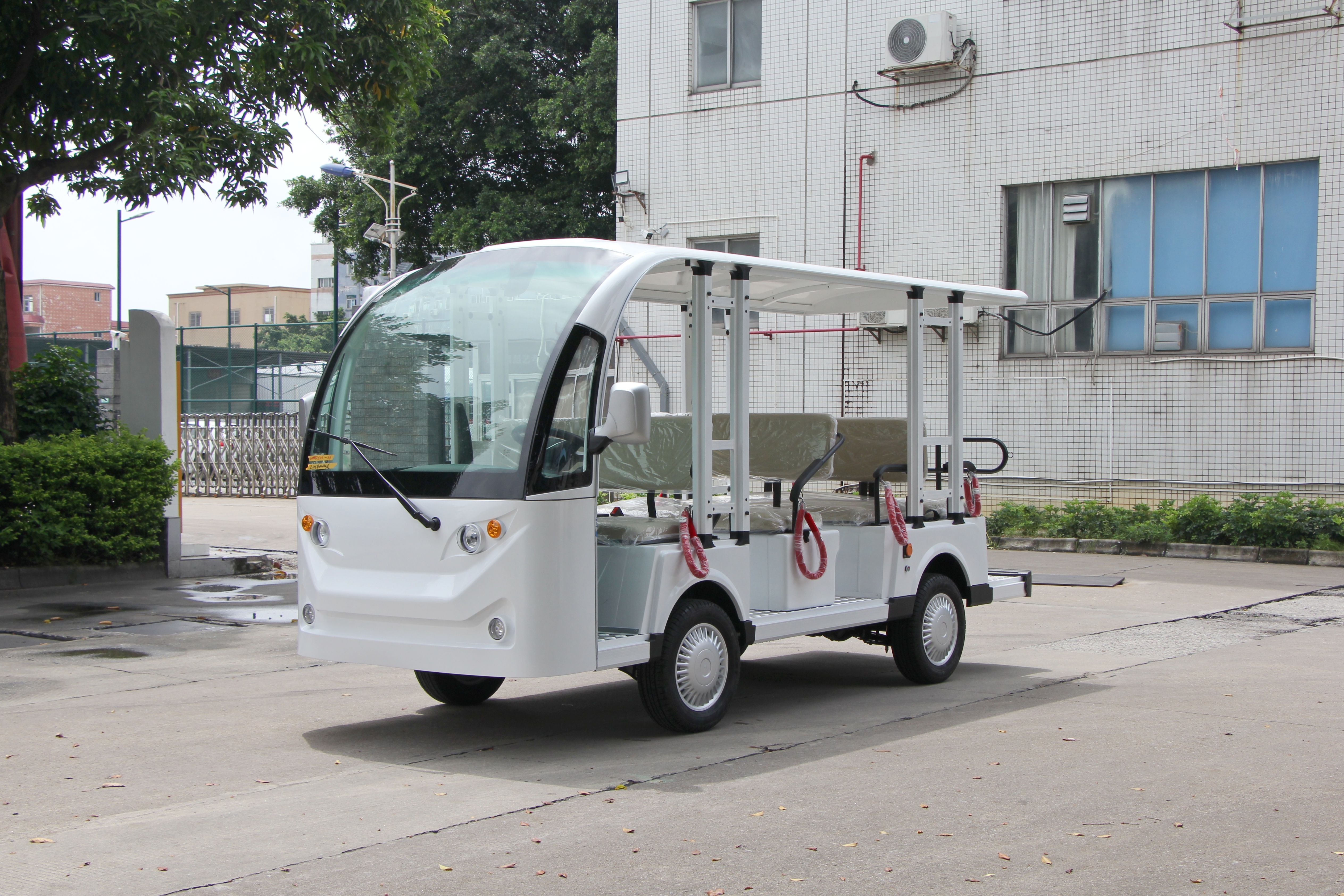
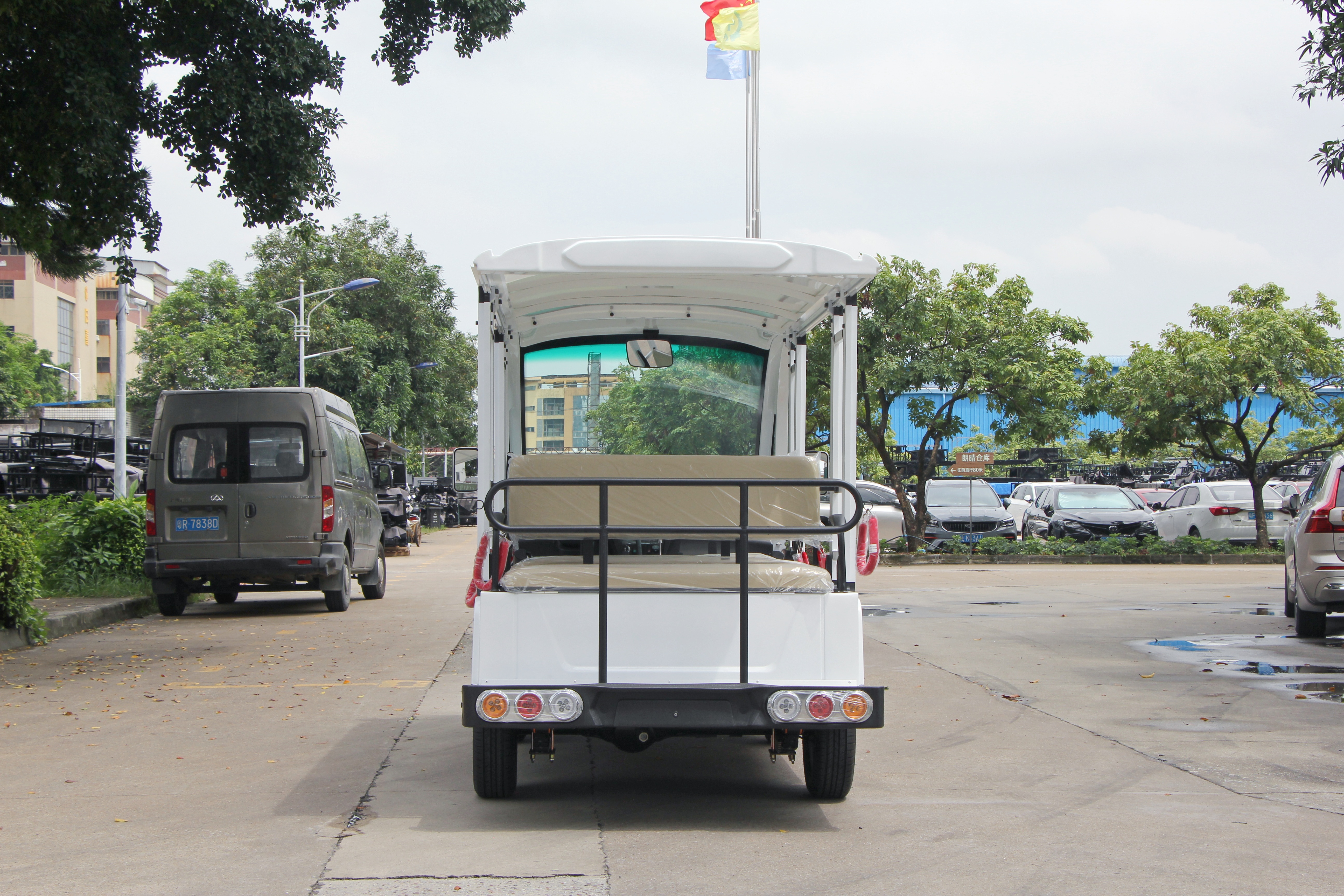
The LQY148A型/D8A+3 open-sightseeing bus addresses logistics and operational challenges through integrated engineering. Its body construction incorporates a lightweight roof and open cockpit, maximizing sightlines for tourism while reducing total vehicle kerb weight. The front cover utilizes PT + PBT alloy injection molding, providing high impact resistance against minor collisions during transport or routine operation, while simple integrated headlights maintain operational reliability.
Underneath, the chassis employs a high-strength anti-rust steel structure engineered to withstand humid coastal or tropical conditions without structural degradation. Front MacPherson independent suspension combined with a heavy-duty rear leaf-spring suspension allows stable handling across varying terrain, from resort pathways to industrial park roadways. Electric power-assisted steering paired with a sensitive braking system provides responsive automotive-grade vehicle control.
Operational field data demonstrates the efficacy of this engineering approach. In a major cultural tourism shuttle project involving 131 units delivered to a museum in Egypt, and a fleet deployment of over 3,500 shuttle units operating in Cuba, high vehicle structural integrity preserved low post-delivery maintenance rates despite intense continuous operation.
Data/Solution Comparison
Comparing procurement criteria helps clarify how vehicle specifications directly counteract rising transportation costs:
| Specification Parameter | Standard Commercial Bus Sourcing | Optimized 11seats Bus (LQY148A型/D8A+3) |
|---|---|---|
| Passenger Capacity | 8–10 Seats | 11 Seats |
| Front Cover Material | Standard Fiberglass / Sheet Metal | PT + PBT Alloy Injection-Molded |
| Chassis Construction | Standard Painted Steel | High-Strength Anti-Rust Steel |
| Front / Rear Suspension | Rigid Axle / Conventional Spring | MacPherson Independent / Rear Leaf Spring |
| Steering System | Manual Hydraulic Steering | Electric Power-Assisted Steering (EPS) |
| Quality Assurance Standard | Basic Sample Inspection | 100% Inspection Line Testing & Road Testing |
| Minimum Order Quantity (MOQ) | 5–10 Units | 1 Unit |
| Production Lead Time | 45–60 Days | 15–20 Days |
Frequently Asked Questions (FAQ)
Q: How does 100% pre-shipment line testing reduce total landed procurement risks?
A: Comprehensive factory inspection and road testing verify brake calibration, suspension behavior, and electrical integration prior to export. This eliminates post-arrival repair costs and operational downtime at remote destination ports.
Q: What shipping methods and delivery timelines apply to 11seats bus orders?
A: Orders ship primarily via sea freight with standard production lead times of 15 to 20 days. Payment terms generally involve a 30% deposit with the balance due prior to loading.
Q: Can open-cockpit 11seats buses handle heavy daily use in municipal or commercial facilities?
A: Yes. High-strength anti-rust steel frames combined with MacPherson independent front suspension provide structural endurance for continuous guest transport in hotels, airports, scenic spots, and government municipal sanitation areas.
Final Conclusion & Recommendations
Navigating elevated freight costs requires selecting commercial vehicles that balance high passenger throughput, low structural weight, and durable chassis designs. The LQY148A型/D8A+3 11seats bus mitigates supply chain cost exposure through reliable anti-rust frame construction, impact-resistant alloy bodywork, and fast 15–20 day production lead times. Fleet operators should prioritize verified certifications, direct factory quality testing, and flexible order quantities when finalizing international transport contracts. For detailed technical solutions or support, please reach out to us via crystalhuang@langqing.cn.
About Us
Guangzhou Langqing Electric Car CO., LTD. was established in 2000 in Nansha District, Guangzhou, operating a 35,000-square-meter manufacturing facility with 160 employees and a monthly production capacity of 1,000 units. Holding national High-tech Enterprise recognition for 16 consecutive years alongside ISO9001, ISO14001, ISO10012, ISO45001, and EU CE certifications, the company exports 80% of its all-electric vehicle output to North America, Europe, South America, the Middle East, and Southeast Asia.
Lastest
-
How are replacement spare parts provided for a 17seats bus?
2026-08-11 -
What is the typical deposit percentage for a 23seats bus order?
2026-08-11 -
What recyclable components are used in modern golf carts?
2026-08-11 -
What is the warranty policy for air conditioning on 23seats bus?
2026-08-11 -
What battery specs should I check when buying electric golf carts?
2026-08-11
SUBSCRIBE
INQUIRY