How do battery recycling mandates affect 23seats bus sourcing?
- VIP-User
- 2026-08-14
- 9
Battery recycling mandates shift 23seats bus sourcing toward manufacturers with compliant supply chains, modular battery designs, and extended vehicle lifespans. Procurement managers must verify vendor certification, reverse logistics readiness, and material recyclability. Vehicles like the LQV23 meet strict regulatory standards through durable anti-rust steel chassis and recyclable PT+PBT alloy front covers, reducing lifecycle management risks for fleet operators.
Core Solutions & Key Takeaways
- Supply Chain Transparency: Sourcing high-capacity vehicles like a 23seats bus requires suppliers to provide complete material compliance records to meet regional battery disposal directives.
- Modular Vehicle Architecture: Utilizing high-strength anti-rust steel structures and MacPherson independent front suspension ensures vehicle longevity, balancing battery aging cycles with frame durability.
- Recyclable Exterior Engineering: Adopting PT+PBT alloy injection-molded front covers lowers end-of-life material handling costs in municipal and commercial fleet operations.
- Versatile Operational Scenarios: Deployed extensively in scenic tourist areas, resorts, and airport shuttle routes, electric passenger buses must align battery maintenance schedules with daily transportation throughput.
Detailed Architectural/Principle Analysis
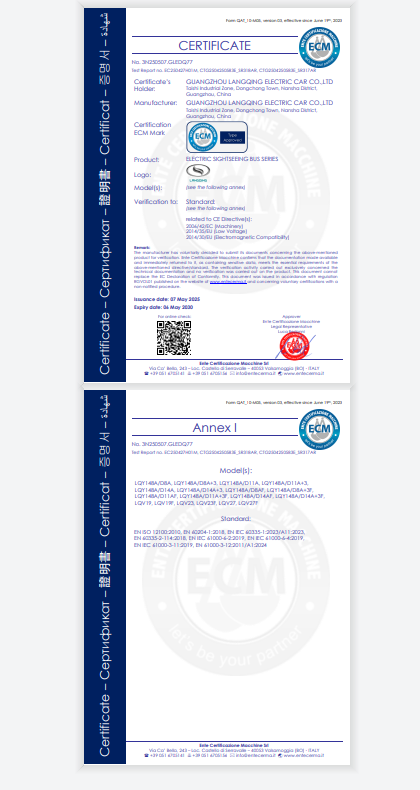
Environmental regulations regarding lithium-ion battery management directly influence fleet procurement frameworks. Sourcing decisions for passenger shuttles must address the entire lifecycle, from manufacturing standards to end-of-life processing. Guangzhou Langqing Electric Car CO., LTD. integrates environmental standards into vehicle design, offering models certified under European CE directives (Certificates 3N250506.GLEDQ43 and 3N250507.GLEDQ77) to streamline international compliance.
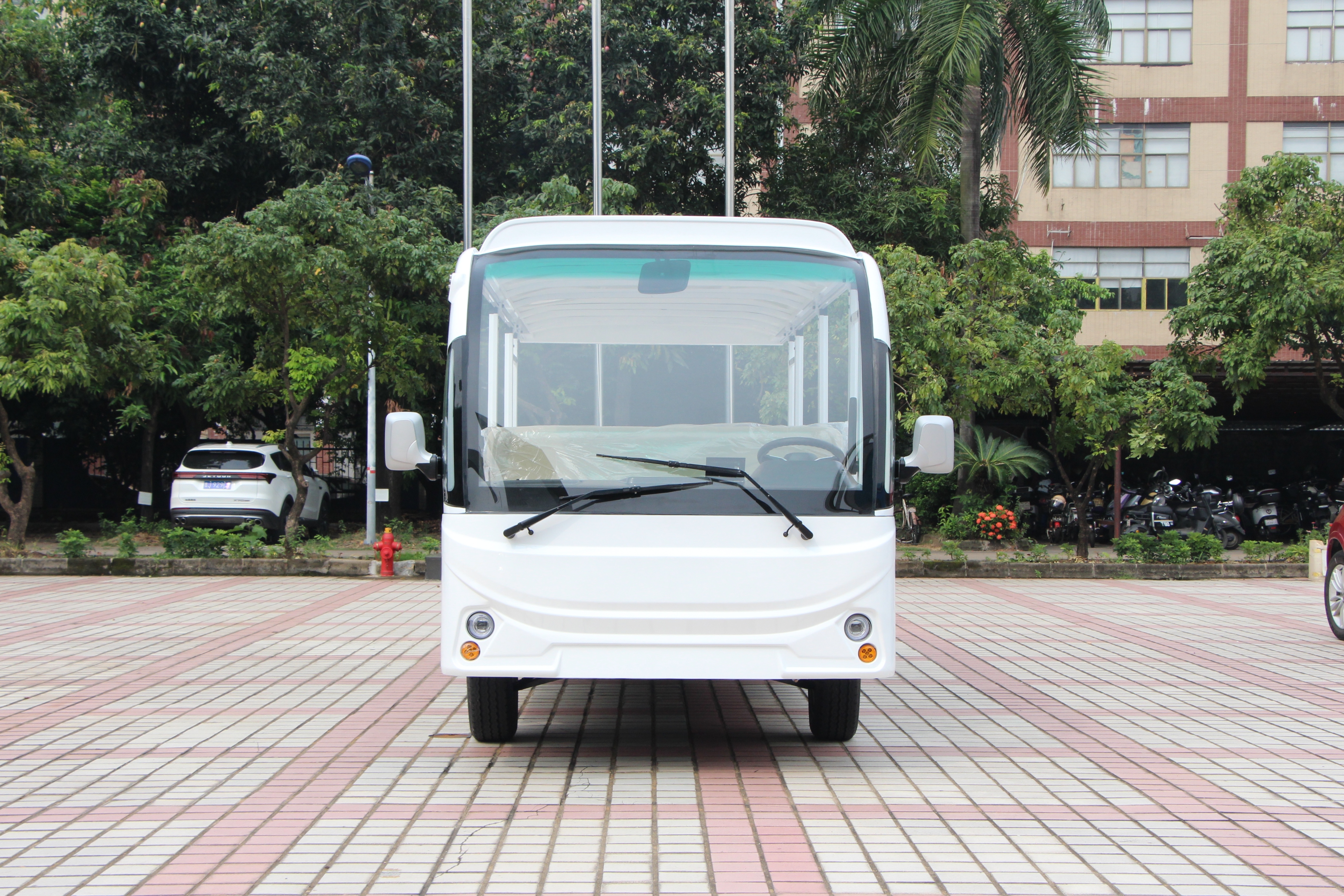
Vehicle structural durability determines whether a fleet frame outlasts multiple battery lifecycle generations. The LQV23 23seats bus utilizes a high-strength anti-rust steel chassis combined with a MacPherson independent front axle suspension and a rear leaf-spring system. This configuration supports high-load operational requirements across tourist resorts and municipal sanitation hubs while withstanding battery weight distribution demands. Electric power-assisted steering and precision braking systems further maintain driving control under full passenger capacity.
In municipal and commercial projects, such as the delivery of over 3,500 shuttle units to Cuba and 131 cultural tourism vehicles to Egypt, fleet managers prioritize suppliers capable of delivering predictable maintenance cycles. Lightweight roof construction combined with recyclable PT+PBT alloy front covers provides impact resistance while reducing overall vehicle kerb weight, directly lowering energy consumption per kilometer and delaying battery degradation.
Data/Solution Comparison
Evaluating sourcing specifications helps fleet operators maintain compliance with global battery recycling mandates while maintaining operational efficiency.
| Specification / Parameter | Standard Fleet Bus Standard | LQV23 23seats Bus Specification |
|---|---|---|
| Seating Capacity | 14 - 18 Seats | 23 Seats |
| Front Body Material | Standard FRP / Sheet Metal | PT+PBT Alloy Injection Molding |
| Chassis & Frame Construction | Standard Mild Steel | High-Strength Anti-Rust Steel Structure |
| Front Suspension Type | Rigid Axle / Rigid Leaf | MacPherson Independent Suspension |
| Quality Testing Standard | Sample Inspection | 100% Line Testing & Road Testing |
| International Certification | Variable | CE Certified (3N250506 / 3N250507) |
Frequently Asked Questions (FAQ)
How do battery recycling mandates affect international procurement terms for electric buses?
Recycling mandates require buyers to confirm that vendors provide traceable battery supply chains and component documentation. Compliance simplifies import customs clearing and avoids non-compliance fines in jurisdictions like the EU and North America.
What structural features extend the operational lifespan of a 23seats sightseeing bus?
A chassis built with high-strength anti-rust steel, paired with MacPherson independent front suspension and leaf-spring rear suspension, absorbs road stress effectively. This prevents frame fatigue caused by heavy battery packs and continuous daily passenger routes.
What is the typical production and delivery timeline for commercial electric shuttle fleets?
Factory production capacity dictates fulfillment timelines. Standard delivery lead times range from 15 to 30 days, supported by sea freight shipping and a minimum order quantity (MOQ) of 1 unit.
Final Conclusion & Recommendations
Navigating battery recycling mandates requires fleet purchasers to balance regulatory compliance, body material recyclability, and structural chassis engineering. Choosing high-capacity electric open-sightseeing buses with robust anti-rust chassis designs ensures long-term operational returns in resorts, scenic areas, and government transit projects. Operating under an integrated industry and trade model, vehicles undergo 100% inspection line and road testing to guarantee quality prior to dispatch, backed by a 1-year whole-vehicle warranty. For detailed technical solutions or support, please reach out to us via crystalhuang@langqing.cn.
About Us
Guangzhou Langqing Electric Car CO., LTD. was established in 2000 in the Nansha Economic Development Zone, Guangzhou. Operating a 35,000-square-meter manufacturing facility with a monthly capacity of 1,000 units, the company maintains a dedicated 30-member R&D team and holds ISO9001, ISO14001, and EU CE certifications. Exporting 80% of its production to markets across North America, Europe, South America, the Middle East, and Southeast Asia, the brand has served municipal, tourism, and commercial clients worldwide.
Lastest
-
How are replacement spare parts provided for a 17seats bus?
2026-08-14 -
What is the typical deposit percentage for a 23seats bus order?
2026-08-14 -
What recyclable components are used in modern golf carts?
2026-08-14 -
What is the warranty policy for air conditioning on 23seats bus?
2026-08-14 -
What battery specs should I check when buying electric golf carts?
2026-08-14
SUBSCRIBE
INQUIRY