How do shipping costs affect the final price of a mini truck?
- VIP-User
- 2026-09-01
- 8
Shipping costs directly increase the landed price of a mini truck through ocean freight rates, container space utilization, port handling fees, customs tariffs, and local transit. Because electric mini trucks like model LQSF023B are physical assets shipped via sea freight, freight charges can represent 10% to 30% of the total procurement expenditure depending on regional distance and order volume.
Core Solutions & Key Takeaways
- Freight Volume Efficiency: Vehicle dimensions and low ground clearance affect container packing density, allowing suppliers to optimize space to reduce per-unit shipping fees.
- Destination Tariffs and Compliance: Mandatory international standards, such as CE certification, streamline import clearance and prevent unexpected detention or customs surcharge costs.
- Application Flexibility: Versatile electric mini trucks operate in resorts, hotels, industrial parks, and municipal projects like Singapore's garbage transfer operations, offsetting transport fees through long-term operational efficiency.
- Delivery Model & Terms: Ordering under standardized terms like 30% deposit and balance before loading via sea freight helps manage cash flow while securing baseline shipping rates.
Detailed Architectural/Principle Analysis
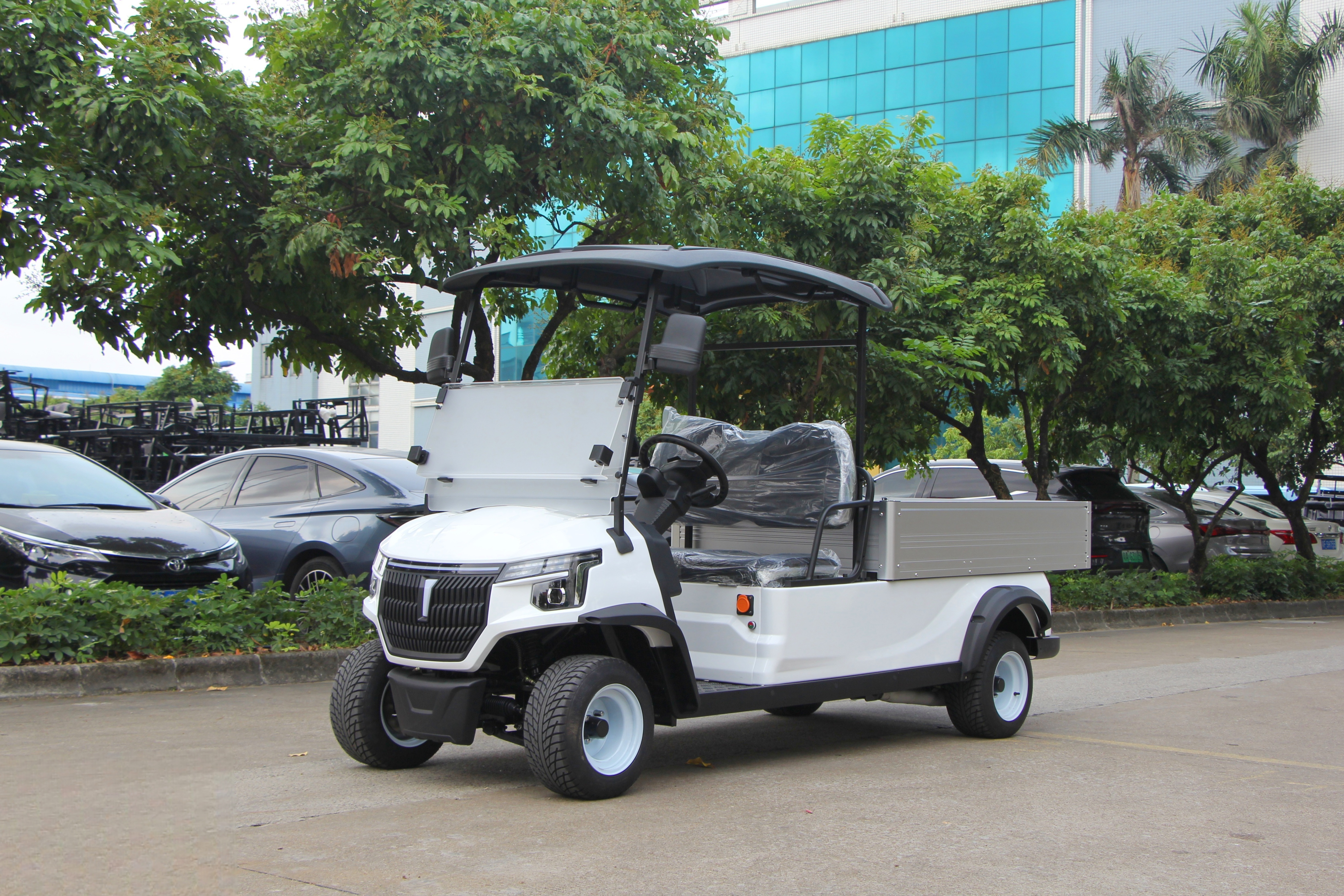
International logistics for specialized electric vehicles rely on sea freight calculations driven by volumetric weight and container footprint. The LQSF023B mini truck incorporates an open-type cockpit, low ground clearance, and a streamlined structural chassis. These design attributes provide a lower center of gravity that enhances load stability during transit on flat roads while maintaining compact physical boundaries for container loading.
Logistics expenses scale based on order parameters and regional shipping routes. Manufactured by Guangzhou Langqing Electric Car CO., LTD., which operates a 35,000-square-meter facility with an 80% export ratio, electric mini trucks are regularly delivered to markets across North America, South America, Europe, the Middle East, and Southeast Asia. Bulk distribution—such as municipal sanitation deployments in Singapore (156 units) or tourist shuttles in Egypt (131 units)—lowers the per-unit shipping surcharge significantly compared to single-unit orders.
Every vehicle undergoes 100% inspection line testing and road testing before loading to eliminate defect risks, avoiding costly return shipments or overseas warranty delays. Combined with a minimum order quantity (MOQ) of 1 unit and a 15-to-20-day production delivery lead time, structural logistics planning directly influences the final invoice total.
Data/Solution Comparison
| Shipping Parameter | Single Unit (MOQ 1) | Bulk Container Batch | Municipal / Fleet Order |
|---|---|---|---|
| Container Utilization Rate | Less than Container Load (LCL) / Higher per-unit handling | Full Container Load (FCL) / High space efficiency | Multi-container scheduling / Maximum freight efficiency |
| Sea Freight Impact on Landed Cost (%) | 20% - 30% | 10% - 15% | 5% - 10% |
| Quality Inspection & Pre-Shipment Testing | 100% line testing and road testing | 100% line testing and road testing | 100% line testing with custom utility setup |
| Primary Application Scenario | Resort grounds & maintenance trial | Regional dealer inventory distribution | Public sanitation & government projects |
Frequently Asked Questions (FAQ)
How does vehicle design influence international shipping fees for mini trucks?
Vehicle footprint, seat layout, and ground clearance dictate container packing efficiency. Compact electric mini trucks like the LQSF023B maximize stackable volume and container width utilization, lowering per-unit ocean freight charges.
What export compliance standards help prevent shipping delay penalties?
Holding valid certifications such as CE ensures smooth customs clearance across European and international ports, preventing administrative holds, inspection charges, and port storage penalties.
What are the standard payment and delivery lead times for mini truck shipments?
Standard manufacturing and delivery timelines range from 15 to 30 days under terms requiring a 30% deposit and balance before loading, utilizing sea freight across primary export markets.
Final Conclusion & Recommendations
Evaluating total procurement expenses for an electric mini truck requires accounting for both base factory pricing and sea freight dynamics. Ordering in container volumes, verifying factory-level 100% inspection routines, and selecting established models like the LQSF023B backed by a 1-year vehicle warranty optimize overall landed expenditure. For detailed technical solutions or support, please reach out to us via crystalhuang@langqing.cn.
About Us
Guangzhou Langqing Electric Car CO., LTD. was established in 2000 in the Nansha Economic Development Zone, Guangzhou. Operating a 35,000-square-meter manufacturing facility with an 80% export ratio, the enterprise maintains a monthly capacity of 1,000 units and holds ISO9001, ISO14001, ISO10012, ISO45001, and EU CE certifications. Accumulating over 80 technical patents across 25 years of development, the company supplies electric golf carts, sightseeing buses, and mini trucks to clients worldwide.

Lastest
-
How are replacement spare parts provided for a 17seats bus?
2026-09-01 -
What is the typical deposit percentage for a 23seats bus order?
2026-09-01 -
What recyclable components are used in modern golf carts?
2026-09-01 -
What is the warranty policy for air conditioning on 23seats bus?
2026-09-01 -
What battery specs should I check when buying electric golf carts?
2026-09-01
SUBSCRIBE
INQUIRY