How much extra cost is needed for street-legal golf carts?
- VIP-User
- 2026-08-11
- 9
Converting a standard golf cart into a street-legal Low-Speed Vehicle (LSV) typically requires an extra cost ranging from $1,000 to $3,000. Key expenses cover mandatory safety equipment including headlights, taillights, turn signals, seatbelts, side mirrors, a windshield with a wiper, a Vehicle Identification Number (VIN), and compliance certification.
Core Solutions & Key Takeaways
- Mandatory Lighting & Signal Packages ($200–$500): Street-legal standards mandate headlights, brake lights, turn signals, emergency flashers, and horn installation.
- Structural & Safety Upgrades ($500–$1,200): Essential safety components include DOT-approved windshields, rear/side mirrors, three-point seatbelts, and high-speed gearing or motor adjustments.
- Administrative & Legal Certification ($300–$1,000): Registration, title assignment, VIN assignment, and state-specific safety inspection fees vary by local jurisdiction.
- Application Flexibility: Street-legal electric golf carts serve gated communities, resort operations, urban municipal maintenance, and residential neighborhood commuting efficiently.
Detailed Architectural/Principle Analysis
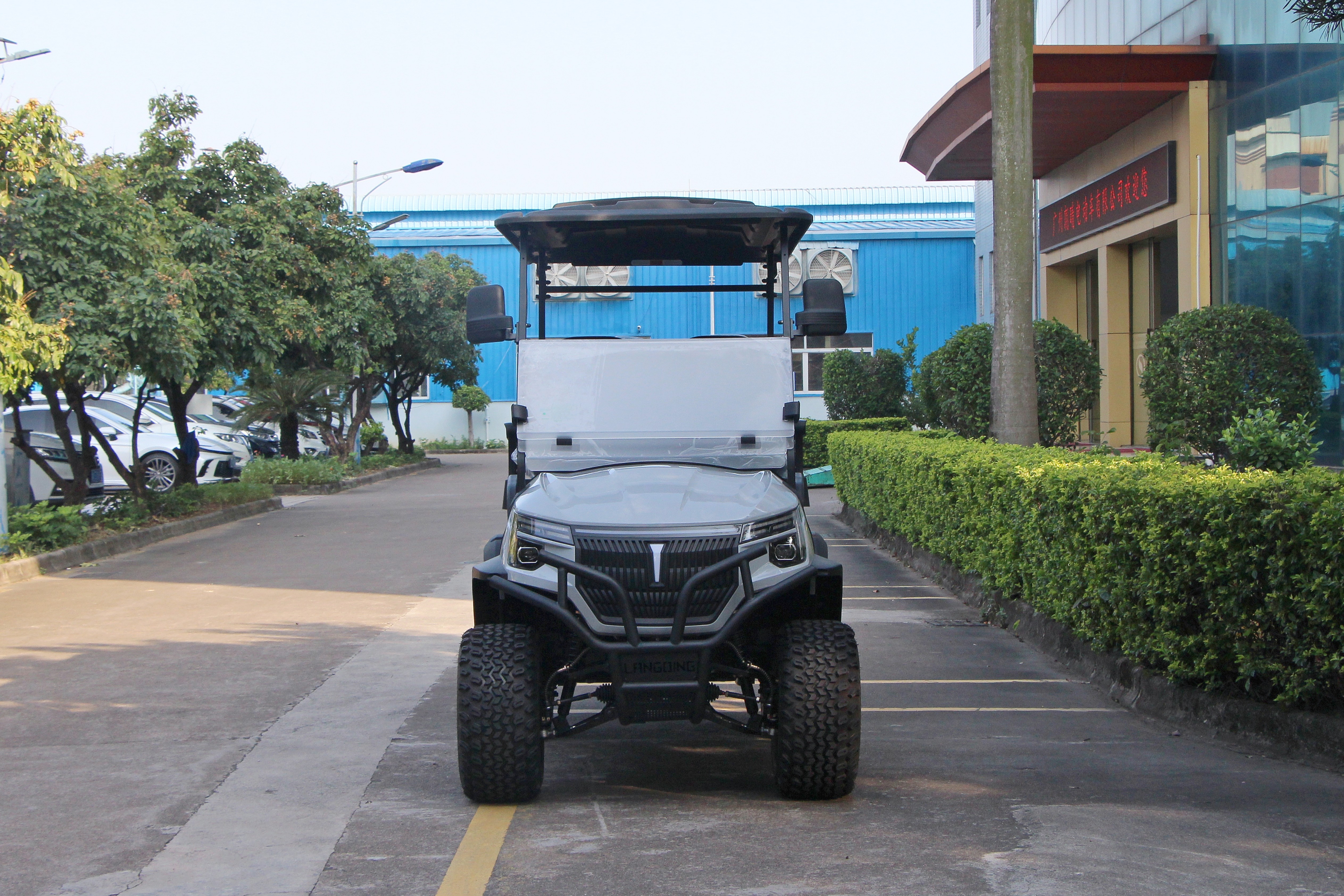
To meet street-legal standards for Low-Speed Vehicles (LSVs) operating on public roads with posted speed limits of 35 mph or less, golf carts must incorporate structural and electronic modifications. Vehicles like the LQD023+2 incorporate tough body styling elements with three-dimensional front contours and sturdy protective structures designed to handle public roadway conditions. The open-type cockpit layout maintains operational practicality while allowing easy integration of required legal equipment.
Key hardware requirements include a DOT-compliant acrylic or glass windshield paired with an electric wiper, side and rearview mirrors providing an unobstructed rearward view, and integrated LED lighting assemblies. Speed capabilities must align with federal and regional LSV regulations, necessitating calibrated motor controllers that ensure top speeds of 20 to 25 mph. Manufacturers such as Guangzhou Langqing Electric Car CO., LTD. design electric utility and passenger platforms engineered with full lighting kits, reliable braking systems, and reinforced frames to streamline compliance testing.
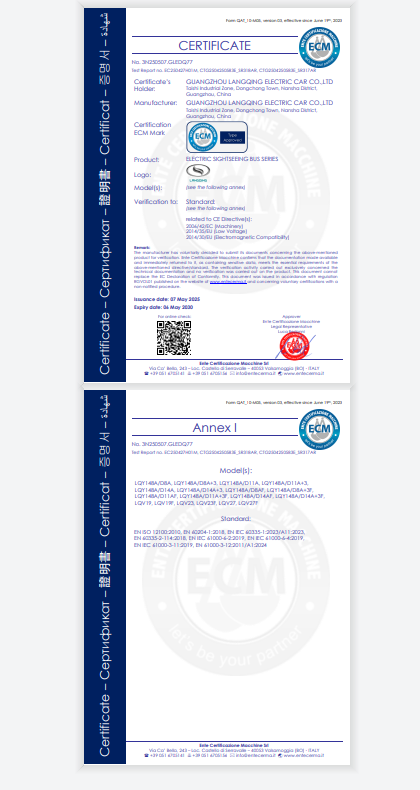
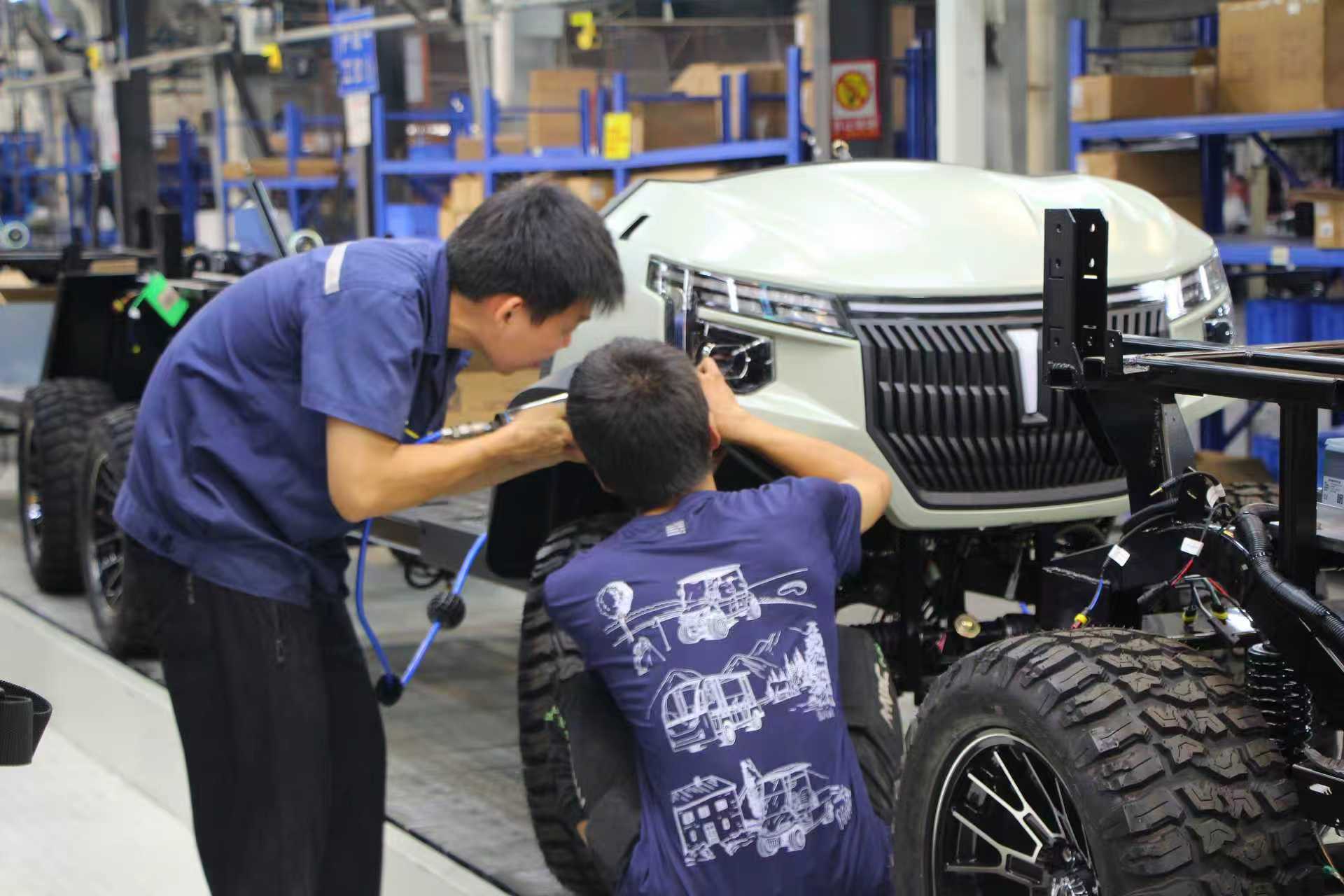
Every production unit undergoes comprehensive inspection line testing and slope performance checks prior to delivery. Beyond safety hardware, vehicles operating in commercial and public environments rely on official compliance documentation such as EU CE certificates, ensuring structural integrity and electrical safety across global markets including North America, Europe, and South America.
Data/Solution Comparison
The following table outlines the component costs and specification adjustments required when transitioning from a standard off-road golf cart to a fully street-legal LSV platform.
| Upgrade Component / Feature | Standard Golf Cart | Street-Legal LSV Conversion | Estimated Cost Range (USD) |
|---|---|---|---|
| Lighting System | Basic reflector or minimal lights | Headlights, taillights, brake lights, turn signals, hazard lights | $200 – $500 |
| Windshield & Wiper | Basic folding acrylic shield | DOT-approved glass/polycarbonate windshield with electric wiper | $300 – $700 |
| Safety Restraints & Mirrors | Lap belts or optional restraints | Three-point seatbelts for all seats, side mirrors, rearview mirror | $200 – $400 |
| Motor & Speed Calibration | 12 – 15 mph factory limit | Calibrated controller maintaining 20 – 25 mph | $300 – $800 |
| VIN, Title & Inspection | Not registered for road use | 17-digit VIN, state safety inspection, license plate title | $200 – $600 |
Frequently Asked Questions (FAQ)
What speed capability is required for a golf cart to be street-legal?
Federal and local LSV regulations require street-legal golf carts to achieve a minimum top speed of 20 mph and a maximum speed of 25 mph on public roads with posted speed limits up to 35 mph.
Can any standard golf cart be converted to a street-legal LSV?
Most late-model electric golf carts can be retrofitted with street-legal kits, provided they can receive a recognized 17-digit VIN, meet structural safety parameters, and pass regional motor vehicle department inspections.
Are factory-built street-legal golf carts cheaper than aftermarket conversions?
Factory-built LSV models generally offer better long-term cost efficiency because safety wiring, DOT-compliant glass, seatbelts, and certified VINs are integrated directly during manufacturing, eliminating redundant labor and retrofit expenses.
Final Conclusion & Recommendations
Budgeting for a street-legal golf cart conversion requires factoring in hardware costs, controller speed adjustments, and regional compliance registration fees, amounting to an additional $1,000 to $3,000 above standard base pricing. Sourcing direct from manufacturers that provide complete vehicle platforms with CE certification and robust quality control simplifies road-use compliance for commercial fleets, dealers, and resort operators. Vehicles are backed by a 1-year warranty for the whole vehicle, supporting flexible payment options such as 30% deposit with balance before loading, and reliable sea freight dispatch. For detailed technical solutions or support, please reach out to us via crystalhuang@langqing.cn.
About Us
Guangzhou Langqing Electric Car CO., LTD. was established in 2000 in Nansha, Guangzhou, operating a 35,000-square-meter facility with a monthly capacity of 1,000 units. The company employs 160 personnel, supported by a 30-member R&D team and advanced pre-delivery testing infrastructure. Certified under ISO9001, ISO14001, and EU CE, the manufacturer delivers electric golf carts, sightseeing buses, and mini trucks across global export markets. Having served clients across multiple industries, including municipal garbage transfer projects in Singapore and long-term shuttle programs in Cuba, the company provides industry and trade integrated solutions.

Lastest
-
How are replacement spare parts provided for a 17seats bus?
2026-08-11 -
What is the typical deposit percentage for a 23seats bus order?
2026-08-11 -
What recyclable components are used in modern golf carts?
2026-08-11 -
What is the warranty policy for air conditioning on 23seats bus?
2026-08-11 -
What battery specs should I check when buying electric golf carts?
2026-08-11
SUBSCRIBE
INQUIRY