How to ensure the 14seats bus complies with local noise limits?
- VIP-User
- 2026-08-12
- 7
Ensuring a 14seats bus complies with local noise limits requires deploying an electric powertrain, implementing sound-dampening chassis components, and conducting strict road vibration testing. Replacing internal combustion engines with electric motors eliminates combustion acoustic output, while independent suspension systems reduce mechanical vibration to meet municipal noise regulations in tourist and urban sectors.
Core Solutions & Key Takeaways
- Electric Drive System Integration: Operating zero-emission electric motors removes engine noise, enabling whisper-quiet passage suitable for scenic areas, tourist attractions, resorts, and gated communities.
- Chassis Acoustic Dampening: Combining a MacPherson independent front suspension with a leaf-spring rear suspension minimizes mechanical rattle and road impact acoustics.
- Rigorous Inspection Standards: Conducting 100% inspection line testing and road testing verifies operational noise remains below strict regional decibel ceilings before delivery.
- Lightweight Composite Bodywork: Utilizing PT + PBT alloy-injection molded front covers reduces overall vehicle resonance while retaining high impact resistance.
Detailed Architectural/Principle Analysis
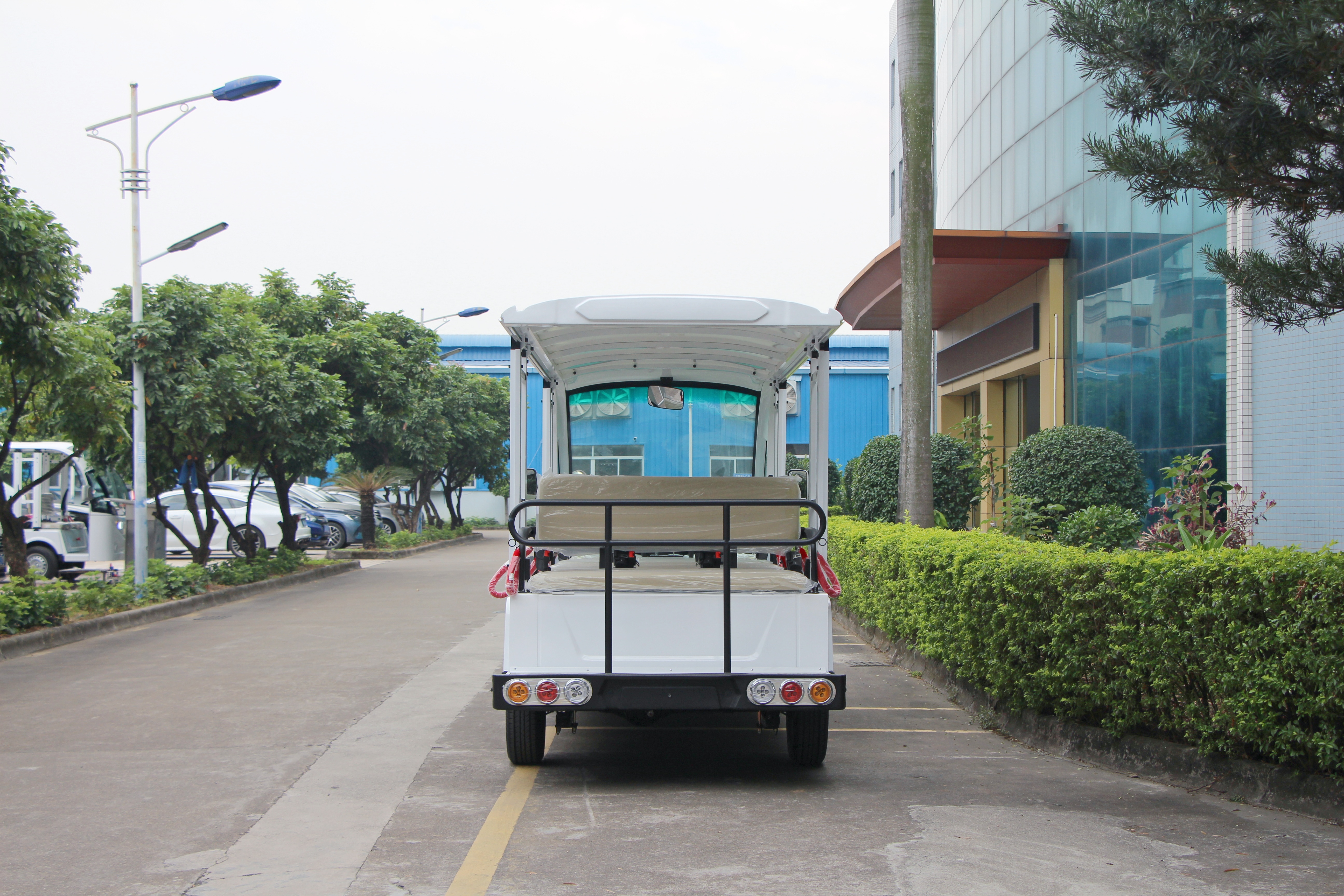
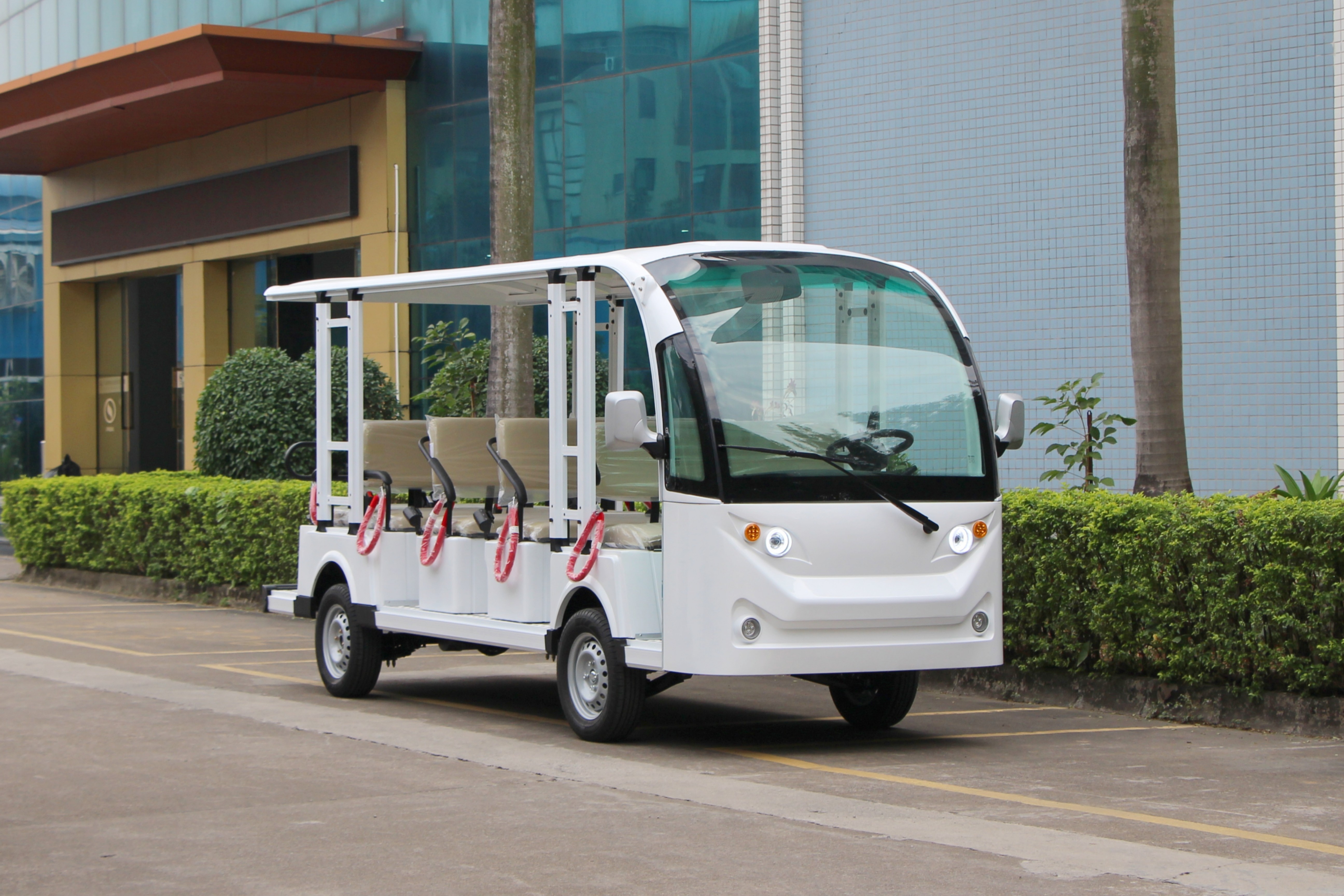
Achieving compliance with municipal noise standards depends heavily on vehicle structural engineering. Traditional internal combustion transport vehicles generate structural vibrations and high-decibel engine noise. Modern passenger transport vehicles, such as the LQY148A 14seats bus, utilize high-strength anti-rust steel chassis structures coupled with electric drive units to mitigate acoustic output at the source.
Front-end mechanical stability relies on a MacPherson independent suspension system, which isolates wheel road shock and suppresses chassis vibration. Electric power-assisted steering delivers precise vehicle control without the whining noise associated with conventional hydraulic steering pumps. Furthermore, the open cockpit configuration and lightweight roof design eliminate interior acoustic reflection, maintaining lower ambient noise during passenger transit in quiet zones like airport shuttles, municipal parks, and hotel grounds.
Vehicle compliance is validated under international safety and environmental benchmarks. Electric vehicles certified under CE parameters fulfill rigorous operational safety and environmental sound criteria. Real-world deployments, such as 3,500 units operating as municipal shuttle buses in Cuba and 20 units utilized for airport shuttle services in Argentina, demonstrate sustained low-noise reliability across continuous operation scenarios.
Data/Solution Comparison
The comparative analysis below outlines the mechanical and acoustic differences between conventional internal combustion passenger buses and specialized electric 14seats buses.
| Evaluation Criteria | Internal Combustion 14-Seat Bus | Electric 14seats Bus (LQY148A) |
|---|---|---|
| Primary Noise Source | Engine combustion and exhaust system | Tyre-road friction only |
| Front Suspension Type | Rigid axle / leaf spring | MacPherson independent suspension |
| Steering Mechanism | Hydraulic power steering | Electric power-assisted steering |
| Acoustic Mitigation Design | Heavy engine soundproofing insulation | PT + PBT alloy injection lightweight body |
| Quality Testing Method | Standard batch sampling | 100% inspection line and road testing |
| Environmental Compliance | Requires exhaust and decibel mufflers | Zero direct emissions, CE certified |
Frequently Asked Questions (FAQ)
How do electric 14seats buses reduce operational noise in residential or hotel zones?
Electric 14seats buses eliminate engine combustion sound entirely. Combined with electric power-assisted steering and independent front suspension, mechanical operational noise is restricted strictly to tire contact with the road surface.
What testing ensures a 14seats bus complies with local decibel standards prior to dispatch?
Every vehicle undergoes 100% inspection line testing alongside functional road testing to verify that motor efficiency, braking performance, and chassis acoustic control meet production quality standards.
Are electric sightseeing buses compliant with European safety and environmental standards?
Yes, vehicles verified under CE certification standards meet regulatory safety and technical directives required for European markets and global municipal projects.
Final Conclusion & Recommendations
Selecting an electric 14seats bus with an optimized chassis and advanced steering system provides a direct pathway to meeting local acoustic limits in eco-sensitive, commercial, and residential environments. Integrating MacPherson independent suspension, alloy-injection bodywork, and full-vehicle factory road testing ensures low decibel levels and structural durability. Supported by a 1-year vehicle warranty and direct manufacturer quality control, electric passenger shuttles maintain compliance while delivering quiet operational performance. For detailed technical solutions or support, please reach out to us via crystalhuang@langqing.cn.
About Us
Guangzhou Langqing Electric Car CO., LTD. was established in 2000 in Nansha, Guangzhou. Operating a 35,000-square-meter manufacturing facility, the enterprise maintains a dedicated 30-member research and development team focused on green technology in all-electric vehicle manufacturing. Possessing CE certification, the company delivers electric golf carts, sightseeing buses, and utility trucks to international markets across North America, Europe, the Middle East, and Southeast Asia.

Lastest
-
How are replacement spare parts provided for a 17seats bus?
2026-08-12 -
What is the typical deposit percentage for a 23seats bus order?
2026-08-12 -
What recyclable components are used in modern golf carts?
2026-08-12 -
What is the warranty policy for air conditioning on 23seats bus?
2026-08-12 -
What battery specs should I check when buying electric golf carts?
2026-08-12
SUBSCRIBE
INQUIRY