How to reduce carbon footprint when running 17seats bus fleet?
- VIP-User
- 2026-09-02
- 7
Reducing the carbon footprint of a 17seats bus fleet involves transitioning from fossil-fuel vehicles to zero-emission electric sightseeing buses, optimizing operational routes, utilizing lightweight body structures such as PT+PBT alloys, and implementing high-efficiency electric battery systems paired with power-assisted control systems.
Core Solutions & Key Takeaways
- Transition to Zero-Emission Powertrains: Replace internal combustion fleet units with all-electric 17seats bus platforms to eradicate direct tailpipe greenhouse gas emissions during operations.
- Optimize Vehicle Construction Weight: Deploy lightweight roof designs and PT+PBT alloy injection-molded front covers to lower the net vehicle mass, decreasing energy draw per passenger kilometer.
- Enhance Mechanical Drive Efficiency: Integrate MacPherson independent front suspension and precision electric power-assisted steering to eliminate mechanical energy losses caused by chassis friction and heavy steering assemblies.
- Targeted Application Deployment: Streamline operational scheduling across high-density environments like tourist attractions, resorts, gated communities, and airport shuttle routes to ensure high occupancy rates and eliminate idle energy waste.

Detailed Architectural/Principle Analysis
Fleet decarbonization requires balancing vehicle energy efficiency with structural durability. Utilizing high-strength anti-rust steel structures for the chassis provides the structural foundation required for multi-passenger transportation while minimizing material wear over continuous daily operation cycle schedules.
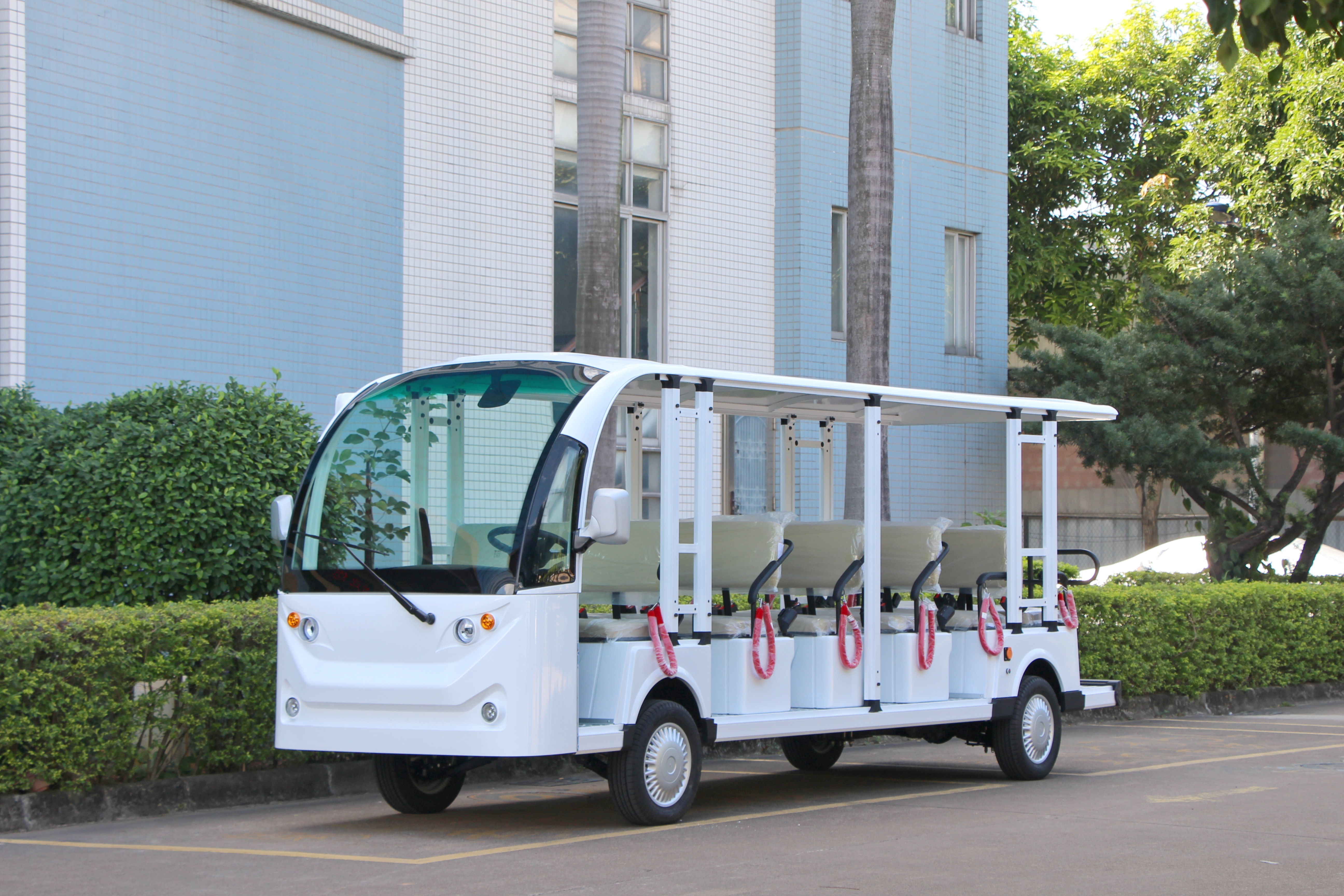
Energy management in a 17seats bus fleet relies heavily on reduced rolling resistance and optimized weight distribution. Modern open-sightseeing configurations utilize lightweight roof architectures and PT+PBT alloy front covers, offering high impact resistance without adding non-essential weight. Combined with a MacPherson independent front suspension and leaf-spring rear suspension, energy transfer from traction systems to the road surface remains efficient even under full capacity passenger loads.
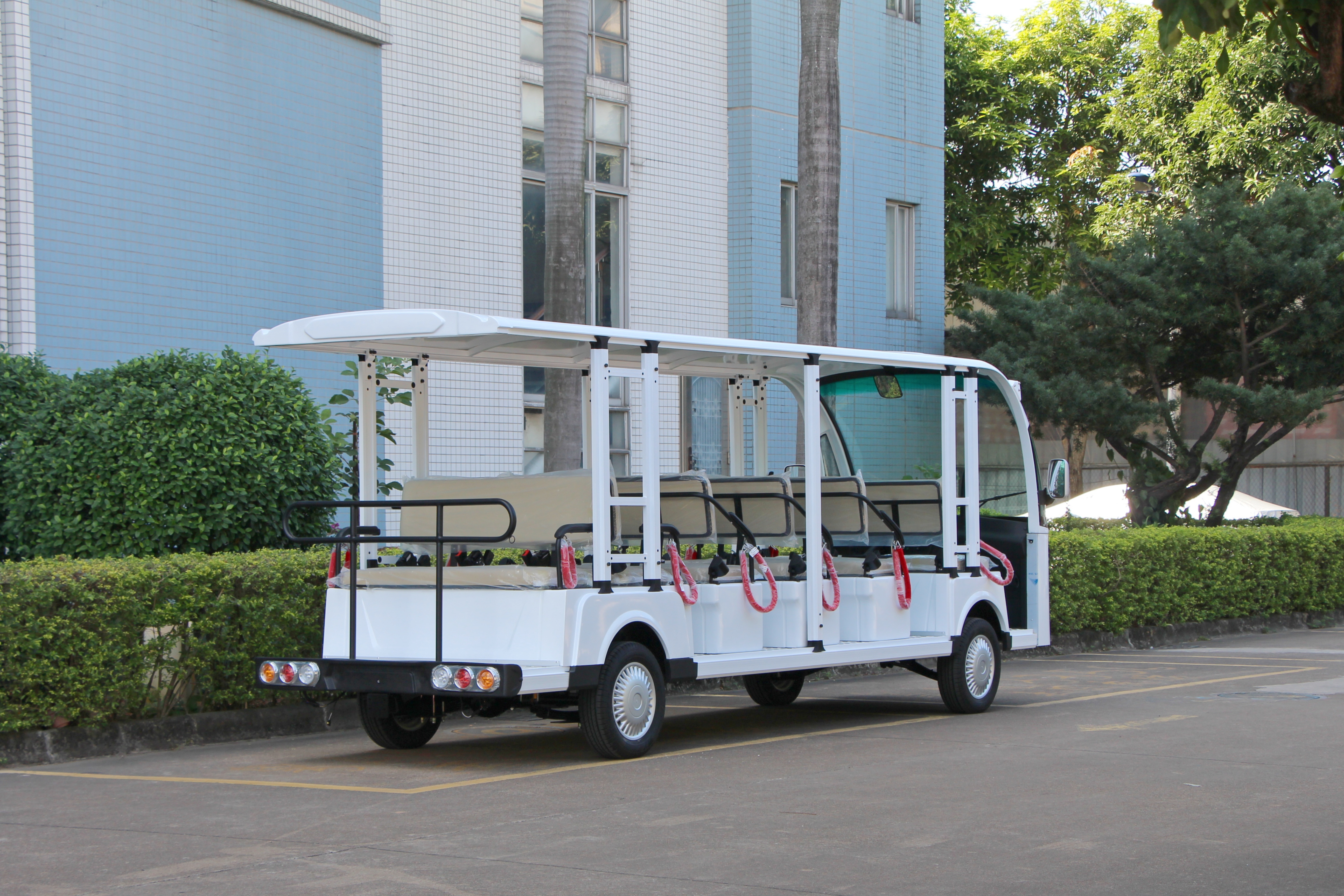
Operational safety and regulatory compliance are essential factors when deploying commercial fleets. Vehicles certified under European CE standards (Certifications 3N250506.GLEDQ43 and 3N250507.GLEDQ77) meet strict electrical safety and mechanical stability thresholds. Real-world applications—such as the deployment of over 3,500 shuttle bus units in Cuba and specialized airport transit fleets of 20 units in Argentina manufactured by Guangzhou Langqing Electric Car CO., LTD.—demonstrate that electric 17seats bus configurations sustain high operational uptime while eliminating thousands of metric tons of carbon emissions over traditional internal combustion options.
Data/Solution Comparison
| Operational Metric / Feature | Traditional 17-Seat ICE Bus Fleet | LQY148A Electric 17seats Bus Fleet |
|---|---|---|
| Direct Operational Emissions | High (Combustion Tailpipe Output) | Zero Direct Tailpipe Emissions |
| Front Cover Material & Weight | Standard Steel / Heavy Composite | PT+PBT Alloy Injection Molding (Lightweight) |
| Chassis & Suspension Setup | Rigid Axle Systems | High-Strength Steel with MacPherson Independent Front / Leaf-Spring Rear |
| Steering Energy Assistance | Engine-Driven Hydraulic Power | Electric Power-Assisted Steering (On-Demand Draw) |
| International Certification Standard | Regional Fuel Emission Standards | EU CE Certification Compliant |
| Standard Production Delivery Window | Variable (30–90 days) | 15–20 Days |
Frequently Asked Questions (FAQ)
Q: How does body material choice affect the energy consumption of a 17seats bus?
A: Utilizing engineered materials such as PT+PBT alloy for front covers and lightweight roof structures reduces overall vehicle weight. Lower mass decreases power consumption per kilometer, extending battery operational range and lowering overall energy demand.
Q: What maintenance practices ensure low energy degradation in electric transit fleets?
A: Maintenance should focus on verifying tire pressure, inspecting the MacPherson front independent suspension, and maintaining electrical power-assisted steering components. Proper mechanical alignment prevents unwanted drag and energy waste.
Q: How are electric 17seats bus units inspected to ensure maximum operating efficiency prior to deployment?
A: Every vehicle undergoes a 100% inspection line test and comprehensive road testing to confirm electrical system output, braking performance, and power-steering responsiveness before final delivery.
Final Conclusion & Recommendations
Upgrading to electric 17seats bus fleets delivers an immediate reduction in fleet carbon emissions while improving passenger comfort and compliance with international standards. To maximize sustainability gains, fleet managers should combine lightweight vehicle models with structured maintenance cycles and reliable charging schedules. Support packages including 1-year whole-vehicle warranties, flexible minimum order quantities starting at 1 unit, and standardized sea freight delivery ensure manageable scaling for commercial operations. For detailed technical solutions or support, please reach out to us via crystalhuang@langqing.cn.
About Us
Guangzhou Langqing Electric Car CO., LTD. was established in 2000 in Nansha, Guangzhou, and operates a 35,000-square-meter manufacturing facility with a monthly production capacity of 1,000 units. The enterprise holds an export ratio of 80% across international markets, holding ISO9001, ISO14001, and EU CE certifications while maintaining national High-tech Enterprise recognition for 16 consecutive years. The company provides complete R&D, manufacturing, and customer service for all-electric vehicles, having supplied custom transport solutions to clients in municipal, commercial, and tourism sectors globally.
Lastest
-
How are replacement spare parts provided for a 17seats bus?
2026-09-02 -
What is the typical deposit percentage for a 23seats bus order?
2026-09-02 -
What recyclable components are used in modern golf carts?
2026-09-02 -
What is the warranty policy for air conditioning on 23seats bus?
2026-09-02 -
What battery specs should I check when buying electric golf carts?
2026-09-02
SUBSCRIBE
INQUIRY