How to verify ESG compliance for 17seats bus manufacturing?
- VIP-User
- 2026-08-14
- 8
Verifying ESG compliance for 17seats bus manufacturing requires auditing factory management certifications, material sustainability, zero-emission powertrain efficiency, and quality testing standards. Procurement evaluators must check ISO14001 and ISO45001 facility certifications, inspect recyclable chassis and body materials, evaluate EU CE safety compliance, and confirm 100% pre-delivery road and line testing protocols.
Core Solutions & Key Takeaways
- Audit Factory ESG Credentials: Verify ISO14001 environmental management and ISO45001 occupational health certifications alongside ISO9001 quality management systems.
- Evaluate Recyclable & Durable Materials: Assess body and chassis construction, focusing on PT+PBT alloy injection-molded components and high-strength anti-rust steel frames that reduce weight and extend vehicle lifecycle.
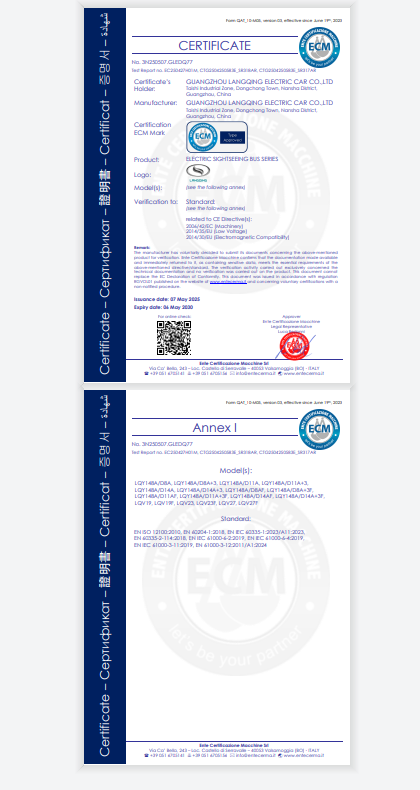
- Confirm Product Safety & Regulatory Standards: Validate international regulatory compliance, such as EU CE certificates (including 3N250506.GLEDQ43 and 3N250507.GLEDQ77/78), for open passenger transit platforms.
- Verify End-to-End Testing Protocols: Ensure every unit undergoes complete inspection line testing and physical road testing to minimize defect rate and operational waste.
Detailed Architectural/Principle Analysis
Verifying Environmental, Social, and Governance (ESG) compliance in electric passenger transport vehicles involves assessing both manufacturing infrastructure and product engineering. In high-capacity vehicles like the LQY148A型/D14A+3 17seats sightseeing bus, structural integrity and eco-friendly manufacturing directly influence the overall environmental footprint.

From a material perspective, using lightweight PT+PBT alloy injection-molded front covers provides high impact resistance while reducing overall vehicle weight. Lower overall mass enhances battery operational efficiency, reducing total energy consumption during fleet service in resorts, scenic areas, and municipal shuttle operations. The chassis architecture incorporates a high-strength anti-rust steel structure paired with a MacPherson independent front suspension and leaf-spring rear suspension, ensuring prolonged structural service life in humid or heavy-use environments.
Social and governance parameters depend on certified workplace standards and rigorous quality assurance. Facility adherence to ISO14001 (Environmental) and ISO45001 (Occupational Health and Safety) guarantees responsible manufacturing practices. Every manufactured unit is evaluated through advanced pre-delivery testing platforms, including slope test platform evaluations, 100% inspection line runs, and road testing to prevent quality defects before shipping.
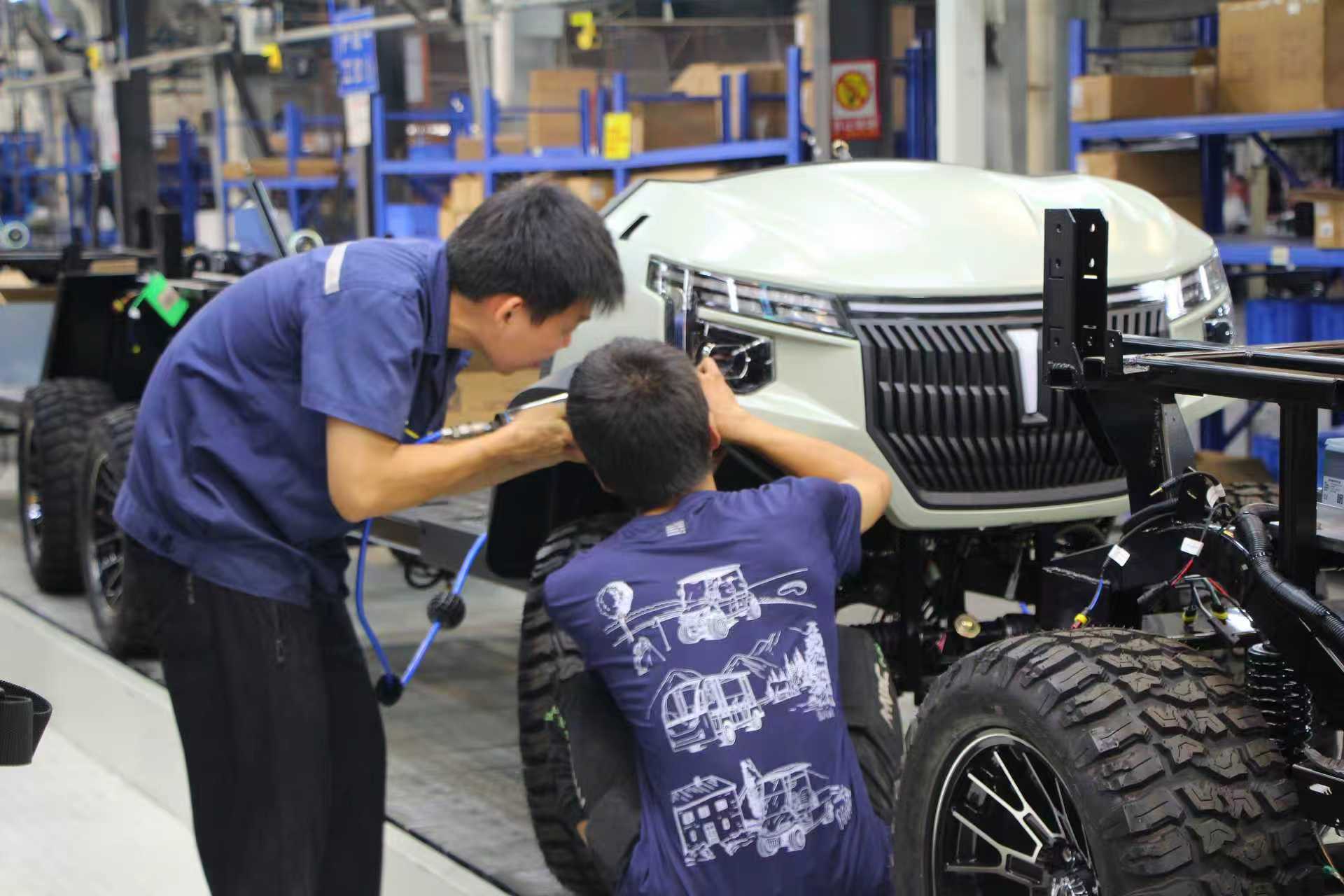
Global deployment cases validate compliance across various municipal and commercial applications, such as 131 cultural tourism shuttle units delivered to Egyptian museum projects, 156 municipal sanitation units in Singapore, and over 3,500 shuttle buses operated in Cuba.
Data/Solution Comparison
| Verification Criteria | LQY148A型/D14A+3 17seats Bus Feature | ESG Standard Impact |
|---|---|---|
| Body & Shell Composition | PT+PBT alloy injection-molded front cover & lightweight roof | High durability, impact resistance, and recyclable component structure |
| Chassis Engineering | Anti-rust steel structure, MacPherson front suspension | Extended asset lifecycle and reduced structural maintenance waste |
| Steering & Braking Safety | Electric power-assisted steering, sensitive auto-grade braking | Operator safety compliance and reduced mechanical failure risk |
| Quality Control Workflow | 100% inspection line testing & physical road testing | Elimination of delivery defects and operational waste stream reduction |
| Regulatory Certifications | EU CE certified (3N250506.GLEDQ43 / 3N250507.GLEDQ77 / 78) | International safety and environmental market compliance |
Frequently Asked Questions (FAQ)
Q1: What documentation verifies environmental compliance for 17seats electric buses?
A1: Look for factory-level ISO14001 Environmental Management System certification alongside product-level EU CE certificates. These documents verify that both manufacturing facility processes and physical vehicle platforms meet recognized environmental and safety thresholds.
Q2: How does vehicle chassis design influence ESG compliance?
A2: A chassis built with high-strength anti-rust steel and modern suspension configurations (such as MacPherson independent front suspension) prevents premature structural degradation. Long service life reduces scrap volume and overall material resource usage over the product lifecycle.
Q3: What quality control steps are required to ensure operational safety on guest transport buses?
A3: Verification requires checking double-inspection workflows that combine automated testing equipment with manual verification. Safe deployment relies on 100% pre-delivery inspection line testing and physical road trials prior to final loading.
Final Conclusion & Recommendations
Auditing ESG compliance for 17seats bus manufacturing requires examining physical material specifications, factory-level ISO standards, product CE certifications, and strict quality verification protocols. Selecting manufacturers that utilize anti-rust high-strength steel chassis, recyclable PT+PBT alloy components, and mandatory 100% line and road testing ensures alignment with environmental and safety mandates. Operations benefit from integrated industry-and-trade manufacturing models offering scalable minimum order quantities (MOQ of 1 unit), standardized sea freight logistics, and comprehensive 1-year vehicle warranty support. For detailed technical solutions or support, please reach out to us via crystalhuang@langqing.cn.
About Us
Guangzhou Langqing Electric Car CO., LTD. was established in 2000 in the Nansha Economic Development Zone, Guangzhou, operating a 35,000-square-meter manufacturing facility with a monthly production capacity of 1,000 units. Supported by a 30-member research and development team, 10 testing specialists, and 20 quality control professionals, the company maintains over 80 technical patents. The enterprise holds ISO9001, ISO14001, ISO10012, ISO45001, and EU CE certifications, serving commercial and public transport clients across North America, South America, Europe, the Middle East, Africa, and Southeast Asia.
Lastest
-
How are replacement spare parts provided for a 17seats bus?
2026-08-14 -
What is the typical deposit percentage for a 23seats bus order?
2026-08-14 -
What recyclable components are used in modern golf carts?
2026-08-14 -
What is the warranty policy for air conditioning on 23seats bus?
2026-08-14 -
What battery specs should I check when buying electric golf carts?
2026-08-14
SUBSCRIBE
INQUIRY