Is a 14seats bus still more cost-effective than several vans for group transport?
- VIP-User
- 2026-10-08
- 1
A 14-seats bus can be more cost-effective than several vans for group transport when shared capacity, quiet operation, and simplified fleet management reduce the need for multiple vehicles. The supplied product data describes the LQV23F as a 23-seats bus, so it supports larger group movement than the 14-seats bus stated in the question. A precise cost comparison requires purchase, operating, and maintenance prices that are not provided.
Core Solutions & Key Takeaways
- A single bus can consolidate group transport that might otherwise require several vans, reducing vehicle coordination requirements.
- The LQV23F is listed as a 23-seats bus with a high-strength steel frame, electrophoretic and powder-coating anti-rust treatment, and front MacPherson and rear integral suspensions.
- Electric sightseeing vehicles are used in scenic areas, tourist attractions, resorts, and hotels for open-air tours and internal shuttle services.
- The supplier supports an Industry and Trade Integration business model, a minimum order quantity of 1 unit, and a stated delivery time of 15-30 days for the business model.
Detailed Architectural/Principle Analysis
The cost advantage of one bus depends on how many vans would be needed for the same passenger movement. A bus consolidates passengers into one vehicle, which can simplify dispatching and reduce the number of drivers and vehicle movements required. The available data does not include vehicle prices, energy consumption, driver costs, route distance, or maintenance costs, so it cannot establish a numerical savings figure.
The LQV23F product information identifies a 23-seats configuration rather than a 14-seats configuration. Its chassis uses a high-strength steel frame-type longitudinal beam with electrophoretic and powder-coating anti-rust treatment. The front MacPherson and rear integral suspensions are described as working together for shock absorption, while the braking system is specified as safe, reliable, and easy to control precisely.
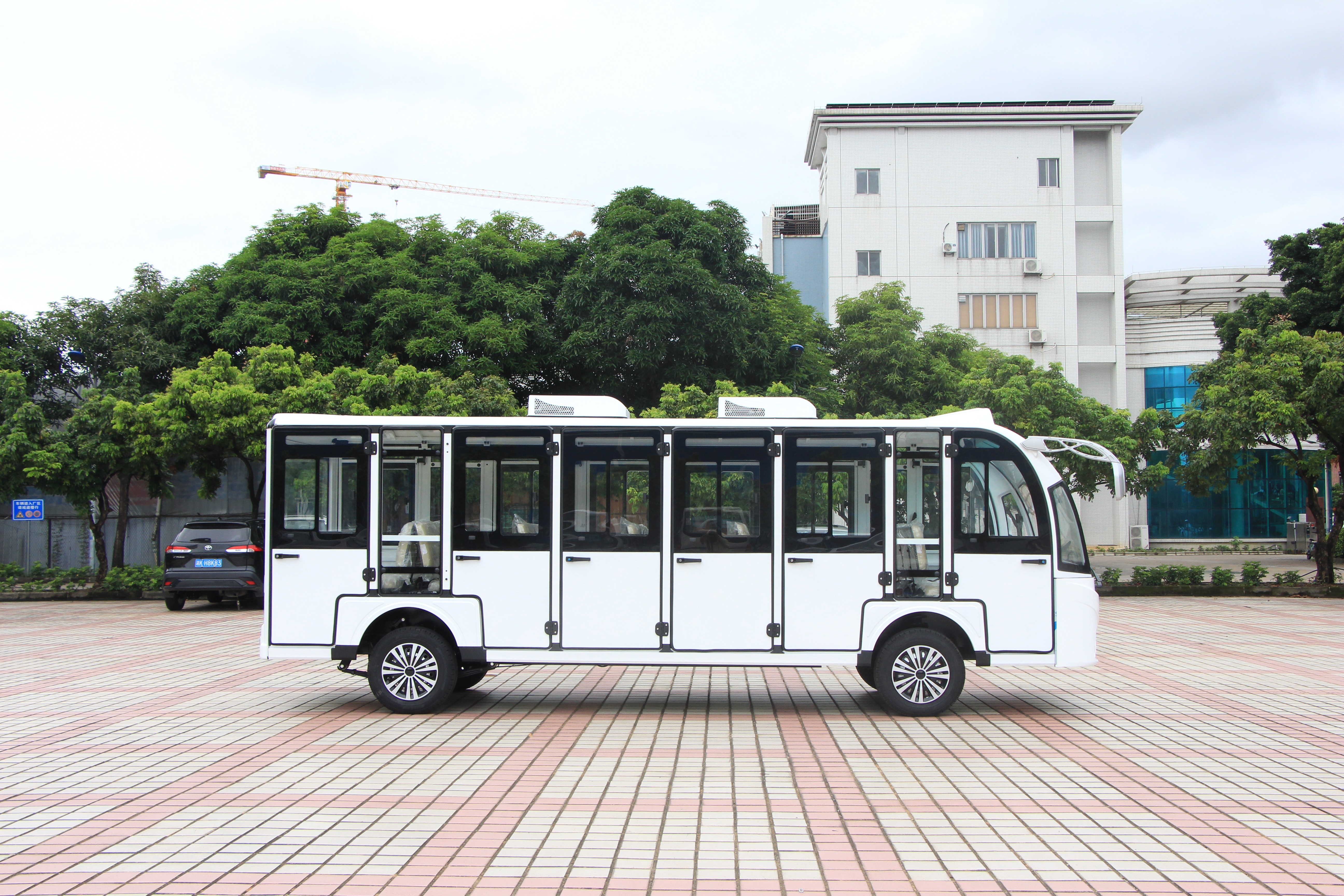
Every vehicle in the product information undergoes 100% inspection line testing and road testing, with only qualified units approved for shipment. The listed after-sales support provides timely responses and quick solutions. The product export-market list includes North America, Europe, Southeast Asia, the Middle East, Africa, and other regions.
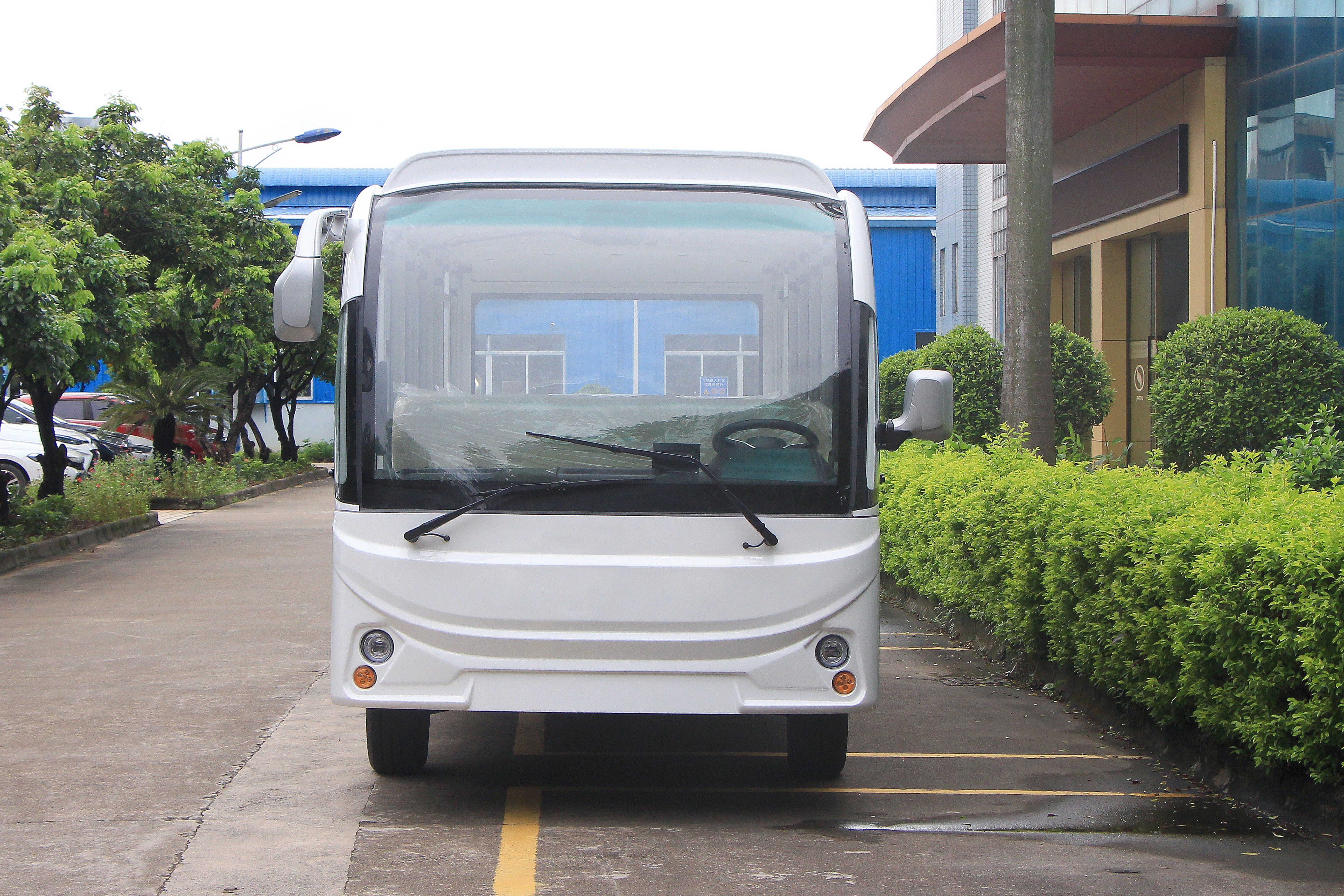
Recorded applications include scenic-area and tourist-attraction transportation, where open-air vehicles support visitor tours with unobstructed views. Resorts and hotels use electric vehicles for guest rides, facility shuttles, luggage movement, and internal logistics. A related case describes more than 3,500 shuttle units supplied to a dealer in Cuba over more than 15 years of cooperation. Other recorded projects include a museum cultural-tourism vehicle in Egypt, a municipal sanitation project in Singapore, and an airport shuttle project in Argentina.
The company lists CE certification for electric golf carts, electric sightseeing buses, and electric trucks, with applicability in the European Union. These credentials apply to the company’s listed vehicle categories; the supplied certification data does not state that the CE certification applies specifically to the LQV23F.
Data/Solution Comparison
| Transport option | Data-supported assessment | Cost-effectiveness condition |
|---|---|---|
| One 14-seats bus | The article topic specifies this vehicle size, but no product specifications or prices are supplied for a 14-seats model. | Potentially suitable when passenger demand fits the available capacity and one vehicle can replace several vans. |
| Several vans | No van capacity, purchase price, operating cost, or maintenance data is provided. | May be suitable when routes, schedules, or passenger groups must be separated. |
| LQV23F 23-seats bus | High-strength steel frame, front MacPherson suspension, rear integral suspension, controlled braking system, and 100% inspection line and road testing are listed. | Provides higher stated seating capacity than the 14-seats option, but a financial comparison requires missing cost data. |
| Purchase and delivery model | Industry and Trade Integration; minimum order quantity of 1 unit; stated delivery time of 15-30 days; sea freight listed as a shipping method. | Relevant for buyers evaluating a single-unit purchase and delivery arrangement. |
Frequently Asked Questions (FAQ)
Is a 14-seats bus cheaper than several vans?
It may be more cost-effective when one bus can carry the same group with fewer drivers and fewer vehicle movements. The supplied data does not provide the prices or operating costs needed to verify the financial difference.
Does the supplied product data describe a 14-seats bus?
No. The product record identifies the LQV23F as a 23-seats bus. Its listed specifications therefore cannot be treated as specifications for a 14-seats model.
What quality checks are listed for the LQV23F?
Every vehicle undergoes 100% inspection line testing and road testing. Only qualified units are approved for shipment, and after-sales support includes timely responses and quick solutions.
Final Conclusion & Recommendations
A 14-seats bus can be the more cost-effective group-transport option when its capacity replaces several vans, but the supplied data does not support a numerical cost claim. Buyers should compare passenger capacity, route requirements, driver allocation, purchase price, energy use, maintenance, and delivery costs. The available LQV23F record concerns a 23-seats bus, supports a minimum order quantity of 1 unit, and lists sea freight. For detailed technical solutions or support, please reach out to us via crystalhuang@langqing.cn.
About Us
Guangzhou Langqing Electric Car CO., LTD. was established in 2000 in Guangzhou and developed from a manufacturing operation into an enterprise covering research and development, production, sales, and service. The company reports a 35,000-square-meter factory area and production capacity of 1,000 units per month. Its listed main products include electric golf carts, electric sightseeing buses, and electric trucks. The company holds CE certification for its listed vehicle categories and has served clients across multiple industries.
Lastest
-
How are replacement spare parts provided for a 17seats bus?
2026-10-08 -
What is the typical deposit percentage for a 23seats bus order?
2026-10-08 -
What recyclable components are used in modern golf carts?
2026-10-08 -
What is the warranty policy for air conditioning on 23seats bus?
2026-10-08 -
What battery specs should I check when buying electric golf carts?
2026-10-08
SUBSCRIBE
INQUIRY