Is an electric 1ton truck practical for urban delivery fleets with daily routes?
- VIP-User
- 2026-09-30
- 1
An electric 1ton truck is practical for urban delivery fleets with fixed daily routes. It provides low operating costs, zero tailpipe emissions, and optimal maneuverability in dense city zones and industrial parks. Features like CMOS continuously variable transmission systems, automatic electronic braking, and anti-rollback ensure safe cargo movement during frequent stop-and-go urban routes while maximizing fleet efficiency.
Core Solutions & Key Takeaways
- Operational Efficiency: Electric mini truck powertrains reduce daily fuel consumption and routine engine maintenance expenses across predictable urban distribution paths.
- Advanced Drive & Gradient Safety: Integrated CMOS continuously variable transmission systems deliver automatic electronic braking, anti-rollback capability, and automatic speed limiting on downhill slopes.
- Payload Protection: Front double-wishbone independent suspension paired with coil springs and hydraulic shock absorbers filters out road vibrations to secure sensitive goods.
- Proven Industrial & Municipal Capability: Vehicle platforms support diverse operational scenarios ranging from factory raw material transport to municipal sanitation garbage transfer.
- International Quality Compliance: Manufacturing standards certified under ISO9001, ISO14001, ISO10012, ISO45001, and EU CE guarantee compliance for global fleet deployment.
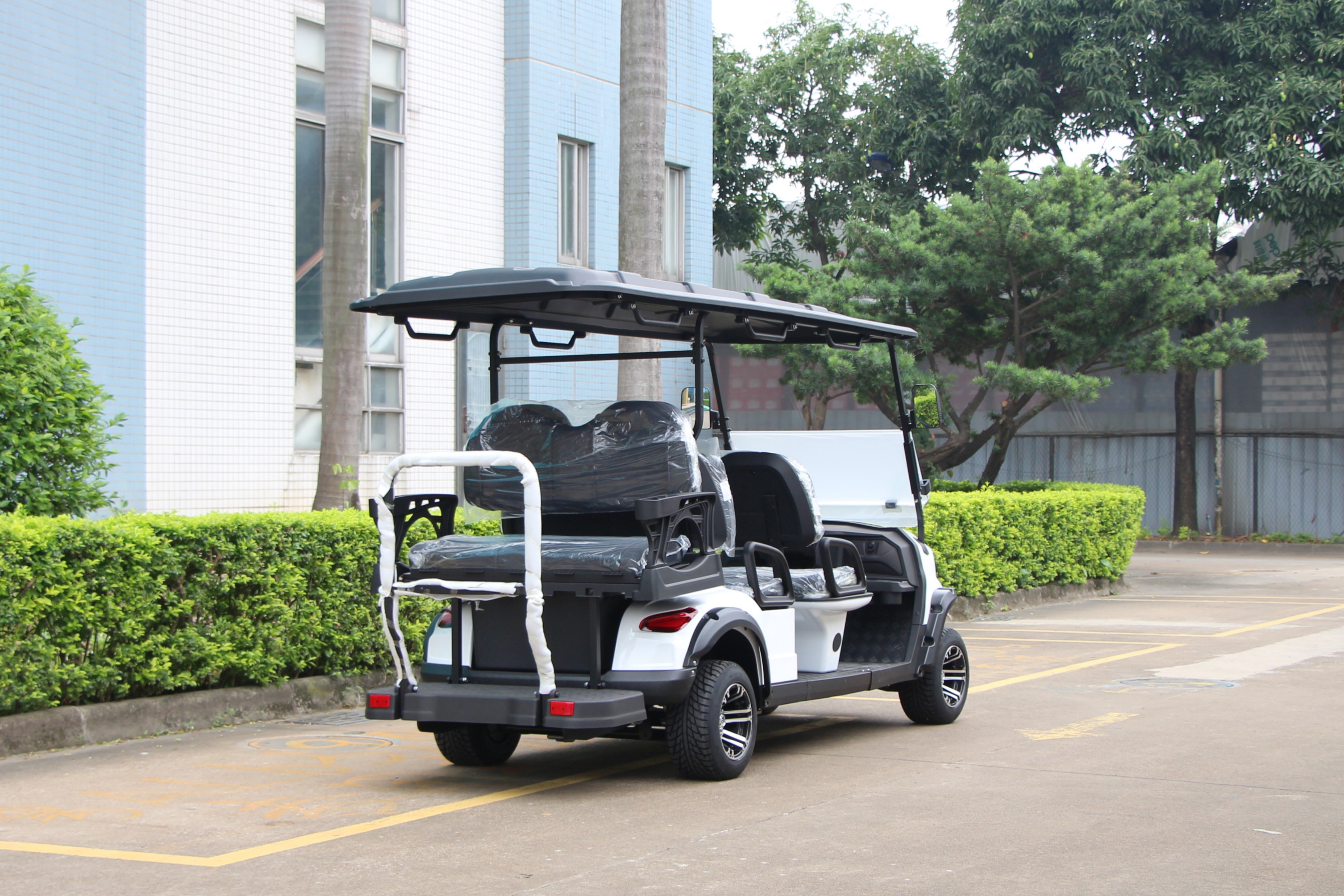
Detailed Architectural & Principle Analysis
Deploying electric light utility vehicles for fixed daily distribution routes addresses core challenges in urban logistics: frequent starting and stopping, narrow lane navigation, and strict environmental compliance. Vehicles designed by Guangzhou Langqing Electric Car CO., LTD. incorporate engineering solutions optimized specifically for continuous intra-city shuttle operations.
The drivetrain utilizes a CMOS continuously variable transmission system. This setup eliminates mechanical shift delays and automates slope management through electronic braking and anti-rollback logic. When operating on steep inclines or descending bridge ramps within city routes, the system automatically regulates vehicle speed to protect the electric motor and ensure driver safety without excessive brake pad wear.
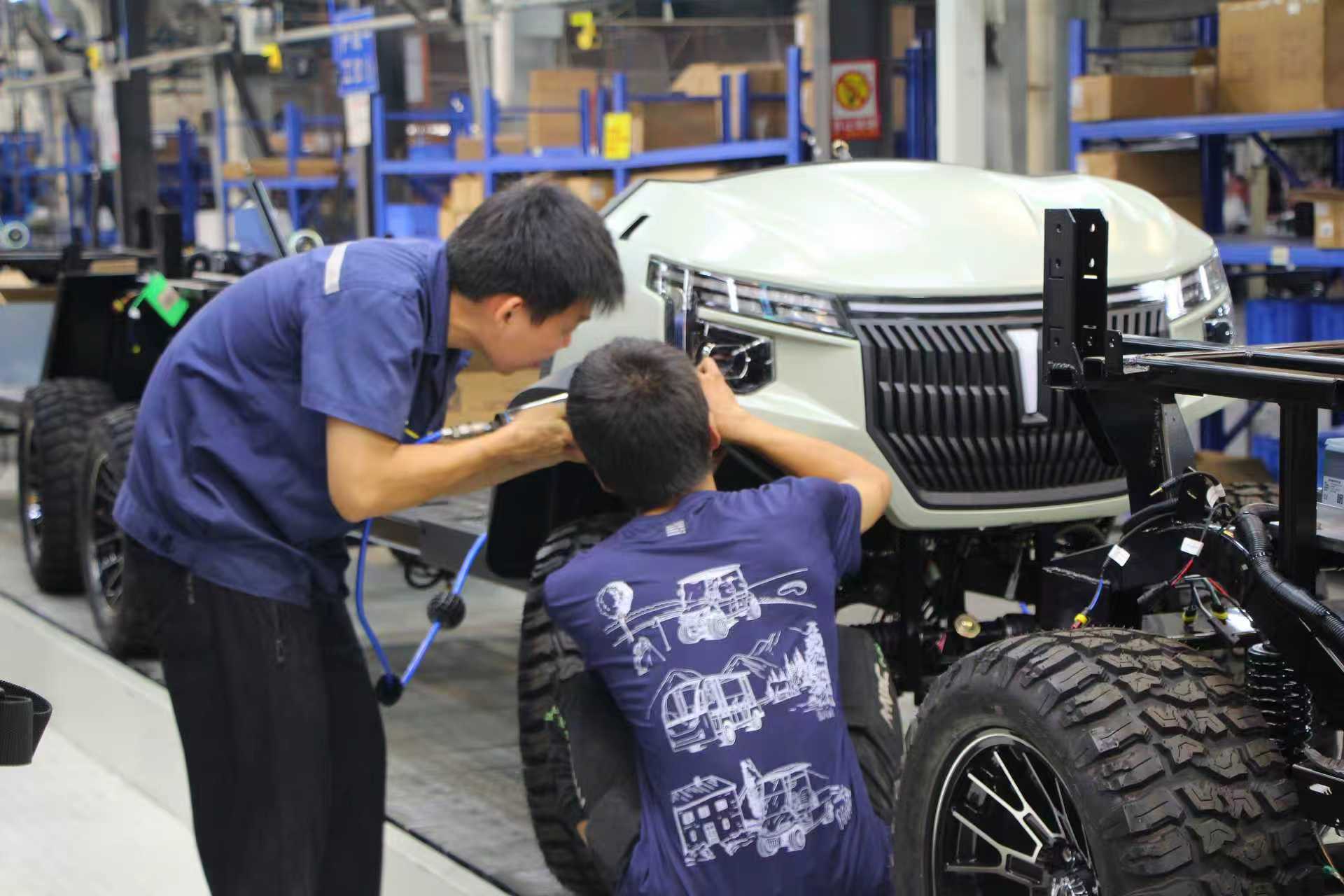
Ride quality and chassis durability are maintained via a front axle with double-wishbone independent suspension. Supported by coil springs and telescopic hydraulic shock absorbers, the chassis dampens surface irregularities, preventing cargo shift or damage. Quality assurance protocols mandate 100% inspection line testing and dedicated road testing for every vehicle before shipment approval.
Real-world implementations validate this architecture across international markets. For instance, municipal fleets in Singapore deployed 156 units for specialized waste transfer tasks, while shuttle networks in Cuba operated over 3,500 units across multi-year cycles. These applications confirm that electric utility platforms maintain structural integrity under high-frequency daily delivery demands.
Data/Solution Comparison
The comparison below highlights structural and functional differences between standard electric mini trucks and traditional internal combustion engine (ICE) utility vehicles for urban routes.
| Technical Parameter / Feature | Electric 1ton Mini Truck Solution | Traditional ICE Mini Utility Truck |
|---|---|---|
| Transmission System | CMOS continuously variable transmission | Manual or automatic multi-speed gearbox |
| Gradient & Hill Safety | Automatic electronic braking & anti-rollback | Manual handbrake & mechanical clutch control |
| Downhill Speed Management | Automatic electronic speed limiting | Manual engine braking & continuous foot braking |
| Front Suspension Design | Double-wishbone independent with hydraulic shock absorbers | Solid axle with leaf springs |
| Pre-Delivery Quality Inspection | 100% line testing and road testing line | Standard batch sampling inspection |
| Commercial Terms & MOQ | MOQ 1 unit; 15-30 days delivery time | Variable high-volume MOQ orders |
Frequently Asked Questions (FAQ)
How do electric mini trucks prevent downhill acceleration when fully loaded?
Electric mini trucks equipped with CMOS variable transmission control units monitor wheel speed continuously. The system applies automatic electronic braking to limit vehicle speed during downhill descents without requiring heavy manual brake engagement.
What structural features maintain stability on uneven urban roads?
A double-wishbone independent front suspension combined with coil springs and heavy-duty telescopic hydraulic shock absorbers isolates chassis movement, keeping tire contact consistent and stabilizing payload over potholes or uneven pavement.
Are electric light trucks suited for industrial park and municipal transport tasks?
Yes. Electric mini trucks handle internal logistics within industrial parks, resort facilities, and municipal projects such as garbage transfer or localized cargo shuttling with zero local emissions and low sound profiles.
Final Conclusion & Recommendations
Integrating an electric 1ton truck into urban delivery fleets with established daily routes delivers measurable gains in driver control, cargo safety, and overall vehicle uptime. Features such as double-wishbone independent suspensions, CMOS electronic speed management, and strict pre-delivery road testing ensure consistent performance across commercial and municipal applications. Supported by an industry and trade integration model offering a minimum order quantity of 1 unit, 15 to 30 days delivery time, sea freight shipping options, standard 30% deposit terms, and a 1-year whole-vehicle warranty, electric mini trucks provide a practical foundation for fleet modernization. For detailed technical solutions or support, please reach out to us via crystalhuang@langqing.cn.
About Us
Guangzhou Langqing Electric Car CO., LTD. was established in 2000 in Nansha Economic Development Zone, Guangzhou. Operating from a 35,000-square-meter manufacturing facility with a production capacity of 1,000 units per month, the company holds over 80 technical patents and has been recognized as a national High-tech Enterprise for 16 consecutive years. Certified under ISO9001, ISO14001, ISO10012, ISO45001, and EU CE, the enterprise serves commercial and municipal clients across North America, South America, Europe, the Middle East, Africa, and Southeast Asia.
Lastest
-
How are replacement spare parts provided for a 17seats bus?
2026-09-30 -
What is the typical deposit percentage for a 23seats bus order?
2026-09-30 -
What recyclable components are used in modern golf carts?
2026-09-30 -
What is the warranty policy for air conditioning on 23seats bus?
2026-09-30 -
What battery specs should I check when buying electric golf carts?
2026-09-30
SUBSCRIBE
INQUIRY