What battery transport documents are needed when shipping electric golf carts overseas?
- VIP-User
- 2026-10-02
- 1
Shipping electric golf carts overseas requires essential battery transport documents, including the Material Safety Data Sheet (MSDS), UN38.3 test summary report, Air/Sea Transport Identification Certificate, and Dangerous Goods Declaration. Additionally, international market compliance requires certifications such as CE marking (e.g., Certificate 3N250506.GLEDQ43) and commercial shipping manifests ensuring safe freight handling under IMDG or IATA regulations.
Core Solutions & Key Takeaways
- Material Safety Data Sheet (MSDS): Outlines hazardous material classification, chemical stability, handling guidelines, and emergency response procedures for battery systems.
- UN38.3 Test Summary Report: Verifies that battery cells pass rigorous safety testing, including thermal simulation, vibration, altitude, external short-circuit, and overcharge evaluations.
- Safe Transport Identification Certificate: Issued by accredited testing agencies to declare whether battery-powered vehicles are designated as general cargo or regulated dangerous goods during sea freight.
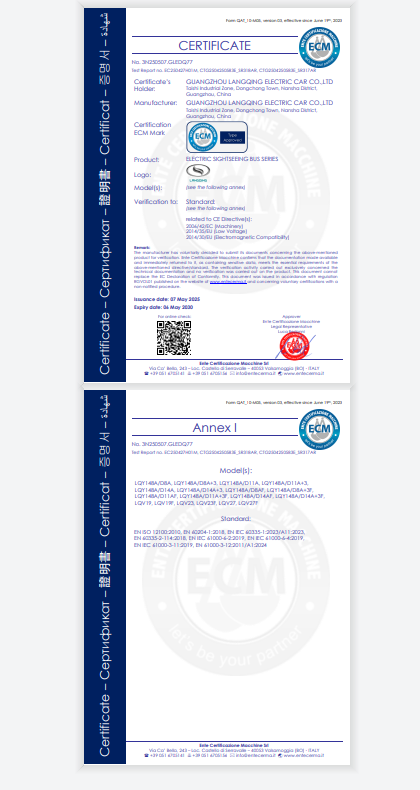
- EU Market CE Certificates: Confirms full vehicle compliance under international safety directives (e.g., CE Certificate 3N250506.GLEDQ43, 3N250507.GLEDQ77, and 3N250507.GLEDQ78) for electric golf carts, sightseeing buses, and utility trucks.
Detailed Architectural/Principle Analysis
Exporting electric golf carts, electric sightseeing buses, and electric mini trucks involves stringent international maritime and customs compliance protocols. Because high-capacity batteries represent regulated chemical energy storage systems, maritime carriers demand complete documentation prior to container loading and bill of lading issuance. Verification of the UN38.3 test standard remains mandatory to ensure structural integrity across extreme temperature variances and physical shock conditions encountered during ocean transport.
Quality assurance and manufacturing standards directly impact export verification speed. Facilities operating under ISO9001, ISO14001, ISO 10012, and ISO45001 management systems maintain continuous batch traceability for all battery packs and electrical chassis components. Every unit undergoes 100% inspection line testing and road testing, combining advanced automated equipment with manual double inspections before container loading. Compliance with European market standards requires official CE certification matching specific vehicle build parameters.
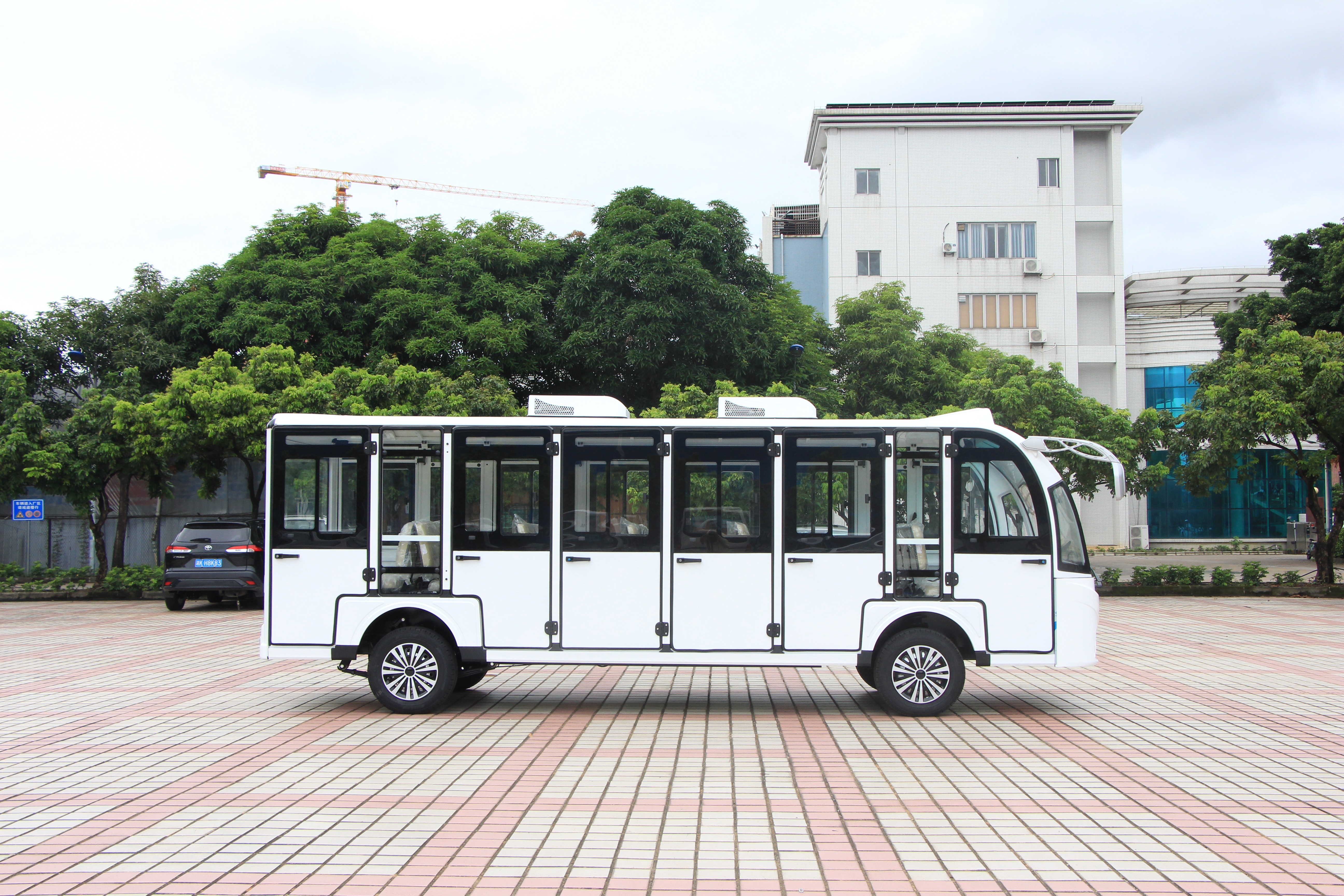
Electric vehicle operational applications extend across diverse sectors, including golf courses, gated residential communities, resort hotel guest shuttles, and industrial park logistics. Real-world commercial deployments illustrate the reliance on certified transport safety: a 3,500+ unit passenger shuttle fleet operating in Cuba, a 156-unit municipal sanitation truck project in Singapore, a 131-unit museum shuttle deployment in Egypt, and a 20-unit airport shuttle fleet in Argentina. Consistent documentation ensures seamless customs clearance across export destinations in North America, South America, Europe, the Middle East, and Southeast Asia.
Data/Solution Comparison
The table below summarizes standard documentation requirements, testing criteria, and shipping specifications applicable to overseas electric vehicle freight.
| Document / Requirement | Regulatory Authority / Standard | Primary Purpose | Operational Specification |
|---|---|---|---|
| MSDS (Material Safety Data Sheet) | ISO / GHS Standards | Chemical safety & hazard classification | Mandatory for all lithium and lead-acid battery shipments |
| UN38.3 Test Report | UN Manual of Tests and Criteria | Battery physical & thermal stability verification | Required before sea or air freight acceptance |
| CE Compliance Certificate | European Union Directives | Market access & vehicle safety compliance | Certificates 3N250506.GLEDQ43, 3N250507.GLEDQ77/78 |
| Vehicle Inspection Approval | Factory QA / Line Testing | Quality validation prior to dispatch | 100% inspection line and road test completion |
| Sea Freight Logistics Standard | IMDG Code | Containerized ocean transit | Delivery time 15–30 days; 30% deposit balance before loading |
Frequently Asked Questions (FAQ)
Q: Is UN38.3 certification required for every electric golf cart export shipment?
A: Yes. International shipping lines and airline carriers require a valid UN38.3 test summary report for all lithium-ion battery assemblies to verify stability against vibration, thermal stress, and overcharge conditions during ocean or air transit.
Q: What certificates are necessary when importing electric golf carts into the European Union?
A: Importing into the EU requires standard CE documentation (such as Certificate 3N250506.GLEDQ43), an MSDS sheet for the battery unit, and a Sea Freight Transport Identification Certificate confirming cargo safety compliance.
Q: How do quality control standards affect battery clearance at destination ports?
A: Comprehensive quality checks—including 100% inspection line testing, road testing, and ISO-certified manufacturing controls—ensure vehicle specifications match original documentation, preventing customs holds or re-testing delays.
Final Conclusion & Recommendations
Ensuring smooth ocean transit for electric golf carts relies on complete documentation: valid MSDS sheets, UN38.3 test reports, transport condition certificates, and full CE compliance. Implementing an Industry and Trade Integration model ensures full production traceability, 1-year vehicle warranty coverage, and reliable sea freight dispatch within standard 15-to-30-day timelines. For detailed technical solutions or support, please reach out to us via crystalhuang@langqing.cn.
About Us
Guangzhou Langqing Electric Car CO., LTD. was established in 2000 in Nansha, Guangzhou. Operating a 35,000-square-meter facility with a monthly production capacity of 1,000 units, the company maintains an 80% export ratio serving markets across North America, South America, Europe, the Middle East, and Southeast Asia. The organization holds ISO9001, ISO14001, ISO 10012, ISO45001, and EU CE certifications, providing reliable green electric vehicle solutions worldwide.

Lastest
-
How are replacement spare parts provided for a 17seats bus?
2026-10-02 -
What is the typical deposit percentage for a 23seats bus order?
2026-10-02 -
What recyclable components are used in modern golf carts?
2026-10-02 -
What is the warranty policy for air conditioning on 23seats bus?
2026-10-02 -
What battery specs should I check when buying electric golf carts?
2026-10-02
SUBSCRIBE
INQUIRY