What chassis parameters should I compare for a 17seats bus?
- VIP-User
- 2026-08-11
- 8
When comparing chassis parameters for a 17-seat sightseeing bus, focus on frame structural strength, suspension type, braking setup, steering assistance, and body cover impact resistance. High-strength anti-rust steel frames paired with MacPherson independent front suspension and rear leaf springs provide ideal load stability, durability, and ride comfort across open-air shuttle operations.
Core Solutions & Key Takeaways
- Frame Structural Integrity: A high-strength anti-rust steel frame prevents corrosion and maintains rigid structural support under continuous full-passenger loads.
- Optimized Axle Suspension: Integrating MacPherson independent suspension on the front axle delivers smooth handling, while rear leaf-spring suspension manages payload weight across uneven terrain.
- Steering and Braking Precision: Automotive-grade sensitive braking paired with electric power-assisted steering ensures effortless control in tight, crowded sight-seeing areas.
- Impact Resistance: PT + PBT alloy injection-molded front covers provide high impact resistance against wear and minor bumps during daily shuttle service.

Detailed Architectural & Chassis Parameter Analysis
Analyzing the chassis architecture of a 17-seat passenger vehicle requires evaluating how structural components manage dynamic stresses during frequent stop-and-go operations. In models such as the LQY148A, the foundation relies on a steel structure treated for anti-rust endurance. This preserves frame rigidity in high-humidity or coastal resort environments where open-cockpit buses typically operate.
Suspension mechanics directly influence passenger safety and operational stability. A front MacPherson independent suspension system decouples left and right wheel impacts, mitigating cabin roll when navigating curves in scenic areas or gated communities. On the rear axle, leaf-spring suspension distributes high vertical loads evenly across the frame, protecting the driveline from stress fatigue during maximum passenger occupancy.
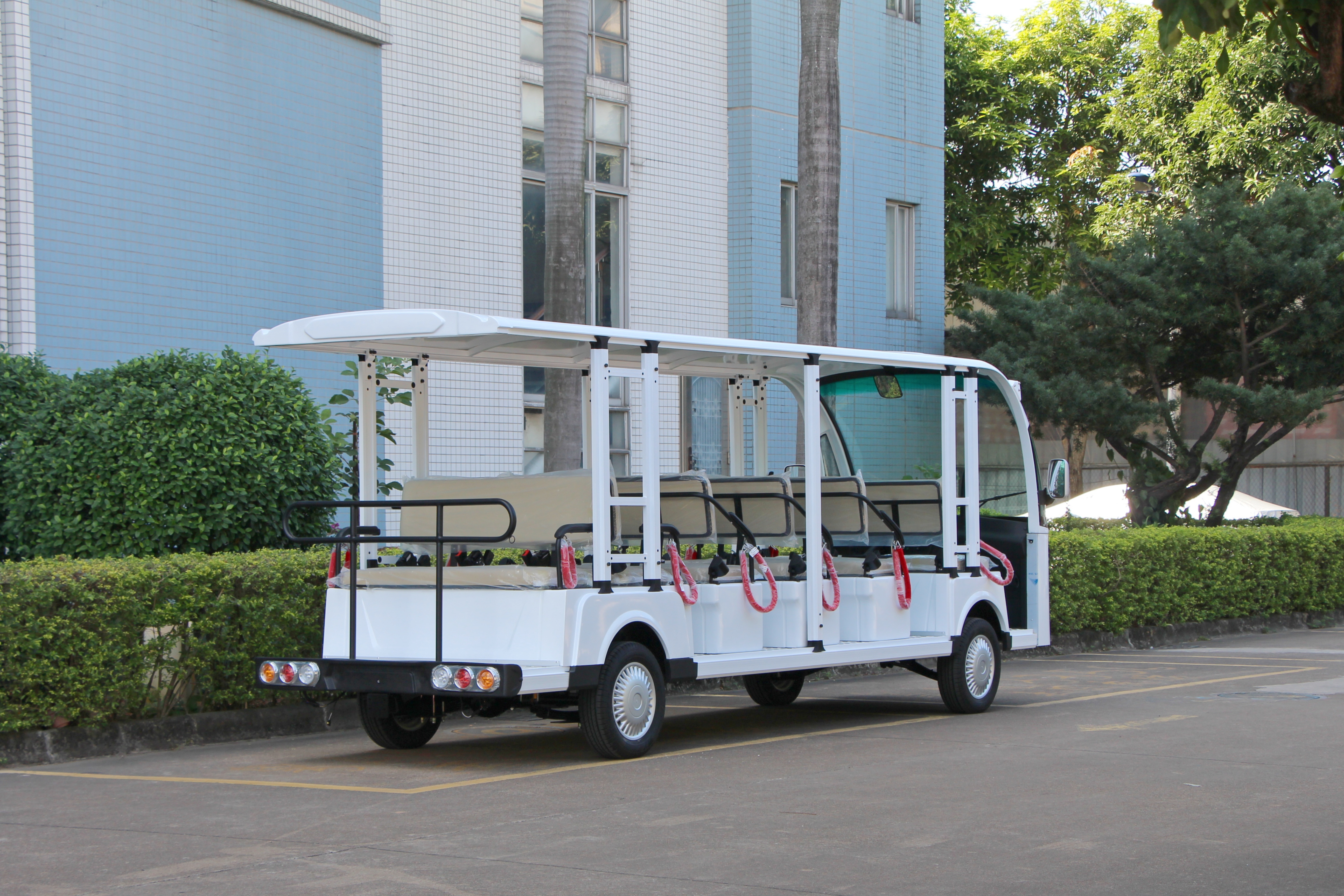
Drive control requires responsive mechanical interfaces. Electric power-assisted steering minimizes driver fatigue during long shifts, while sensitive braking mechanisms maintain consistent stopping distances. For body panel protection, utilizing a PT + PBT alloy front cover delivers higher impact toughness than standard fibreglass, absorbing localized shocks without fracturing.
Chassis engineering standards are validated through stringent international quality frameworks, including EU CE certifications (CE Certificate Nos. 3N250506.GLEDQ43, 3N250507.GLEDQ77, 3N250507.GLEDQ78). Real-world applications—such as cultural tourism shuttles in Egypt, government sanitation fleets in Singapore, and municipal shuttle operations in Cuba deploying over 3,500 units—confirm the operational reliability of this structural blueprint.
Data & Chassis Parameter Comparison
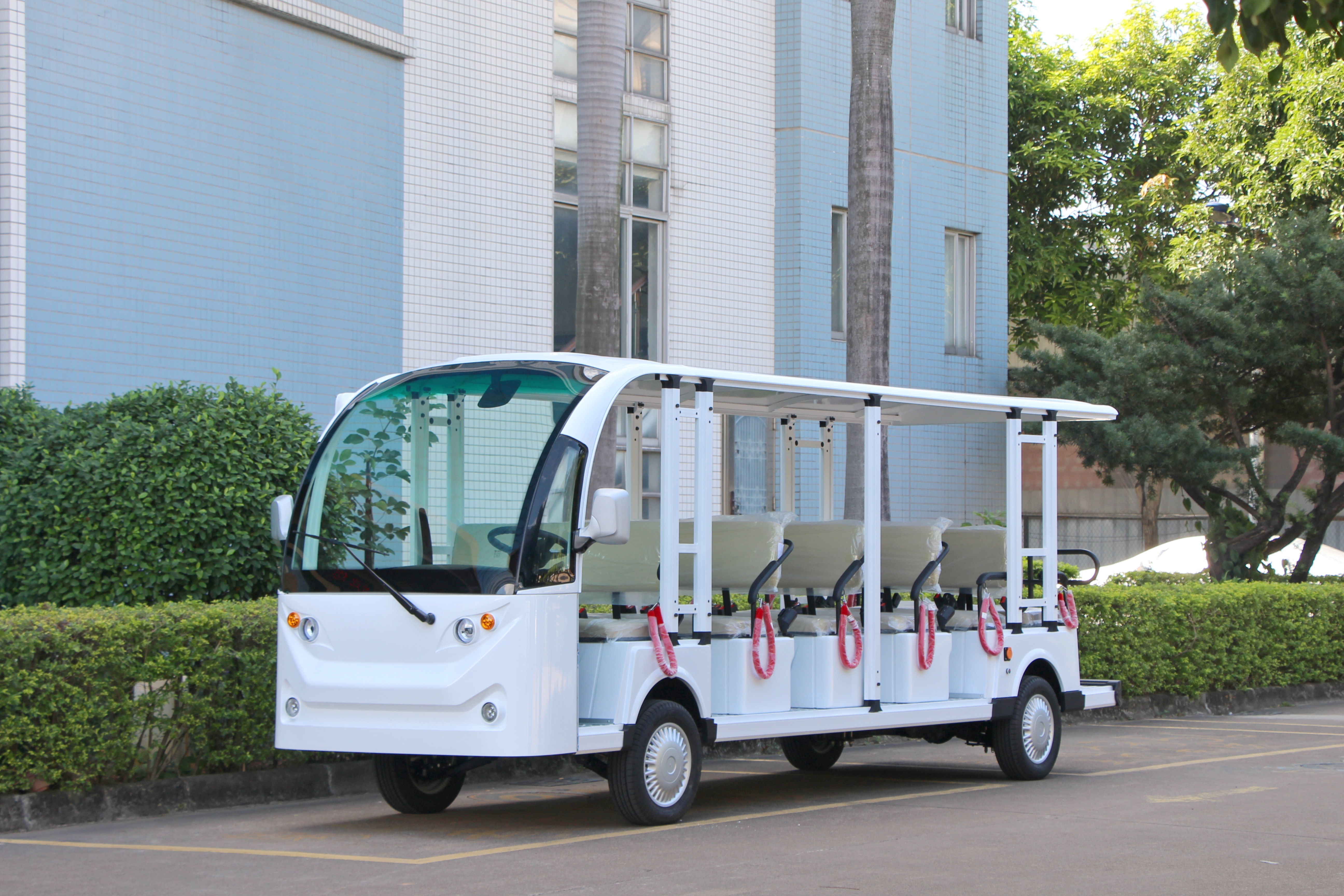
| Chassis Parameter / Specification | 17-Seat Bus Specification (LQY148A) | Conventional Shuttle Chassis Standard |
|---|---|---|
| Frame Structural Material | High-strength anti-rust steel structure | Standard channel steel frame |
| Front Axle Suspension | MacPherson independent suspension | Rigid beam / Non-independent suspension |
| Rear Axle Suspension | Leaf-spring heavy-duty suspension | Standard coil or light leaf spring |
| Front Cover Material | PT + PBT alloy injection molding | Standard FRP (Fiberglass) or sheet metal |
| Steering Assist Type | Electric power-assisted steering (EPS) | Manual mechanical steering |
| Quality Inspection Standard | 100% inspection line and road testing | Sample batch testing |
| Fulfillment & Delivery Time | 15–30 days via Sea Freight | Varies by manufacturer |
Frequently Asked Questions (FAQ)
What is the benefit of MacPherson independent front suspension on a 17-seat bus?
MacPherson independent suspension isolates road shocks to each individual front wheel. This reduces frame vibration, enhances vehicle handling, and provides a smoother ride for passengers in open-cockpit buses.
Why is PT + PBT alloy preferred over traditional fiberglass for front covers?
PT + PBT alloy is an injection-molded material offering superior impact resistance and flexibility compared to rigid fiberglass. It resists denting and cracking during low-speed impacts common in busy resort or tourist settings.
How are chassis reliability and safety verified before delivery?
Vehicles undergo 100% line testing and dedicated road testing prior to shipment. Units are inspected for braking responsiveness, steering stability, and structural alignment to meet export compliance standards.
Final Conclusion & Recommendations
Selecting the right chassis for a 17-seat bus involves comparing structural anti-rust steel frames, dual-suspension balance, power-assisted steering, and durable exterior materials. Prioritizing independent front suspension and heavy-duty rear leaf springs preserves ride quality while handling high passenger throughput. Supported by trade integration options with flexible terms (such as 30% deposit and balance before loading via sea freight), operators can source scalable transport fleets tailored to long-term operations. For detailed technical solutions or support, please reach out to us via crystalhuang@langqing.cn.
About Us
Guangzhou Langqing Electric Car CO., LTD. was established in 2000 in Nansha, Guangzhou, operating a 35,000-square-meter manufacturing facility with a monthly capacity of 1,000 units. Recognized as a national High-tech Enterprise for 16 consecutive years with over 80 technical patents, the company holds ISO9001, ISO14001, ISO10012, ISO45001, and EU CE certifications. Exporting over 80% of its production to North America, South America, Europe, the Middle East, Africa, and Southeast Asia, the enterprise supplies global markets with electric golf carts, sightseeing buses, and mini utility trucks.
Lastest
-
How are replacement spare parts provided for a 17seats bus?
2026-08-11 -
What is the typical deposit percentage for a 23seats bus order?
2026-08-11 -
What recyclable components are used in modern golf carts?
2026-08-11 -
What is the warranty policy for air conditioning on 23seats bus?
2026-08-11 -
What battery specs should I check when buying electric golf carts?
2026-08-11
SUBSCRIBE
INQUIRY