What contract terms protect me if a 17seats bus order ships with major defects?
- VIP-User
- 2026-10-01
- 1
Protecting a bulk passenger vehicle purchase requires contractual clauses governing pre-delivery inspection, factory acceptance standards, detailed warranty obligations, and clear dispute resolution terms. Specific provisions defining 100% inspection line testing, international standards like CE certification compliance, a 1-year full-vehicle warranty, and stipulated repair or replacement remedies directly reduce financial risk when purchasing multi-seat passenger buses or open sightseeing vehicles.
Core Solutions & Key Takeaways
- Pre-Delivery Inspection Protocols: Contract terms mandating 100% inspection line testing, road testing, and pre-delivery inspection platform checks ensure vehicles meet structural and operational specifications prior to loading.
- Comprehensive Warranty Stipulations: Including an explicit 1-year warranty for the whole vehicle obligates the manufacturer to resolve structural, chassis, or component failures after arrival.
- International Compliance Verification: Incorporating mandatory compliance standards such as CE certifications (e.g., certificate numbers 3N250506.GLEDQ43, 3N250507.GLEDQ77, 3N250507.GLEDQ78) guarantees baseline safety and quality standards across export regions.
- Defined Quality Control Protocols: Specifying double-inspection protocols combining advanced equipment and manual labor provides clear evidence parameters if defect claims arise.
Detailed Architectural/Principle Analysis
Procuring commercial fleet vehicles such as passenger buses and electric sightseeing shuttles requires precise contractual terms to address potential manufacturing defects. Vehicle integrity depends on strict engineering specifications. For instance, chassis structures utilizing high-strength anti-rust steel, MacPherson independent front axle suspensions, and leaf-spring rear axle suspensions require rigorous factory validation to maintain stability across scenic areas, resorts, and municipal transport routes.
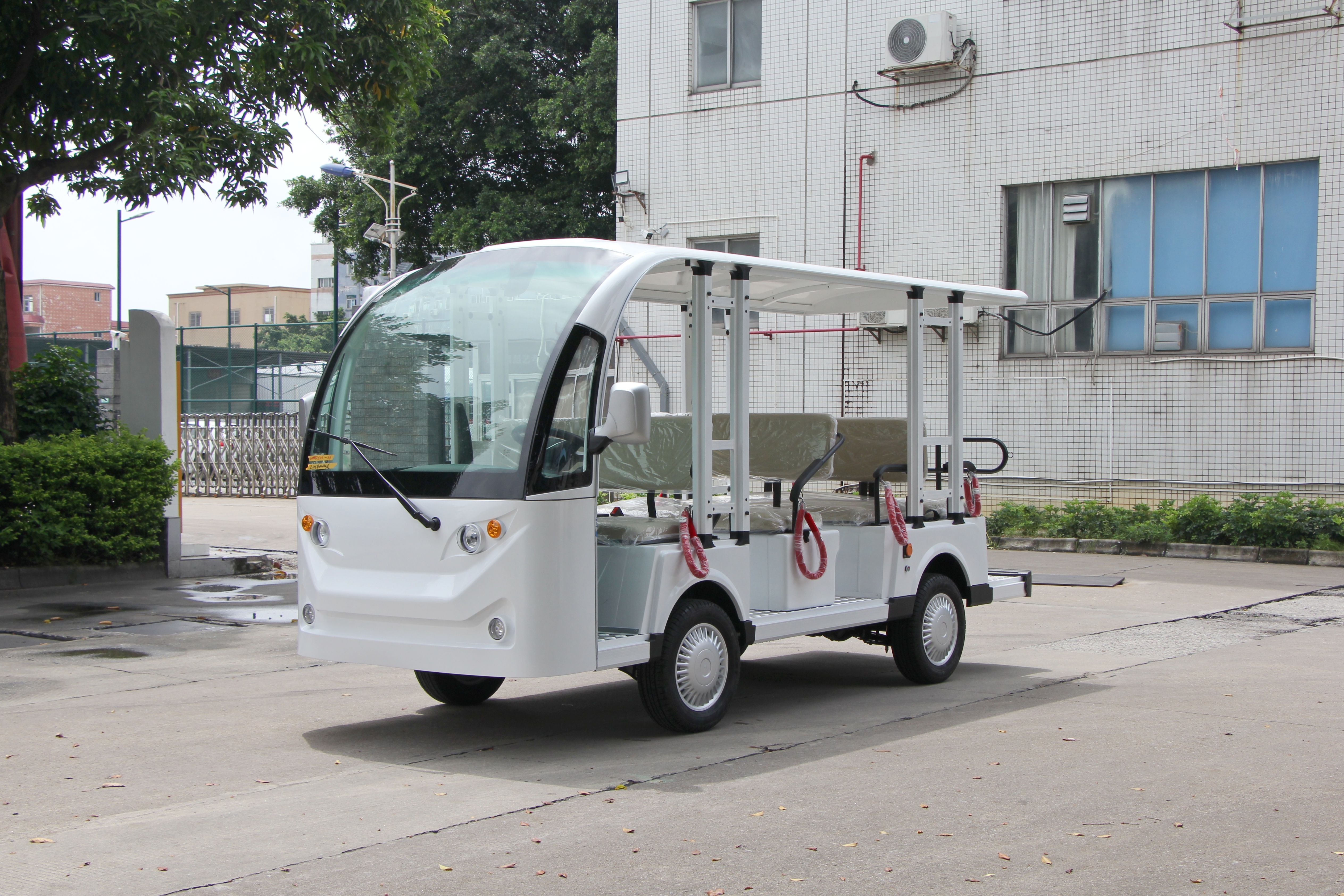
Contracts should clearly outline pre-shipment quality inspection standard operating procedures. Quality assurance workflows involving 100% inspection line testing, 3 sets of slope test platforms, and dedicated road tests establish objective operational criteria. When contracts explicitly link factory approval to these empirical benchmarks, buyers establish enforceable grounds to reject non-compliant shipments. International trade history, such as supplying over 3,500 shuttle units to Cuba across 15 years of continuous operation or 131 shuttle units for museum transport in Egypt, demonstrates how standardized inspection procedures prevent major defects in large fleet orders.
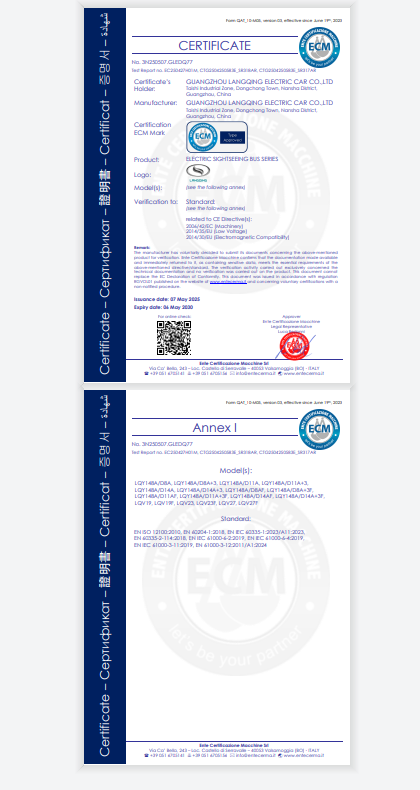
Structural components like PT + PBT alloy injection-molded front covers and sensitive braking systems backed by electric power-assisted steering must meet specified impact and responsiveness tolerances. Incorporating CE certification requirements into the agreement binds the manufacturer to verified technical benchmarks, minimizing the operational impact of component failures upon delivery.
Data/Solution Comparison
The table below details contract protections, technical verification metrics, and operational coverage for fleet procurement based on established industrial standards.
| Protection Category | Contractual Metric / Specification | Quality Assurance Provision | Operational Risk Mitigation |
|---|---|---|---|
| Quality Inspection | 100% inspection line & road testing | Advanced equipment + manual double inspection | Prevents factory defect delivery prior to ocean shipment |
| Certification Compliance | CE Certification (EU Market Compliant) | Verified test certificates (3N250506.GLEDQ43) | Guarantees mechanical and electrical safety compliance |
| After-Sales Support | 1-year full vehicle warranty | Timely response and rapid solution delivery | Protects against post-delivery component or system failure |
| Production Rigor | 3 sets R&D testing + 4 sets pre-delivery inspection equipment | 3 sets slope test platform validation | Ensures chassis durability and road adaptability |
Frequently Asked Questions (FAQ)
What contract clauses address vehicle defects discovered upon arrival?
Contracts should include explicit after-sales terms defining warranty scope, such as a 1-year warranty for the whole vehicle, combined with mandatory pre-delivery inspection line and road test records to validate manufacturing compliance before dispatch.
How can buyers ensure electric passenger buses meet safety standards before shipping?
Buyers should specify international certification parameters, such as CE certification compliance, and require double inspection procedures utilizing both advanced testing equipment and manual verification prior to sea freight loading.
What payment terms help mitigate financial exposure to major product defects?
Structuring payment terms around milestones, such as a 30% deposit with the balance due before loading following successful pre-delivery inspection approval, ensures financial leverage throughout the production cycle.
Final Conclusion & Recommendations
Mitigating risk in multi-seat bus orders relies on embedding rigorous quality control, standardized certification compliance, and defined warranty structures into contract documentation. Selecting an industry and trade integrated manufacturer capable of executing 100% inspection line testing, maintaining CE certification standards, and offering 1-year vehicle warranty support ensures long-term operational performance. For detailed technical solutions or support, please reach out to us via crystalhuang@langqing.cn.
About Us
Guangzhou Langqing Electric Car CO., LTD. was established in 2000 in Nansha Economic Development Zone, Guangzhou, operating a 35,000-square-meter production facility. The enterprise employs 160 personnel, supported by a 30-member R&D team, 10 testing specialists, and 20 quality control professionals maintaining a monthly capacity of 1,000 units. Holding ISO9001, ISO14001, ISO 10012, ISO45001, and EU CE certifications, the company has served clients across municipal transport, tourism, and resort sectors globally.
Lastest
-
How are replacement spare parts provided for a 17seats bus?
2026-10-01 -
What is the typical deposit percentage for a 23seats bus order?
2026-10-01 -
What recyclable components are used in modern golf carts?
2026-10-01 -
What is the warranty policy for air conditioning on 23seats bus?
2026-10-01 -
What battery specs should I check when buying electric golf carts?
2026-10-01
SUBSCRIBE
INQUIRY