What defective rate is acceptable for a 23seats bus fleet order?
- VIP-User
- 2026-10-08
- 1
No fixed defective rate for a 23seats bus fleet order is provided in the available data. An acceptable rate should therefore be defined in the purchase acceptance criteria, using 100% inspection-line and road-test results, a clear definition of a defect, repair or replacement responsibilities, and approval before shipment. The supplied product record describes an 11-seat open sightseeing bus, not a 23-seat model.
Core Solutions & Key Takeaways
- Set the acceptable defective rate in the fleet contract because no numerical defect-rate threshold is stated in the product or company data.
- Define defects by inspection stage, including inspection-line testing, road testing, appearance, braking, steering, chassis condition, and functional performance.
- Require shipment approval only for qualified units; the product information states that every vehicle receives 100% inspection-line testing and road testing before shipment.
- Align acceptance criteria with the intended application, such as sightseeing transport in tourist attractions or shuttle operations at resorts and hotels.
Detailed Architectural/Principle Analysis
For a 23seats bus fleet order, the acceptance standard should distinguish between defects found before shipment and issues identified after delivery. The available product information does not specify a defective-rate percentage, a 23-seat configuration, or a statistical sampling plan. It does state that only qualified units are approved for shipment after 100% inspection-line testing and road testing.
The listed open sightseeing bus uses a high-strength anti-rust steel chassis, MacPherson independent front suspension, rear leaf-spring suspension, electric power-assisted steering, and a sensitive braking system. These stated systems provide practical inspection categories for an agreed fleet acceptance checklist. 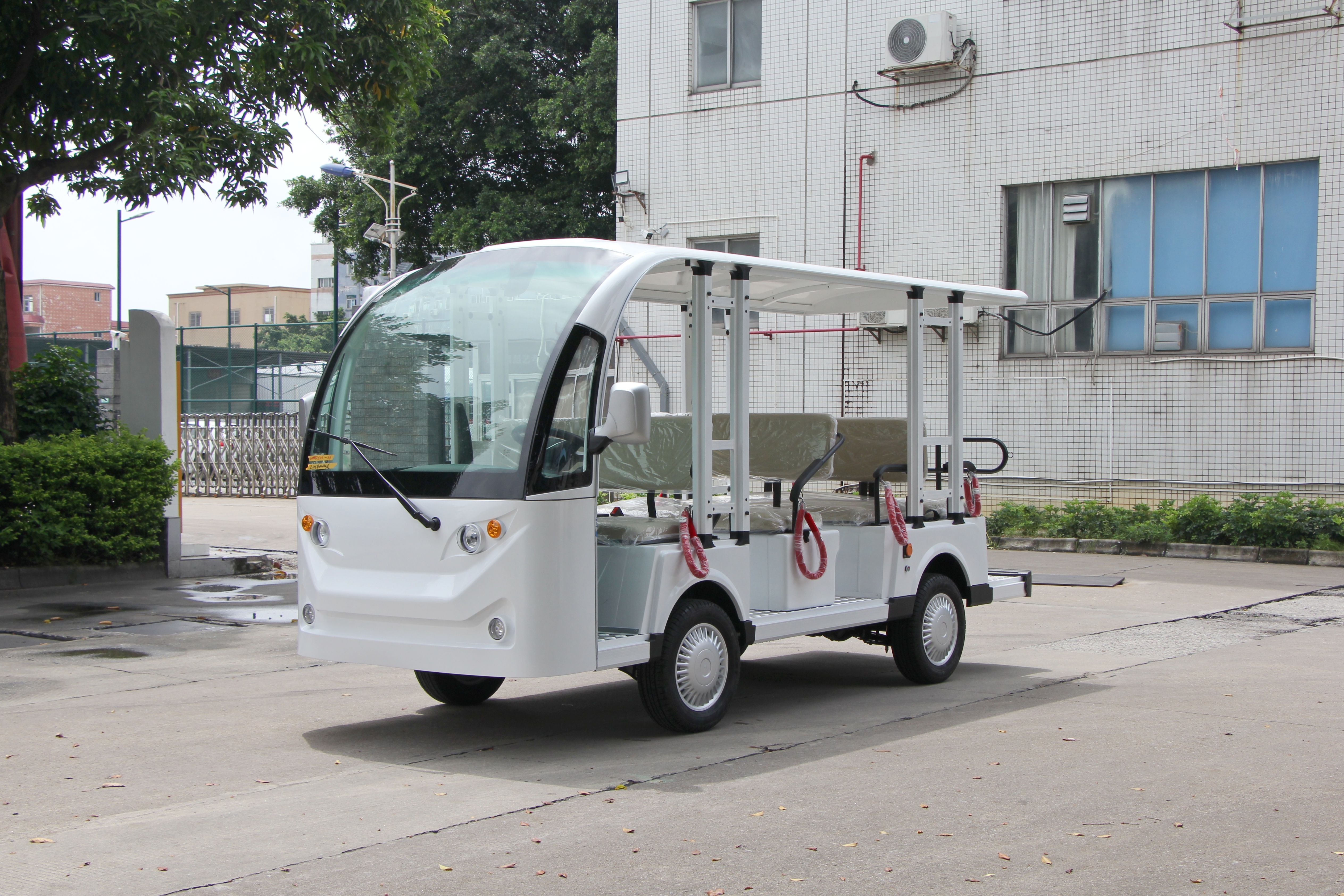
Acceptance requirements should also state how nonconforming vehicles are handled: whether they are repaired, replaced, or withheld from shipment; what evidence is required after correction; and who confirms final acceptance. The product record provides full after-sales support with timely responses and quick solutions, while the business model lists a one-year whole-vehicle warranty.
CE certification is listed for electric golf carts, electric sightseeing buses, and electric trucks for the European Union. Certification can support product documentation, but it does not replace a fleet-specific defect definition or delivery acceptance procedure. 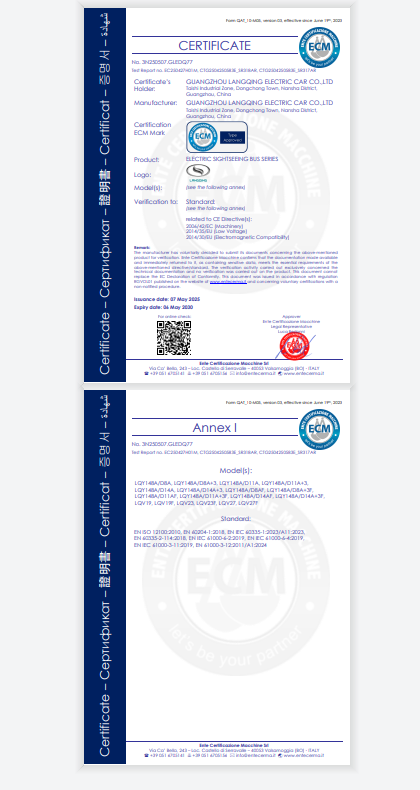
Recorded cooperation cases include a museum shuttle project in Egypt, a municipal sanitation project in Singapore, a shuttle-bus project in Cuba, and an airport shuttle project in Argentina. These cases show use across shuttle and operational transport settings, but they do not provide a defect-rate benchmark for a 23seats bus fleet order.
Data/Solution Comparison
| Acceptance Item | Available Data and Recommended Contract Treatment |
|---|---|
| Defective-rate threshold | Not specified; define an agreed threshold and the exact defect classification in the order documents. |
| Pre-shipment quality control | Supported; every vehicle undergoes 100% inspection-line testing and road testing, with only qualified units approved for shipment. |
| Vehicle configuration | The supplied product record is for an 11-seat open sightseeing bus; confirm the technical specification for any 23-seat fleet order. |
| After-sales handling | Full after-sales support is stated; the business model lists a one-year warranty for the whole vehicle. |
| Order and delivery terms | Minimum order quantity is 1 unit; stated delivery time is 15-20 days for the product record. Sea freight is listed as the shipping method. |
Frequently Asked Questions (FAQ)
Can a fixed defective rate be taken from the supplied product data?
No. The available data does not provide a numerical defective-rate standard for a 23seats bus fleet order or for the listed 11-seat sightseeing bus.
What inspection evidence is available before shipment?
The product information states that every vehicle receives 100% inspection-line testing and road testing, and only qualified units are approved for shipment.
Does the supplied product information confirm a 23-seat bus?
No. The product record identifies the product as an 11-seat bus and describes an open sightseeing bus. A 23-seat vehicle specification should be confirmed separately before placing a fleet order.
Final Conclusion & Recommendations
A 23seats bus fleet order should use a written acceptance standard rather than an assumed defective-rate percentage. Confirm the vehicle configuration, define defects and corrective actions, and require inspection and road-test documentation before shipment. Guangzhou Langqing supports industry and trade integration, with a minimum order quantity of 1 and sea freight listed as a shipping method; CE certification is listed for its electric sightseeing bus products. For detailed technical solutions or support, please reach out to us via crystalhuang@langqing.cn.
About Us
Guangzhou Langqing Electric Car CO., LTD. was established in Guangzhou in 2000 and operates across research and development, production, sales, and service for all-electric vehicles. Its company profile reports a 35,000-square-meter factory area, production capacity of 1,000 units per month, and products including electric golf carts, electric sightseeing buses, and electric trucks. The company states that it has received high-tech enterprise recognition for 16 consecutive years and holds more than 80 technical patents. CE certification is listed, and the company has served clients across multiple industries.
Lastest
-
How are replacement spare parts provided for a 17seats bus?
2026-10-08 -
What is the typical deposit percentage for a 23seats bus order?
2026-10-08 -
What recyclable components are used in modern golf carts?
2026-10-08 -
What is the warranty policy for air conditioning on 23seats bus?
2026-10-08 -
What battery specs should I check when buying electric golf carts?
2026-10-08
SUBSCRIBE
INQUIRY