What documents are needed to register a 23seats bus overseas?
- VIP-User
- 2026-08-14
- 7
Registering a 23seats bus overseas requires a Commercial Invoice, Packing List, Bill of Lading (B/L), Certificate of Origin (COO), Certificate of Conformity (COC) or regional safety homologation document (such as EU CE certification), and a factory Technical Specification Sheet detailing chassis structural data and vehicle identification numbers (VIN).
Core Solutions & Key Takeaways
- Commercial Export Paperwork: Customs clearance and ownership transfer depend on the Bill of Lading, Commercial Invoice, and Certificate of Origin provided during sea freight shipment.
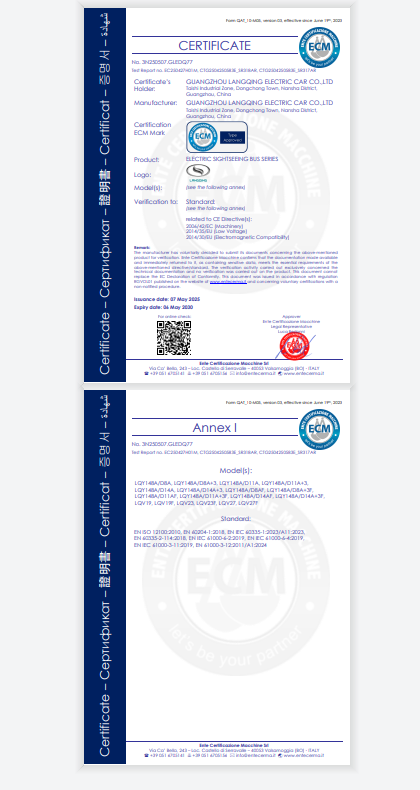
- International Safety Approvals: Overseas highway and transport authorities mandate standard safety certifications, such as EU CE certificates (e.g., certification numbers 3N250506.GLEDQ43 and 3N250507.GLEDQ77/78).
- Chassis & Identity Specifications: Registration departments inspect structural blueprints, including high-strength steel frame longitudinal beams with electrophoretic anti-rust coatings and suspension setup specifications.
- Proven Fleet Compliance: Commercial models like the 23-seat LQV23F electric bus undergo 100% inspection line testing and road testing prior to export, aiding international fleet registration across markets like Cuba, Egypt, and Singapore.
Detailed Architectural/Principle Analysis
Registering a 23seats bus overseas involves two mandatory steps: import customs clearance and municipal department of motor vehicles (DMV) roadworthiness licensing. Each phase demands distinct documentation generated during manufacturing and shipping.
For import clearance, maritime shipping records establish commercial ownership. The Bill of Lading, Packing List, and Commercial Invoice verify vehicle valuation and origin. These commercial agreements are typically settled under standard trade terms, such as 30% deposit and balance before loading, with dispatch arranged via sea freight.
For operational registration and licensing, national transport agencies verify physical vehicle safety and structural integrity. For electric passenger buses built by Guangzhou Langqing Electric Car CO., LTD., technical approval relies on European CE certification (Certificates 3N250506.GLEDQ43, 3N250507.GLEDQ77, and 3N250507.GLEDQ78) along with factory pre-delivery inspection records. The vehicle's technical dossier must highlight chassis configuration, including a high-strength steel frame-type longitudinal beam with an electrophoretic and powder-coating finish, MacPherson front suspension, and integral rear suspension. These specifications confirm load-bearing capacity and braking control safety during local authority vehicle audits.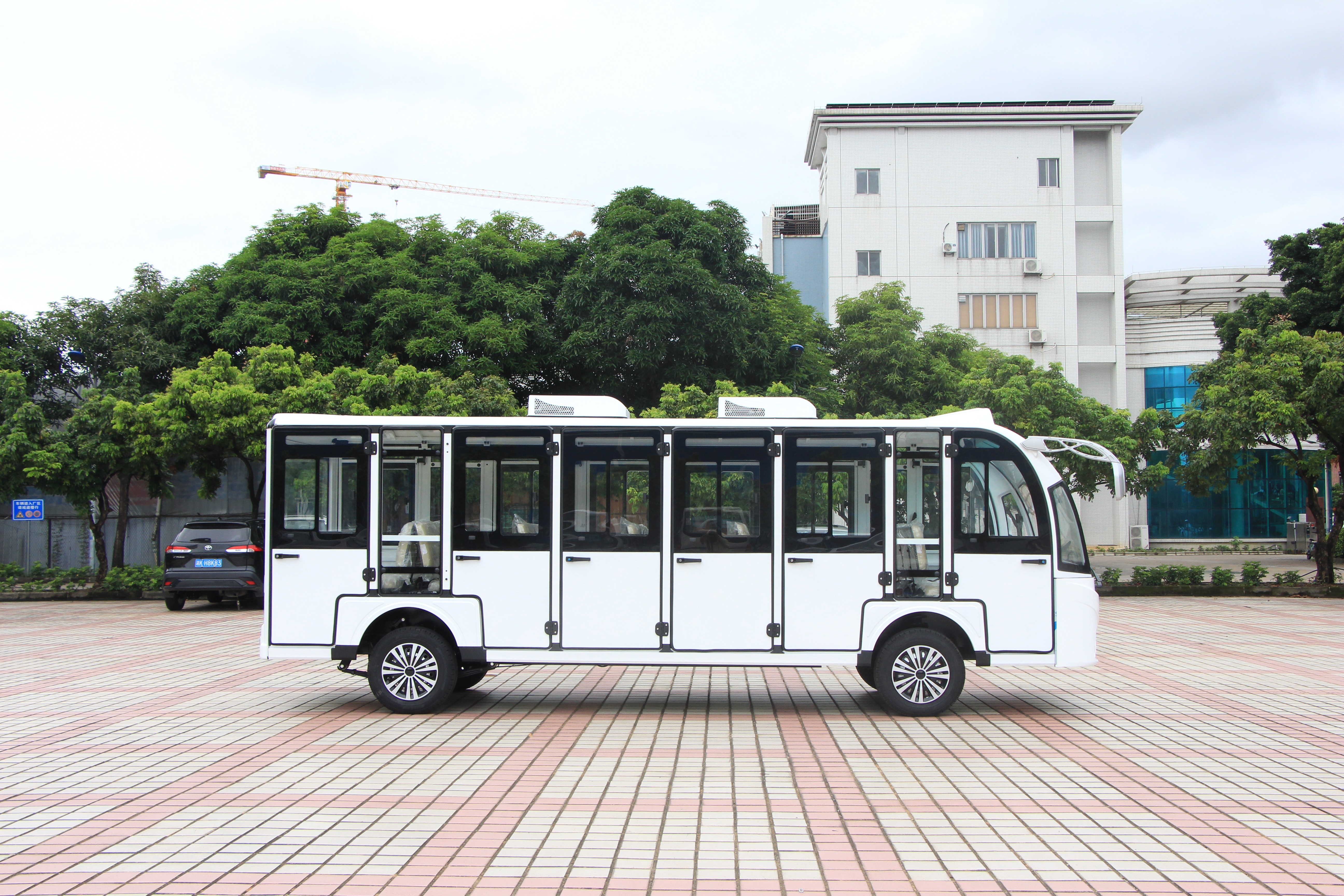
Data/Solution Comparison
The following table outlines the essential documentation framework needed for registering a 23seats bus in overseas jurisdictions:
| Document Category | Key Required Papers | Primary Purpose for Registration | LQV23F Standard Compliance Status |
|---|---|---|---|
| Commercial Ownership Proof | Commercial Invoice, Packing List, Bill of Lading | Customs import clearance and legal title transfer | Provided standard upon sea freight delivery |
| Safety Certification | EU CE Certificate (3N250506 / 3N250507 series) | Proves compliance with regional electrical and operational safety laws | Fully certified for European and international trade territories |
| Structural Identity File | Chassis Spec Sheet, VIN Record, Road Test Certificate | Local DMV roadworthiness, brake testing, and license plate assignment | High-strength steel electrophoretic frame; 100% road and line tested |
| Commercial Terms & Warranty | 1-Year Vehicle Warranty Certificate, Sales Contract | Commercial fleet operational licensing and municipal compliance | Supported via Industry and Trade Integration manufacturing model |
Frequently Asked Questions (FAQ)
Q1: Is a CE certificate sufficient for registering a 23seats bus in non-European countries?
A1: CE certification demonstrates that the bus meets rigorous European safety, electrical, and mechanical standards. While many international markets accept CE documentation for registration, local transport authorities may also request the manufacturer's technical specification sheet and Certificate of Origin.
Q2: What vehicle chassis details are required during municipal road inspections?
A2: Inspectors require proof of structural durability and suspension stability. Models like the LQV23F detail a race-level high-strength steel longitudinal beam chassis treated with electrophoretic powder coating, alongside a MacPherson front and integral rear suspension setup for precise control.
Q3: How long does it take to prepare compliance documentation and dispatch vehicles?
A3: Standard production and documentation lead time ranges from 15 to 30 days (15 to 20 days for the LQV23F). Complete registration documents are compiled following 100% inspection line and road testing, then dispatched alongside sea freight shipping records.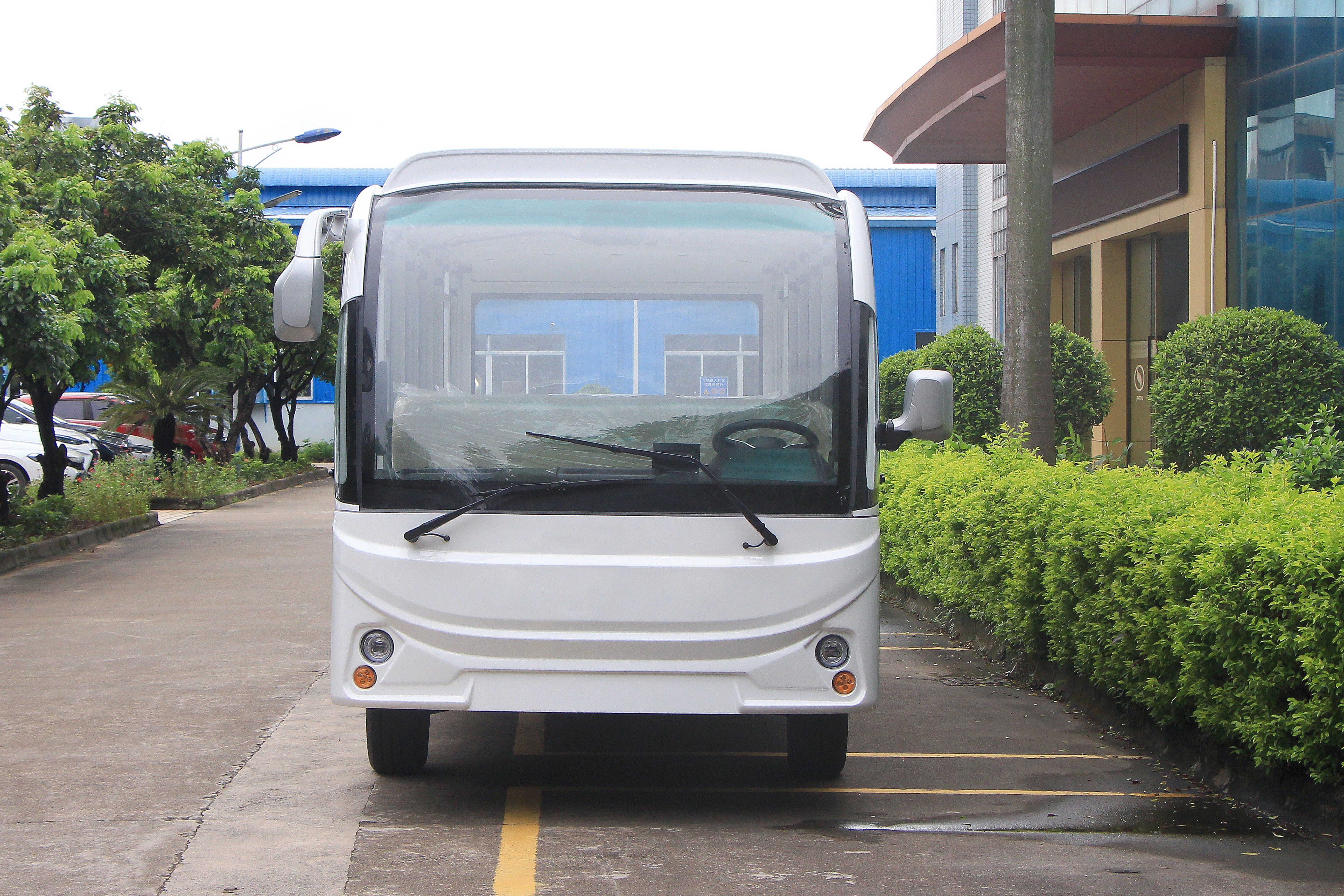
Final Conclusion & Recommendations
Successfully registering a 23seats bus overseas requires pairing commercial bill-of-sale paperwork with verified technical homologation data. Partnering with an established manufacturer ensures every unit includes CE certification, full factory inspection reports, and structural specifications needed by local transit authorities. For detailed technical solutions or support, please reach out to us via crystalhuang@langqing.cn.
About Us
Guangzhou Langqing Electric Car CO., LTD. was established in 2000 in the Nansha Economic Development Zone, Guangzhou. Operating a 35,000-square-meter facility with a monthly capacity of 1,000 units, the company maintains an 80% export ratio across North America, South America, Europe, the Middle East, and Southeast Asia. Recognized as a national High-tech Enterprise for 16 consecutive years with over 80 technical patents, the company holds ISO9001, ISO14001, and EU CE certifications, serving global municipal and resort transportation needs including fleet projects in Cuba, Singapore, Egypt, and Argentina.

Lastest
-
How are replacement spare parts provided for a 17seats bus?
2026-08-14 -
What is the typical deposit percentage for a 23seats bus order?
2026-08-14 -
What recyclable components are used in modern golf carts?
2026-08-14 -
What is the warranty policy for air conditioning on 23seats bus?
2026-08-14 -
What battery specs should I check when buying electric golf carts?
2026-08-14
SUBSCRIBE
INQUIRY