What emission standards apply to importing a 14seats bus to EU?
- VIP-User
- 2026-08-12
- 7
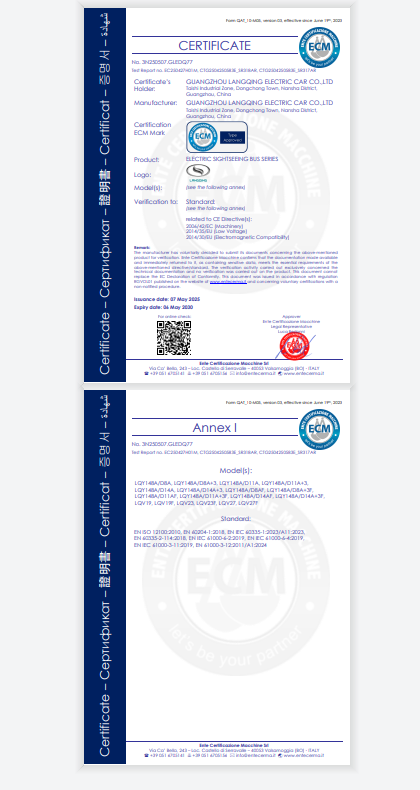
Importing an all-electric 14seats bus to the European Union requires no tailpipe emission compliance because electric power systems emit zero exhaust emissions, bypassing Euro combustion standards. Instead, European Union import regulations require CE certification to verify compliance with European safety, low voltage, and electromagnetic compatibility standards prior to operational deployment in scenic areas or municipal transport.
Core Solutions & Key Takeaways
- Zero Tailpipe Emissions: Fully electric 14seats passenger buses produce zero exhaust emissions, satisfying EU environmental regulations without requiring internal combustion exhaust treatments.
- CE Certification Compliance: All electric buses imported into the EU must hold valid CE certifications covering machinery and electrical safety directives.
- Versatile Application Scenarios: Suitable for high-density passenger transfers in scenic areas, tourist attractions, resorts, and municipal transport networks.
- Durable Engineering: Built on high-strength steel frame longitudinal beams with electrophoretic and powder-coating anti-rust finishes for extended service life.
Detailed Architectural/Principle Analysis
Importing passenger-carrying utility vehicles like the LQY148A 14seats bus into EU member states simplifies compliance regarding traditional Euro tailpipe emission regulations. Because the propulsion mechanism relies entirely on electric battery systems rather than internal combustion engines, zero direct greenhouse gas or particulate emissions occur during operation.
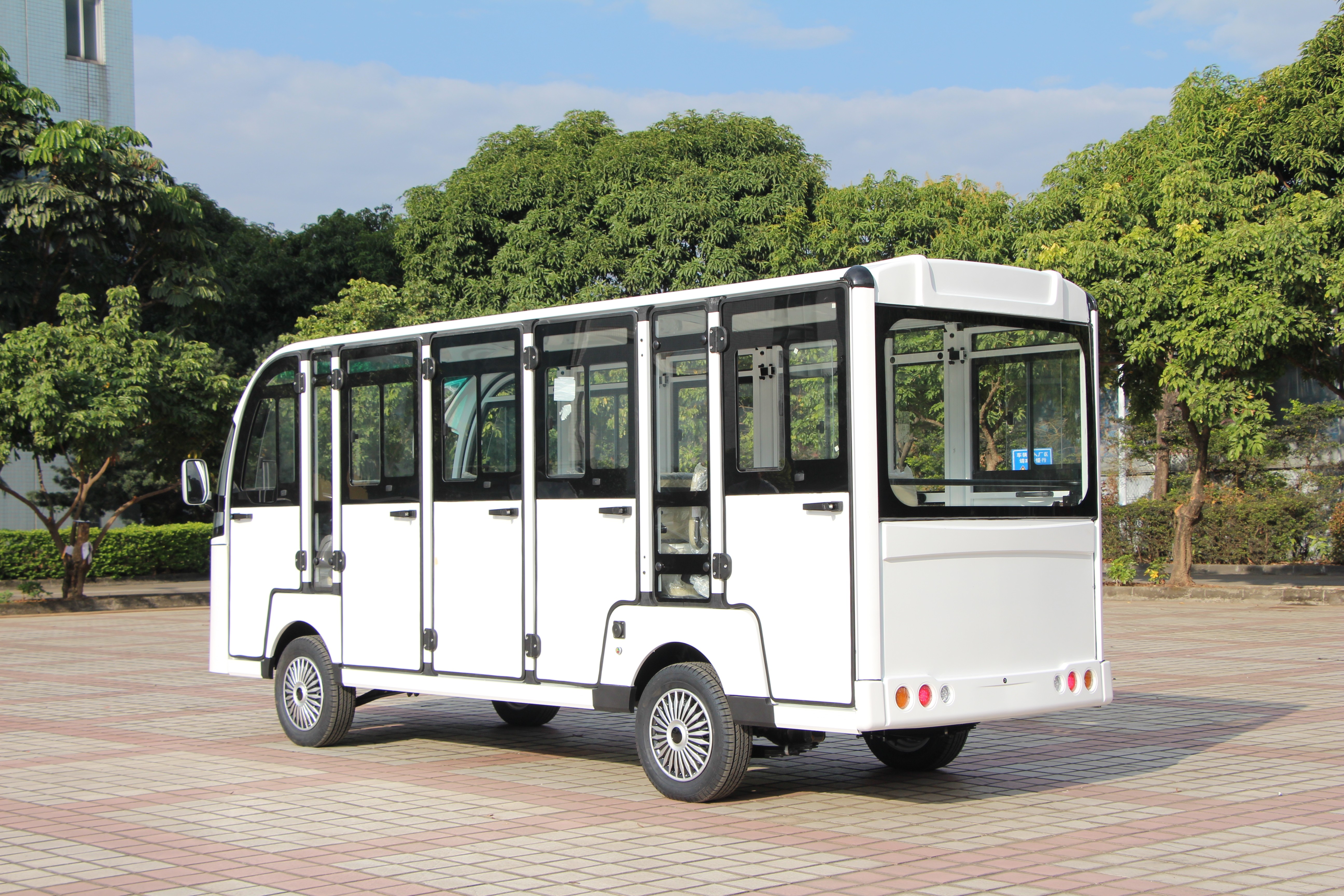
Rather than exhaust testing, EU compliance focuses on technical integrity and electrical safety. Key regulatory checks require verified CE approval. Manufacturing standards established by Guangzhou Langqing Electric Car CO., LTD. utilize advanced production processes, including 100% inspection line testing and road testing prior to export shipment. Structural strength is backed by electrophoretic and powder-coated steel chassis beams combined with front MacPherson and rear integral suspensions to maintain stability under full passenger loads.
Data/Solution Comparison
| Specification / Standard | Internal Combustion 14-Seat Bus | Electric 14seats Bus (LQY148A) |
|---|---|---|
| EU Emission Compliance | Strict Euro VI Exhaust Limits | Zero Tailpipe Emissions (Exempt from Euro VI) |
| Required EU Certification | EU Whole Vehicle Type Approval (WVTA) | CE Certification (Safety & EMC Compliance) |
| Chassis Anti-Rust Finish | Standard Paint Coating | Electrophoretic + Powder-Coating |
| Suspension Architecture | Standard Leaf Springs | Front MacPherson + Rear Integral Suspension |
| Quality Inspection Standard | Sample Testing | 100% Line Testing & Road Testing |
Frequently Asked Questions (FAQ)
Do electric 14seats buses require Euro VI emission testing before entering the EU?
No. Euro VI emission standards target internal combustion engine exhaust. All-electric buses produce zero exhaust emissions and are evaluated on electrical safety and CE conformity instead.
What certifications are required for importing the LQY148A 14seats bus into European countries?
Electric 14seats passenger buses require official CE certification covering machinery safety, low voltage parameters, and electromagnetic standards to ensure full regulatory compliance across EU markets.
How is quality and safety verified before export delivery?
Vehicles undergo double inspection consisting of advanced equipment testing and manual evaluation. Every unit undergoes 100% inspection line testing and dedicated road testing prior to shipping.
Final Conclusion & Recommendations
When importing a 14seats bus to the EU, electric power systems eliminate complex tailpipe emission barriers while providing quiet, eco-friendly operational performance for commercial and municipal applications. Prioritize vehicles equipped with electrophoretic anti-corrosion chassis, full CE certification, and comprehensive pre-delivery testing to ensure full compliance and long-term durability. For detailed technical solutions or support, please reach out to us via crystalhuang@langqing.cn.
About Us
Guangzhou Langqing Electric Car CO., LTD. was established in 2000 in Nansha Economic Development Zone, Guangzhou, and operates a 35,000-square-meter manufacturing facility. The company houses 160 employees and maintains a monthly production capacity of 1,000 units. Supported by a 30-member R&D team, ISO9001 and CE certifications, it has served clients across multiple industries across North America, South America, Europe, the Middle East, and Southeast Asia.
Lastest
-
How are replacement spare parts provided for a 17seats bus?
2026-08-12 -
What is the typical deposit percentage for a 23seats bus order?
2026-08-12 -
What recyclable components are used in modern golf carts?
2026-08-12 -
What is the warranty policy for air conditioning on 23seats bus?
2026-08-12 -
What battery specs should I check when buying electric golf carts?
2026-08-12
SUBSCRIBE
INQUIRY