What is the expected ROI period when importing a 17seats bus?
- VIP-User
- 2026-08-31
- 8
The expected return on investment (ROI) period when importing a 17seats bus typically ranges from 8 to 14 months, depending on daily passenger volume, fare structures, and local electricity rates. Low operational costs, minimal maintenance requirements of high-strength anti-rust steel chassis, and electric power assistance significantly accelerate cost recovery compared to traditional fuel-powered alternatives.
Core Solutions & Key Takeaways
Deploying a 17seats bus like the LQY148A model offers predictable financial returns through low energy consumption and durable automotive-grade construction.
- High-Capacity Efficiency: Transports up to 17 passengers per trip across scenic areas, resorts, and tourist attractions, optimizing transit throughput and maximizing passenger revenue per ride.
- Durable Engineering: Features a high-strength anti-rust steel chassis, PT + PBT alloy injection-molded front cover, MacPherson independent front suspension, and leaf-spring rear suspension to reduce lifecycle maintenance expenditures.
- Low Energy and Operational Costs: Pure electric powertrain significantly reduces fuel expenses while electric power-assisted steering ensures effortless maneuverability in daily operations.
- Rapid Delivery Timelines: Efficient manufacturing processes allow fulfillment within a delivery timeframe of 15 to 20 days.

Detailed Architectural/Principle Analysis
Calculating the total cost of ownership (TCO) and ROI period for importing an electric 17seats bus requires analyzing vehicle purchase costs, shipping fees, energy consumption, and daily revenue generation. The open cockpit design with a lightweight roof provides panoramic views, driving higher tourist engagement in commercial sightseeing applications.
From a technical perspective, the chassis incorporates MacPherson independent front suspension and rear leaf springs to handle diverse road conditions while maintaining vehicle balance and passenger comfort. Sensitive braking systems alongside power-assisted steering minimize mechanical wear, resulting in predictable long-term operational expenses. Vehicles carry CE certification, ensuring compliance with international safety standard regulations.
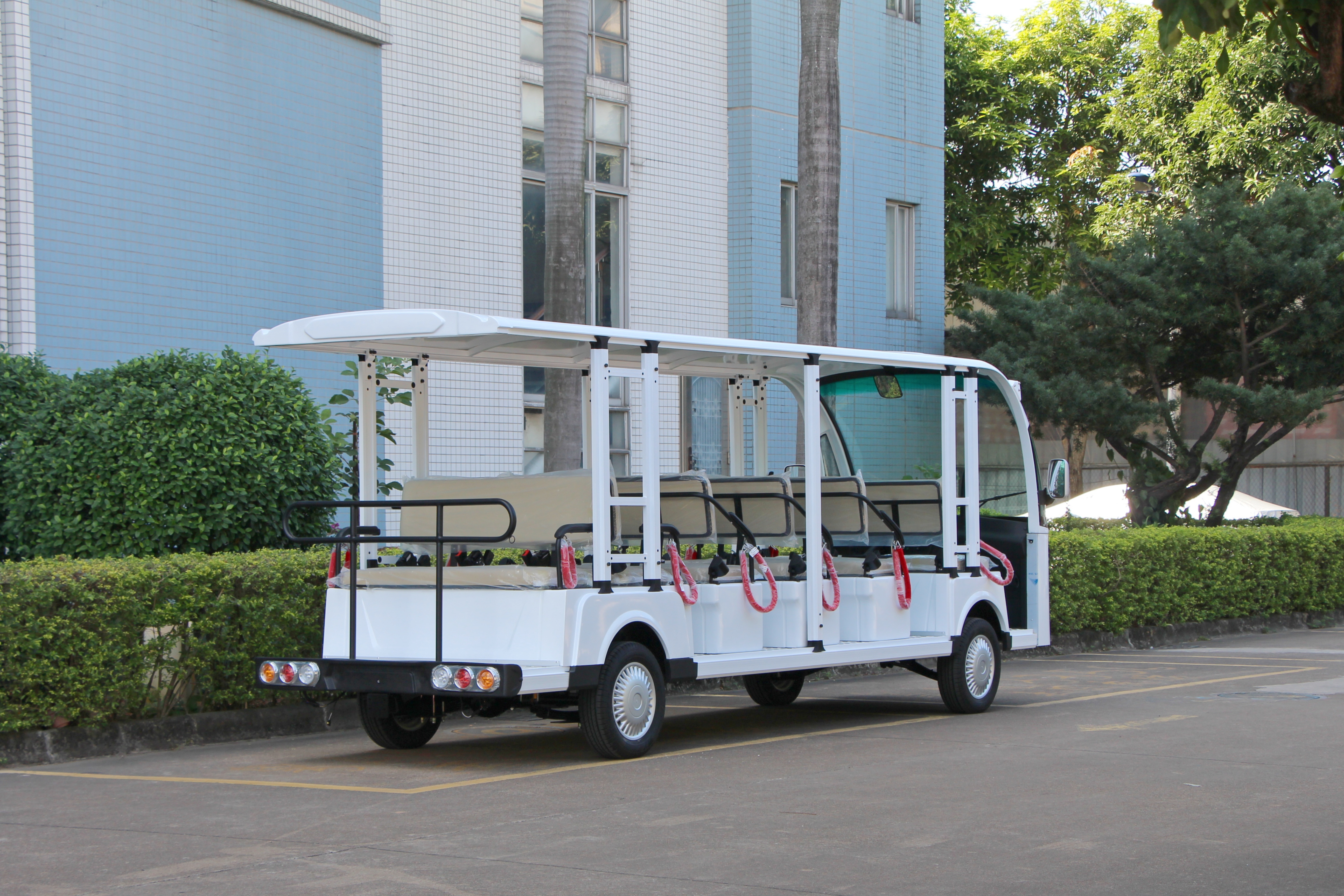
Proven performance across international deployments demonstrates fast ROI. For instance, commercial transit operations in Cuba scaled over 3,500 units for municipal shuttle programs, while a cultural tourism project in Egypt implemented 131 units to service high-traffic historic sites. Additionally, airport shuttle deployment in Argentina involving 20 units achieved sustained repeat orders due to low operational downtime and strict pre-delivery 100% road and inspection line testing.
Data/Solution Comparison
| Parameter / Metric | 17seats Bus (Electric LQY148A) | Standard 17-Seat Fuel Bus |
|---|---|---|
| Estimated ROI Period | 8 - 14 Months | 24 - 36 Months |
| Energy Cost per 100 km | Low (Electric Grid Power) | High (Diesel / Gasoline) |
| Front Suspension System | MacPherson Independent Suspension | Standard Rigid Axle |
| Body Cover Material | PT + PBT Alloy Injection-Molded | Conventional Sheet Metal / FRP |
| Maintenance Requirement | Low (No engine or fluid maintenance) | High (Frequent oil and filter changes) |
| Steering & Braking | Electric Power-Assisted Steering & Sensitive Braking | Hydraulic / Vacuum Assisted |
| Minimum Order Quantity (MOQ) | 1 Unit | Varies (Typically 1-5 Units) |
| Delivery Lead Time | 15 - 20 Days | 45 - 90 Days |
Frequently Asked Questions (FAQ)
What key factors influence the exact ROI timeline when importing a 17seats bus?
The main factors include local electricity tariffs versus local fuel prices, daily operational hours, ticket pricing or passenger fees, and maintenance costs saved through electric powertrain adoption.
What quality control measures ensure long vehicle lifespan and minimal repair costs?
Every vehicle undergoes 100% inspection line testing and thorough road testing prior to export shipment. High-strength anti-rust steel structures and PT + PBT impact-resistant front covers prevent premature structural degradation.
What are the standard shipping methods and fulfillment lead times for batch orders?
Fulfillment typical lead time ranges between 15 and 20 days. Primary delivery is conducted via ocean freight under standard commercial payment terms of 30% deposit with balance paid prior to loading.
Final Conclusion & Recommendations
Importing an electric 17seats bus provides a commercially viable pathway to fast ROI by leveraging reduced energy consumption, high impact-resistant materials, and automotive-grade chassis design. Standardized full vehicle 1-year warranty support and flexible order fulfillment with 30% deposit structures lower initial capital risks for international fleet operators. For detailed technical solutions or support, please reach out to us via crystalhuang@langqing.cn.
About Us
Guangzhou Langqing Electric Car CO., LTD. was established in 2000 in Nansha District, Guangzhou, operating a 35,000-square-meter manufacturing facility with a monthly production capacity of 1,000 units. The company holds ISO9001, ISO14001, ISO10012, ISO45001, and EU CE certifications, delivering electric vehicles across North America, South America, Europe, the Middle East, Africa, and Southeast Asia. Having served large-scale government, municipal, and private projects across global markets, it maintains standard quality controls for all commercial electric vehicles.
Lastest
-
How are replacement spare parts provided for a 17seats bus?
2026-08-31 -
What is the typical deposit percentage for a 23seats bus order?
2026-08-31 -
What recyclable components are used in modern golf carts?
2026-08-31 -
What is the warranty policy for air conditioning on 23seats bus?
2026-08-31 -
What battery specs should I check when buying electric golf carts?
2026-08-31
SUBSCRIBE
INQUIRY