What material innovations are lowering 17seats bus body weight?
- VIP-User
- 2026-08-16
- 6
Material innovations lowering 17seats bus body weight include a lightweight roof and an open cockpit, which reduce upper-body mass and improve visual openness. The PT + PBT alloy injection-molded front cover provides a lightweight material option with stated impact resistance. The vehicle also uses a high-strength anti-rust steel chassis, MacPherson independent front suspension, and rear leaf-spring suspension for road adaptability.
Core Solutions & Key Takeaways
- The lightweight roof reduces weight in the upper structure of the 17seats bus.
- The open cockpit removes enclosed body elements and provides an unobstructed view for sightseeing use.
- The PT + PBT alloy injection-molded front cover combines a specified lightweight material approach with industry-leading impact resistance.
- The bus is designed for scenic areas, tourist attractions, resorts, and hotels, where open-air passenger transport and unobstructed views are required.
Detailed Architectural/Principle Analysis
The main material change identified in the product data is the PT + PBT alloy injection-molded front cover. This replaces a conventional unspecified front-cover material with an engineered alloy component. The available data states that the cover offers industry-leading impact resistance, while its injection-molded construction supports the product's lightweight front-end design.

The lightweight roof contributes directly to reduced upper-body mass. Combined with the open cockpit, it creates an open sightseeing configuration with an unobstructed view. The product data does not provide a roof weight, total vehicle weight, or percentage reduction, so the effect can be identified qualitatively rather than quantified.
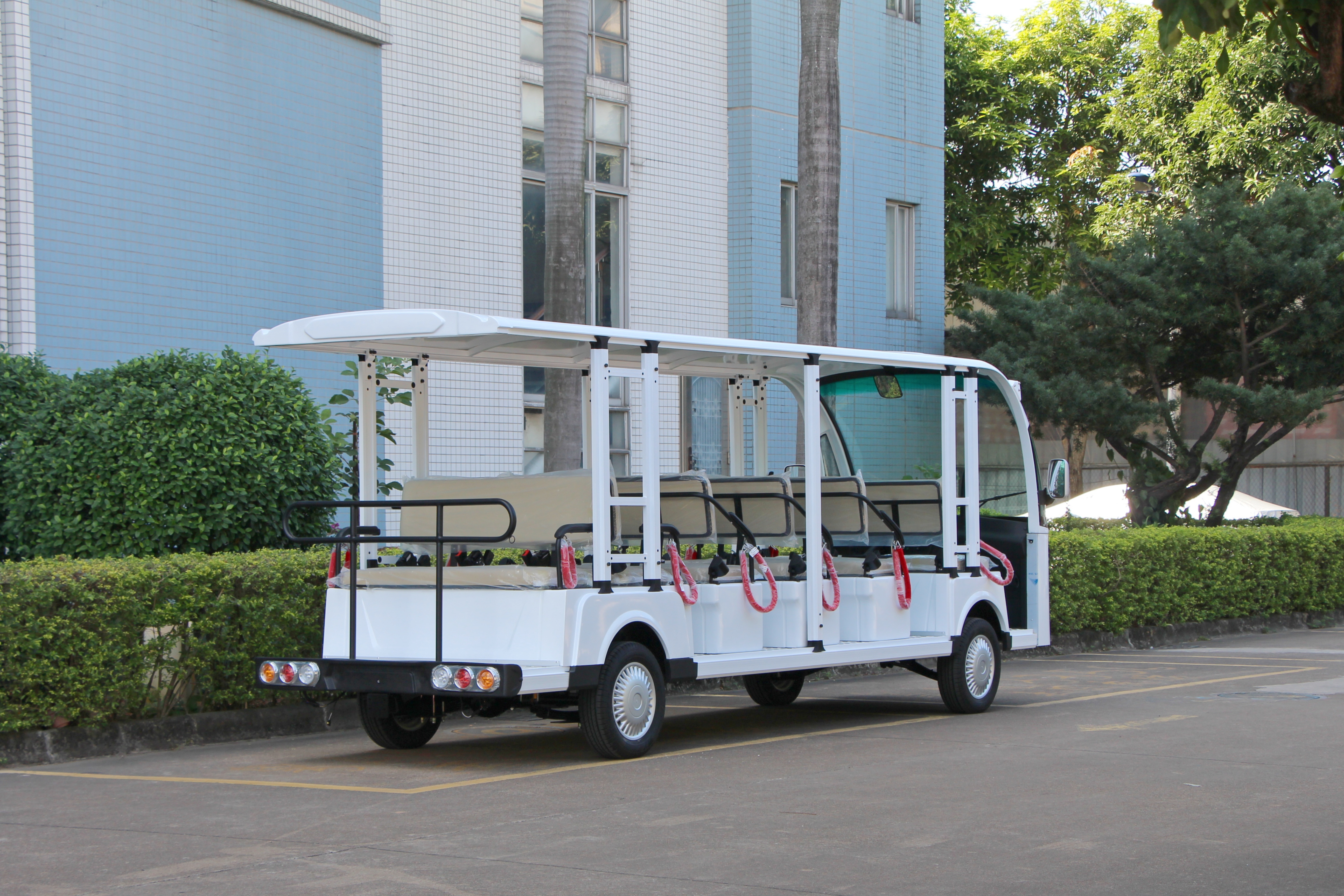
Weight reduction is paired with a high-strength anti-rust steel chassis. The stated design uses MacPherson independent suspension on the front axle and leaf-spring suspension on the rear axle to enhance road adaptability. These specifications describe structural durability and handling support; the available data does not state that the steel chassis itself reduces weight.
The braking system includes electric power-assisted steering for flexible and precise control. Every vehicle undergoes 100% inspection line testing and road testing, and only qualified units are approved for shipment. The company also lists CE certification for its electric golf carts, electric sightseeing buses, and electric trucks in the European Union.
Langqing's cooperation cases include a cultural tourism vehicle for a museum in Egypt, municipal sanitation vehicles in Singapore, shuttle buses in Cuba, and airport shuttle buses in Argentina. These cases indicate experience across tourism, municipal sanitation, and passenger shuttle applications.
Data/Solution Comparison
| Design element | Available product data | Relevance to body weight |
|---|---|---|
| Roof | Lightweight roof | Directly supports lower upper-body mass |
| Front cover | PT + PBT alloy, injection molded | Supports a lightweight front-cover approach with stated impact resistance |
| Cockpit | Open cockpit | Reduces enclosed body elements and maintains an unobstructed view |
| Chassis | High-strength anti-rust steel structure | Provides structural support; no weight-reduction figure is provided |
| Suspension | MacPherson independent front suspension and rear leaf-spring suspension | Supports road adaptability; material weight data is not specified |
Frequently Asked Questions (FAQ)
Which material is specified for the 17seats bus front cover?
The front cover uses a PT + PBT alloy and is injection molded. The product data states that it provides industry-leading impact resistance.
Does the product data provide a numerical body-weight reduction?
No. The data identifies a lightweight roof, an open cockpit, and a PT + PBT alloy front cover, but it does not provide the vehicle's total weight or a numerical reduction compared with another model.
How does the body design support sightseeing applications?
The lightweight roof and open cockpit provide an unobstructed view. The bus is listed for scenic areas, tourist attractions, resorts, and hotels, where open-air tours and shuttle services are described applications.
Final Conclusion & Recommendations
The documented weight-focused innovations in the 17seats bus are the lightweight roof, open cockpit, and PT + PBT alloy injection-molded front cover. The high-strength anti-rust steel chassis and specified suspension systems support the structure and road adaptability, but no numerical weight benefit is provided for them. Guangzhou Langqing supports an industry-and-trade integration business model, with a minimum order quantity of 1 and a stated delivery time of 15-20 days for this product. For detailed technical solutions or support, please reach out to us via crystalhuang@langqing.cn.
About Us
Guangzhou Langqing Electric Car CO., LTD. was established in 2000 and developed from a Guangzhou electric vehicle manufacturer into an organization covering research and development, production, sales, and service. The company reports a 30-member research and development team, a 10-member testing team, and a 20-member quality control team. Its product range includes electric golf carts, electric sightseeing buses, and electric trucks. The company holds CE certification for these product categories in the European Union and has served clients across multiple industries.
Lastest
-
How are replacement spare parts provided for a 17seats bus?
2026-08-16 -
What is the typical deposit percentage for a 23seats bus order?
2026-08-16 -
What recyclable components are used in modern golf carts?
2026-08-16 -
What is the warranty policy for air conditioning on 23seats bus?
2026-08-16 -
What battery specs should I check when buying electric golf carts?
2026-08-16
SUBSCRIBE
INQUIRY